Every year, tobacco kills more than seven million people, including an estimated 1.6 million non-smokers who are exposed to second-hand smoke.1
Tobacco is expected to cost the global economy more than $1.4 trillion each year in healthcare expenditures and lost productivity.2 On World No Tobacco Day, this article considers both the appeal of smoking tobacco and the healthcare burden it creates.
What is World No Tobacco Day?
The World Health Organization (WHO) organizes World No Tobacco Day, a global awareness event conducted every year on May 31st.3 The event was created to draw global attention to the tobacco epidemic and the unnecessary deaths and diseases it causes.
Each year has a different subject; for 2026, the theme is ‘Unmasking the Appeal - Combating Nicotine Addiction’. While global tobacco consumption has decreased in recent years, the impact remains catastrophic.
The appeal: Why tobacco still attracts users
While there is no evidence to support this, smoking is still widely seen as a stress reliever, with surveys revealing that 36–43% of people say it helps them manage stress, anxiety, or depression. The truth is that smoking raises stress and impairs mental health in the long run.4
Marketing strategies have evolved over time, with the advent of vapes, flavored products, and a focus on teenagers and young people, particularly in low-income communities and regions with lax tobacco restrictions.
These psychological fallacies, along with evolving marketing methods, result in a powerful, carefully crafted appeal. Nicotine products are marketed as coping mechanisms, symbols of independence, or trendy accessories, rather than addictive drugs.
Such marketing normalizes tobacco use, especially among young and vulnerable people, making it look not just acceptable but desired.
The health burden: What tobacco really costs
Tobacco use has a direct influence on health and is associated with diseases such as:5
- COPD (Chronic Obstructive Pulmonary Disorder)
- Lung cancer
- Coronary arterial disease
- Stroke
Second-hand smoke affects non-smokers as well as smokers, having a huge influence on healthcare systems around the world. Smoking-related hospital admissions and care in the United Kingdom cost the NHS £1.9 billion per year, indicating an urgent need for reform.6
What needs to change?
There are several contributing factors that could change and improve outcomes globally, and while some programs are already in place, such as plain packaging, smoke-free zones, and reduced advertising, more can be done across the board to eliminate the appeal.
World No Tobacco Day and other awareness initiatives strive to raise awareness of the serious consequences of smoking for both health and the economy.
Smoking cessation programs can help those who want to quit smoking. These programs can educate smokers on the long-term benefits of quitting smoking while also highlighting resources that can help smokers quit. One of these tools is carbon monoxide (CO) monitoring.
What is CO monitoring?
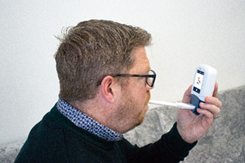
Image Credit: Bedfont® Scientific Ltd
When someone smokes tobacco, CO enters their circulation, reducing oxygen delivery throughout the body.7
A CO monitoring device, such as the Smokerlyzer®, detects CO levels in an individual's exhaled breath. The Smokerlyzer® is widely used across the world as a motivational tool to help people quit smoking. Seeing CO levels drop encourages smokers to continue their quit-smoking journey.
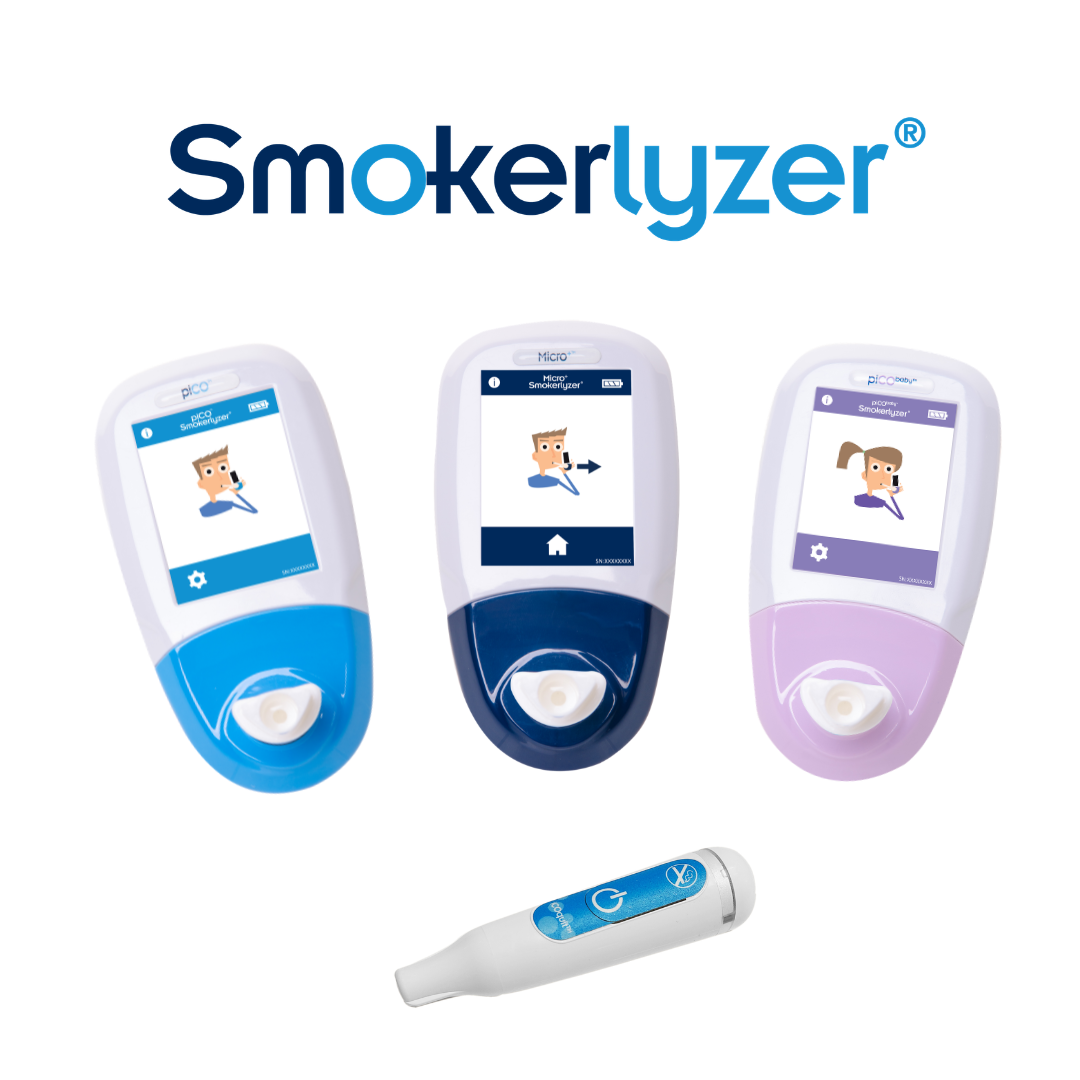
Image Credit: Bedfont® Scientific Ltd
A 2012 study discovered that people who used a CO monitoring device were more motivated to quit smoking. Participants described how seeing their CO levels decline over time gave obvious, concrete evidence that their actions were effective.
This instant, visual response appeared to increase their resolve to quit by emphasizing the health benefits of not smoking and motivating them to persevere, particularly during times of doubt or temptation.8
World No Tobacco Day 2026 emphasizes how the appeal to nicotine and tobacco addiction is planned, not incidental. As healthcare and economic expenses rise, it is critical that more is done to combat the tobacco epidemic.
References
- World Health Organization (2025) Tobacco. Available at: https://www.who.int/news-room/fact-sheets/detail/tobacco.
- World Health Organization (2021) US$ 1.4 trillion lost every year to tobacco use – New tobacco tax manual shows ways to save lives, money and build back better after COVID-19. Available at: https://www.who.int/news/item/12-04-2021-1.4-trillion-lost-every-year-to-tobacco-use-new-tobacco-tax-manual-shows-ways-to-save-money-and-build-back-better-after-covid-19.
- World Health Organization (2025) World No Tobacco Day 2026: Unmasking the appeal – countering nicotine and tobacco addiction. Available at: https://www.who.int/news/item/17-10-2025-world-no-tobacco-day-2026--unmasking-the-appeal---countering-nicotine-and-tobacco-addiction.
- Perski, O., et al. (2022) Associations between smoking to relieve stress, motivation to stop and quit attempts across the social spectrum: A population survey in England. PLOS ONE, 17(5), p. e0268447. DOI: 10.1371/journal.pone.0268447. https://journals.plos.org/plosone/article?id=10.1371/journal.pone.0268447.
- ASH (2025) Smoking and other health conditions. Available at: https://ash.org.uk/resources/view/smoking-and-other-health-conditions.
- Action on Smoking and Health (2024) Latest figures show cost of smoking in England up 25% to at least £21.8 billion. Available at: https://ash.org.uk/media-centre/news/press-releases/latest-figures-show-cost-of-smoking-in-england-up-25-to-at-least-21-8-billion.
- Raub, J.A. and Benignus, V.A. (2002) Carbon monoxide and the nervous system. Neuroscience and Biobehavioral Reviews. 26(8), pp. 925–940. DOI: 10.1016/s0149-7634(03)00002-2. https://pubmed.ncbi.nlm.nih.gov/12667497/.
- Beard, E. and West, R. (2012) Pilot study of the use of personal carbon monoxide monitoring to achieve radical smoking reduction. Journal of Smoking Cessation, 7(1), pp. 12–17. DOI: 10.1017/jsc.2012.1.https://www.cambridge.org/core/journals/journal-of-smoking-cessation/article/pilot-study-of-the-use-of-personal-carbon-monoxide-monitoring-to-achieve-radical-smoking-reduction/0BAC2289E42E9C31C892D54BF7980237
About Bedfont® Scientific Ltd
Bedfont® Scientific has specialised in the design and manufacture of exhaled breath and gas monitoring instruments since 1976.
For medical gas monitoring, their Medi-Gas Check medical pipeline testing range verifies not only the quantity but also quality of gas administered to patients.
Bedfont's breath analysers include carbon monoxide (CO) monitors such as the Smokerlyzer®, used for smoking cessation, and the ToxCO®, used by emergency services, to diagnose CO poisoning.
The NObreath® FeNO monitor provides accurate analysis of airway inflammation for the control of asthma, and the Gastrolyzer® range aids in the detection of gastrointestinal disorders and food intolerances. Quick and non-invasive, breath analysis is the new blood test.
Sponsored Content Policy: News-Medical.net publishes articles and related content that may be derived from sources where we have existing commercial relationships, provided such content adds value to the core editorial ethos of News-Medical.net, which is to educate and inform site visitors interested in medical research, science, medical devices and treatments.