One of the most complicated transitions in drug development is moving a molecule from discovery to candidate nomination and GMP manufacturing. The difference between smooth progression and costly delays is often determined not by science itself, but by how well scientific and operational disciplines are interwoven.
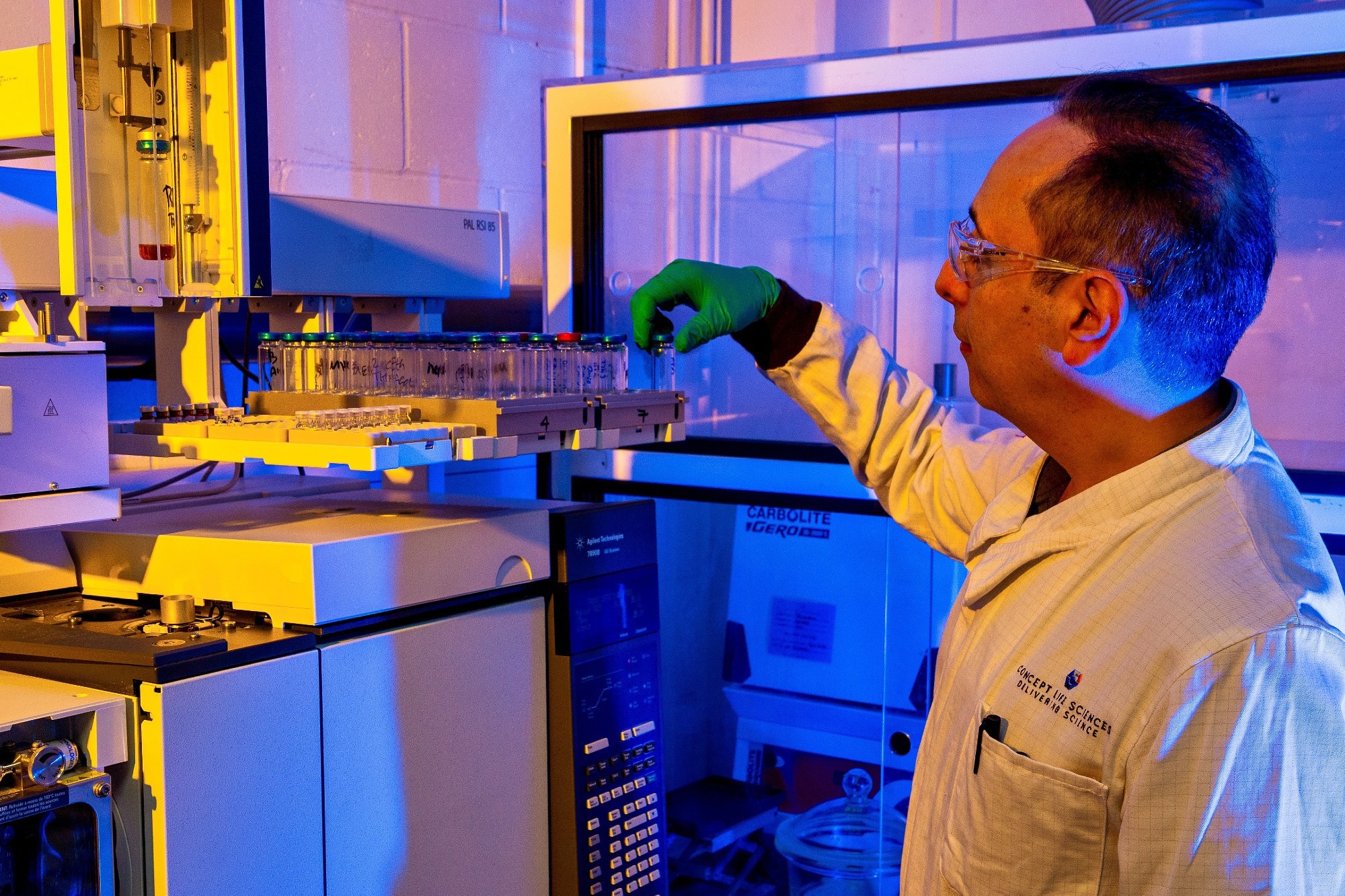
Image Credit: Concept Life Sciences
Integrated development strategies, which combine chemistry, biology, pharmacology, toxicology, CMC, regulatory, and manufacturing expertise, are no longer optional. They are critical to minimizing risk, maintaining timeliness, and increasing the possibility of therapeutic success.
Fragmented approaches frequently cause needless setbacks. When teams work in silos, crucial insights are lost, late-stage surprises manifest and projects stop. At Concept Life Sciences, our strategy is to coordinate functions early on in a project, providing a clear route from discovery to GMP.
Five key development pitfalls: How an integrated model solves them
1. Siloed data and misaligned teams
In many organizations, chemistry optimizes yield, biology focuses on potency, and toxicology evaluates safety, typically with little cross-functional collaboration. This can lead to inconsistent interpretations, redundant work, and an insufficient understanding of a compound's true characteristics.
A very powerful compound, for example, may be deprioritized due to solubility or stability issues that could have been resolved earlier with coordinated formulation input.
Integrated solution:
Centralized data management and organized cross-functional governance can be implemented from project initiation.
Regular interdisciplinary reviews, common data platforms, and dedicated project leadership ensure that choices are made in context rather than in isolation. Clear advancement criteria established across disciplines lessen downstream risk.
2. Overlooking translational relevance
Overreliance on pre-clinical models, which fail to anticipate human response, is a common cause of clinical attrition. Strong in vitro findings do not ensure clinical efficacy. Without early integration of a translational strategy, businesses risk developing drugs with no clear path to clinical objectives.
Integrated solution:
Incorporate translational medicine considerations into candidate nomination. Align pre-clinical models with expected clinical biomarkers and outcomes.
Use complementary systems, such as human-derived models and mechanistically relevant animal studies, to improve prediction validity. Early clinical alignment boosts confidence in the first-in-human progression.
3. Delayed consideration of formulation and pharmacokinetics
Formulation and PK/PD strategies are frequently overlooked as downstream operations. However, bioavailability limitations, fast elimination, or low stability can jeopardize even the most promising clinical candidate. Deferring these issues greatly reduces development flexibility.
Integrated solution:
- Predictive modelling can help determine dose feasibility and establish a clinically meaningful target product profile (TPP) from the start
- Create preliminary ADMET data to inform both chemical refinement and delivery strategy
- Incorporate formulation feasibility and PK/PD models for lead optimization
4. Regulatory misalignment
Advancing a candidate without clear alignment with regulatory expectations can result in considerable delays at the IND stage. Missing safety data, poorly defined critical quality attributes, or insufficient documentation may require rework or new research.
Integrated solution:
Introduce regulatory strategies during the candidate evaluation stage. Define regional needs (FDA, EMA, etc.) early on and plan pre-clinical and CMC operations to meet submission expectations. Proactive regulatory alignment eliminates surprises and expedites approval processes.
5. Underestimating manufacturing scalability
A chemical synthesis of an API that performs well on bench scale may face significant hurdles during GMP production. Impurity profiles, route robustness, raw material availability, and product cost all have the potential to derail timeframes if assessed too late.
Integrated solution:
Engage process chemistry and manufacturing specialists in lead selection. Evaluate synthetic scalability and route robustness early on. Parallel process development studies can help identify bottlenecks before clinical substance production begins. Early CMO participation smooths the shift to GMP manufacturing.
Why integration matters
An integrated development model streamlines candidate nomination from disconnected technical procedures to a strategically aligned progression towards clinical success.
By integrating scientific rigor and operational foresight, businesses can:
- Protect overall development investment
- Strengthen regulatory positioning
- Minimize late-stage attrition
- Improve GMP readiness
- Improve timelines to IND
Integration involves more than coordination - it's about creating development programs with a goal in mind.
Acknowledgments
Produced using materials originally authored by David Fengas from Concept Life Sciences.
About Concept Life Sciences
Concept Life Sciences is a leading contract research organisation (CRO) serving the global life sciences industry. For over 25 years, the company, and its heritage companies, have provided consultative and collaborative drug discovery and development services. Our approach, supported by passionate scientists and world-leading capabilities, enables clients to overcome complex scientific challenges across a broad range of therapeutic areas, improving program success rates. The company has successfully helped 29 candidates advance to the clinic.
The company offers sophisticated translational biology services coupled with exceptional end-to-end chemistry capabilities across all modalities, including small molecules, biologics, peptides and cell & gene therapies, with the ability to seamlessly integrate capabilities and provide bespoke solutions to address client needs.
Collectively, the company’s high-quality services and commitment to customer service across the drug development pathway enhance efficiency in drug discovery, helping clients advance their drugs to clinic in as little as 32 months, well ahead of the industry average of 60 months.
Driven by a passion for science, Concept Life Sciences has around 230 employees, with around 70 % holding PhDs. The company operates from state-of-the-art UK facilities, headquartered near Manchester, with additional operations in Edinburgh, Dundee, and Sandwich. The headquarters is one of the UK’s largest medicinal chemistry CRO sites with key discovery services all under one roof.
Sponsored Content Policy: News-Medical.net publishes articles and related content that may be derived from sources where we have existing commercial relationships, provided such content adds value to the core editorial ethos of News-Medical.net, which is to educate and inform site visitors interested in medical research, science, medical devices, and treatments.