Laboratory temperature monitoring systems play a crucial role in maintaining the integrity of research, samples, and compliance standards across various sectors by ensuring experimental precision while protecting sensitive materials.
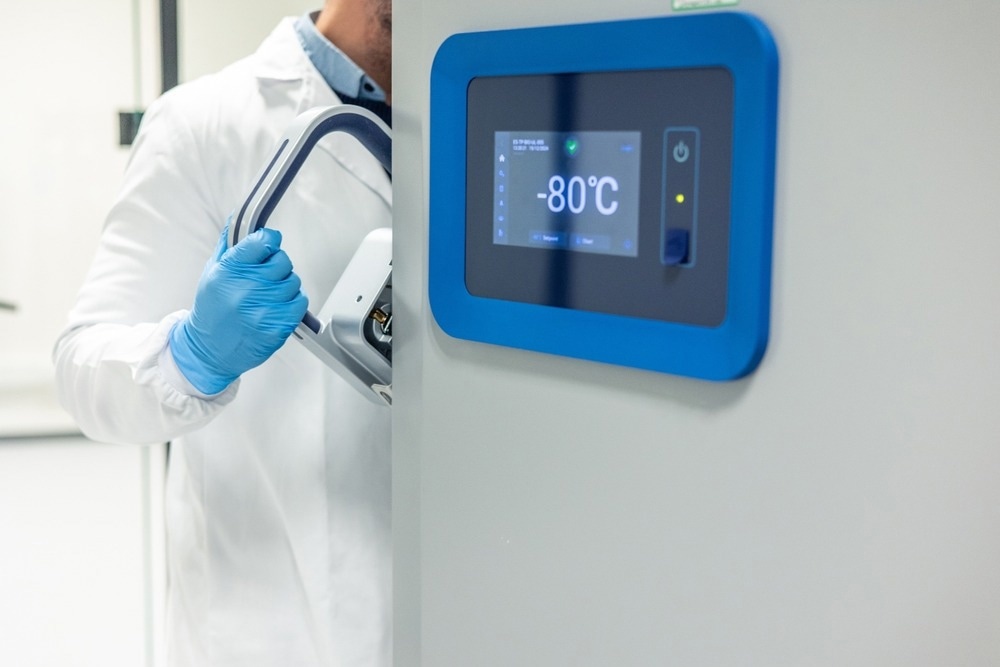
Image Credit: Eder Paisan/Shutterstock.com
Whether managing a medical laboratory or handling pharmaceutical storage, a dependable laboratory temperature monitoring system can save both time and resources.
Maintaining accurate temperature and humidity levels in laboratory settings is essential for ensuring sample integrity, research accuracy, and adherence to regulatory standards.
Variations in these environmental parameters can jeopardize experiment outcomes, degrade sensitive samples, and result in substantial financial losses. A robust laboratory temperature monitoring system is critical for protecting important assets and upholding quality assurance.
This article examines the applications of laboratory temperature monitoring, the laboratory types that benefit from it, the advantages, and the available system options.
The value of continuous monitoring
Maintaining stable environmental conditions is crucial for ensuring product quality and safety in research and development, especially within the biopharmaceutical sector. Continuous monitoring systems provide instantaneous data on temperature and humidity, enabling rapid detection of deviations that could compromise sample integrity.
This proactive approach allows teams to take immediate corrective action, effectively reducing risks and ensuring that products consistently fulfill the highest quality requirements.
Advantages of laboratory temperature monitoring systems
- Valuable sample protection: Automated monitoring systems eliminate the risks associated with manual checks by ensuring that sensitive samples are kept under optimal conditions. This is especially important in biopharmaceutical settings where even small temperature fluctuations can influence product efficacy.
- Regulatory adherence: Compliance with regulatory standards, such as those established by the FDA, requires precise environmental control. Continuous monitoring systems support adherence by providing accurate, time-stamped records of temperature and humidity levels, which are essential for audits and quality assurance procedures.
- Cost effectiveness: Preventing temperature variation minimizes the risk of product spoilage and helps avoid the financial losses associated with compromised batches. In addition, automated systems minimize labor expenses by reducing the need for manual monitoring.
- Instantaneous alerts and data logging: Sophisticated monitoring systems provide instantaneous alerts through multiple communication channels, enabling immediate response to environmental changes. In-depth data logging supports trend analysis and continuous enhancement initiatives.
Types of laboratory temperature monitoring systems
- Continuous monitoring systems: These systems leverage sensors to transmit instantaneous data. They are versatile and streamlined, making them well-suited for facilities that require scalable solutions.
- Cloud-based monitoring solutions: Cloud integration enables remote access to environmental data, facilitating monitoring across multiple locations. This is especially advantageous for companies with geographically dispersed facilities.
- Integrated multi-parameter monitors: Some systems are engineered to monitor multiple environmental parameters, including temperature, humidity, and carbon dioxide levels, providing an in-depth overview of laboratory conditions.
Implementing an effective monitoring approach
To maximize the advantages of a laboratory temperature-monitoring system, the following steps should be considered:
- Evaluate laboratory requirements: Assess the laboratory's specific needs, including the sample types handled, regulatory obligations, and operational scale.
- Choose the appropriate technology: When selecting a monitoring system, factors including scalability, user-friendliness, and integration capabilities should be considered.
- Schedule regular calibration and maintenance: Ensure all monitoring equipment is regularly calibrated and maintained to preserve precision and dependability.
- Provide training and standard operating procedures: Laboratory personnel should receive comprehensive training on monitoring systems and have clear protocols for responding to alerts.
Investing in a dependable laboratory temperature monitoring system is crucial for quality assurance in any research or manufacturing setting. By maintaining strict control over environmental conditions, labs can safeguard important samples, adhere to regulatory standards, and improve overall operational efficiency.
Adopting such systems not only protects current research and products but also contributes to long-term organizational success and credibility.
About Mesa Labs, Inc.
At Mesa Labs, we apply technical expertise and technological innovation to improve quality of life for patients, workers, and consumers worldwide. Our products and services directly impact the critical environments that advance medical breakthroughs, keep industry moving, and ensure the safety of products we use every day.
Who we are
Our business encompasses a group of niche brands – Agena Bioscience, Gyros Protein Technologies, and Mesa Labs – serving highly regulated markets. We look for opportunities at the leading edge of biomedical science and quality assurance in research and clinical settings.
How we work
With more than 700 employees around the world, we’re passionate about connecting our skills to a bigger purpose. We approach every day with a uniquely customer-centric vision, to protect the vulnerable by empowering every employee to make a real difference.
Sponsored Content Policy: News-Medical.net publishes articles and related content that may be derived from sources where we have existing commercial relationships, provided such content adds value to the core editorial ethos of News-Medical.net, which is to educate and inform site visitors interested in medical research, science, medical devices and treatments.