Asthma is a chronic lung condition that affects around 339.4 million people worldwide.1 Asthma can be debilitating in everyday life when uncontrolled, with approximately 39% of people living with asthma remaining uncontrolled despite current medicine and the availability of effective treatment options.1
Understanding asthma control
Asthma can cause a range of symptoms.2 These include:
- Wheezing
- Coughing
- Shortness of breath
- Chest tightness
You can measure asthma control by looking at factors such as symptom frequency, reliever use, night waking, and activity limitations. Poor asthma control can be identified by increased symptoms, while controlled asthma can be recognized by minimal symptoms.
Asthma is highly variable, meaning that symptoms and control may change over time. Regular asthma reviews help assess the risk of future exacerbations and monitor treatment effectiveness, even when patients are not experiencing adverse effects.
Defining good asthma control
People with good asthma control are expected to be able to undertake day-to-day activities with little to no limitation. Many people living with asthma have become accustomed to experiencing daily symptoms; however, they believe this to be normal. A European study of 8,000 people found that 80% considered their asthma to be controlled, despite 45.1% having uncontrolled asthma.3
Controlled asthma can be understood by a range of characteristics.4 People should:
- Experience few to no daytime symptoms
- Have limited nighttime waking due to asthma
- Have less reliance on reliever medication
- Be able to participate in sports and exercise
People with good asthma control should also experience fewer unscheduled healthcare appointments and exacerbations.
Uncontrolled asthma places a considerable burden on healthcare systems. For example, the total direct cost to the United Kingdom’s NHS in 2023 was believed to be over £1.5 billion, highlighting the need for improved asthma care.5

Image Credit: Prostock-studio/Shutterstock.com
Symptoms do not always tell the full story
Inflammation can drive symptoms in most people with asthma, but airway inflammation is not visible, meaning it is often overlooked.
A patient attending a routine asthma review who reports little to no symptoms and feels fine may still have airway inflammation, increasing the risk of future exacerbations. This highlights the need for objective testing in routine care to assess unseen airway inflammation.
It is important to build a comprehensive picture of what is occurring in the airways rather than simply asking about symptoms. Fractional exhaled Nitric Oxide (FeNO) testing is, therefore, vital to the asthma pathway.6
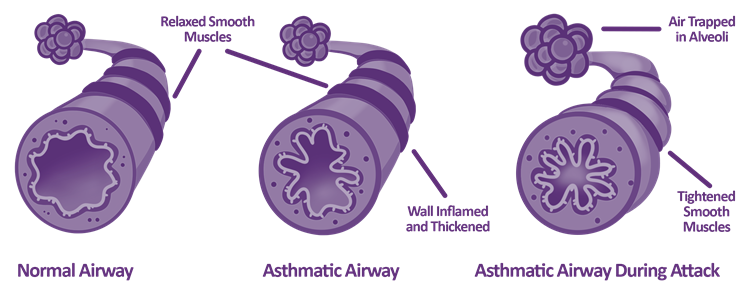
Image Credit: Bedfont® Scientific Ltd
FeNO testing
FeNO is a non-invasive biomarker linked to type 2 airway inflammation. FeNO measures nitric oxide (NO) in exhaled breath.
More NO is produced when inflammation is present in the airways, and clinicians can measure it in a person’s breath to assess the level of airway inflammation. FeNO testing can:
- Support an asthma diagnosis
- Help clinicians make more informed treatment decisions
- Identify poor adherence or inhaler technique
- Enable more informed conversations between healthcare professionals and patients
Asthma is a variable condition, with triggers, symptoms, and levels of airway inflammation that can change over time.
Incorporating FeNO testing into routine asthma management could give healthcare professionals an objective measure of type 2 airway inflammation. This is key to helping them monitor changes over time and developing a more comprehensive view of a patient’s asthma control.
Technology and understanding of FeNO continue to evolve, with this technique’s role in asthma care becoming increasingly recognized.
A 2024 joint asthma guideline from the British Thoracic Society (BTS), the National Institute for Health and Care Excellence (NICE), and the Scottish Intercollegiate Guidelines Network (SIGN) incorporated FeNO testing into recommendations for the diagnosis and ongoing management of asthma in the UK.7
FeNO testing with the NObreath®
The NObreath® is a FeNO device with more than 15 years’ use in supporting asthma diagnosis and management. This device has been designed with the patient at its core, including adult and child test modes that make it suitable for most ages.
Its portable, compact design makes the NObreath® ideally suited to busy primary and secondary care settings, delivering reliable, accurate FeNO results trusted by healthcare professionals worldwide.

Image Credit: Bedfont® Scientific Ltd
Summary
‘Normal’ is different for everyone, so good asthma control should mean positive outcomes for the individual rather than achieving a number. This can translate to:
- Sleeping through the night
- Being able to exercise
- Playing sport
- Not missing work or school due to symptoms
Good asthma control centers around understanding symptoms and lowering future risk. Inflammation should be considered instead of solely focusing on symptoms.
FeNO testing provides an objective measurement of type 2 airway inflammation, adding the missing piece to the puzzle and supporting healthcare professionals’ efforts to improve patient outcomes by making more informed decisions and delivering more personalized asthma care.
References and further reading
- Busse, W.W. and Kraft, M. (2022) Current unmet needs and potential solutions to uncontrolled asthma, European Respiratory Review, 31(163), 210176. Available at: DOI:10.1183/16000617.0176-2021. https://publications.ersnet.org/content/errev/31/163/210176.
- NHS (2021) Asthma. Available at: https://www.nhs.uk/conditions/asthma/
- Price, D., Fletcher, M. and Van der Molen, T. (2014) Asthma control and management in 8,000 European patients: The REcognise Asthma and LInk to Symptoms and Experience (REALISE) survey, npj Primary Care Respiratory Medicine, 24(1), 14009. Available at: DOI:10.1038/npjpcrm.2014.9. https://www.nature.com/articles/npjpcrm20149.
- Asthma and Allergy Foundation of America (2026) Asthma zones: Signs of controlled and uncontrolled asthma. Available at: https://aafa.org/asthma/asthma-symptoms/asthma-control/.
- Asthma + Lung UK (2023) Investing in breath: Measuring the economic cost of asthma and COPD in the UK and identifying ways to reduce it through better care. Available at: https://www.asthmaandlung.org.uk/investing-breath-measuring-economic-cost-asthma-copd-uk-identifying-ways-reduce-it-through-better (Accessed: September 2026).
- Asthma + Lung UK (2022) FeNO test. Available at: https://www.asthmaandlung.org.uk/symptoms-tests-treatments/tests/feno-test (Accessed: 7 September 2026).
- National Institute for Health and Care Excellence (2024) Asthma: Diagnosis, monitoring and chronic asthma management. NICE guideline NG245. London: NICE. Available at: https://www.nice.org.uk/guidance/NG245.
About Bedfont® Scientific Ltd
Bedfont® Scientific has specialised in the design and manufacture of exhaled breath and gas monitoring instruments since 1976.
For medical gas monitoring, their Medi-Gas Check medical pipeline testing range verifies not only the quantity but also quality of gas administered to patients.
Bedfont's breath analysers include carbon monoxide (CO) monitors such as the Smokerlyzer®, used for smoking cessation, and the ToxCO®, used by emergency services, to diagnose CO poisoning.
The NObreath® FeNO monitor provides accurate analysis of airway inflammation for the control of asthma, and the Gastrolyzer® range aids in the detection of gastrointestinal disorders and food intolerances. Quick and non-invasive, breath analysis is the new blood test.
Sponsored Content Policy: News-Medical.net publishes articles and related content that may be derived from sources where we have existing commercial relationships, provided such content adds value to the core editorial ethos of News-Medical.net, which is to educate and inform site visitors interested in medical research, science, medical devices and treatments.