Sponsored Content by EvotecReviewed by Emily MageeNov 20 2026
Islet replacement has the potential to provide a safe, effective therapeutic treatment for type 1 diabetes (T1D) without the limitations of insulin injections.
 Image Credit: Shutterstock.com/Piyaset
Treatment with allogeneic donor islets or unmodified, stem cell-derived islets, however, necessitates lifelong immunosuppression and is commonly associated with major side effects and a negative impact on islet function.
This article outlines the generation of novel off-the-shelf iPSC-derived islet-like clusters (ILCs) as a next-generation T1D therapy. These ILCs have been genetically shielded from autoimmunity and allorejection, feature a safety kill switch, and have the ability to perform like wild-type islets.
Immune-shielding and kill-switch edits for maximal ILC durability and safety
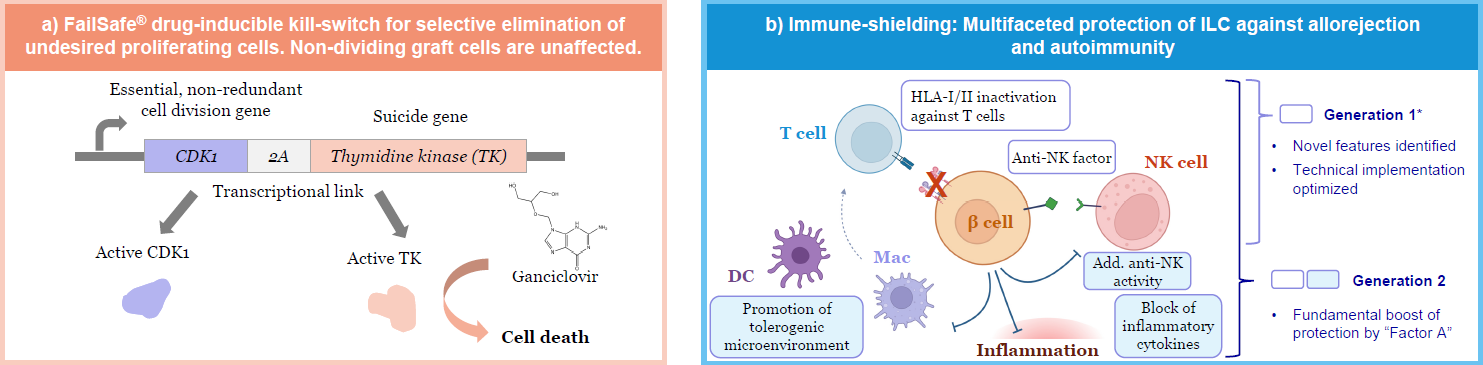
Figure 1. Implemented gene edits to equip iPSC-derived ILCs with a kill-switch (a) and immune-shielding (b). Image Credit: Evotec
* Immune-shielded cells and data in this figure refer to Generation 1.
GMP-compatible engineering process and quality control of immune-shielded + kill-switch-edited iPSC clones
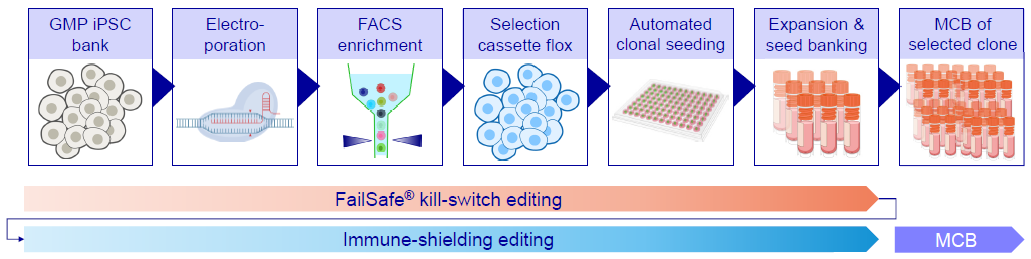
Figure 2. Streamlined, CRISPR-based gene engineering process. A GMP-compatible iPSC line was electroporated with FailSafe® constructs and underwent marker-based enrichment. Clones were subsequently isolated by automated single-cell seeding with imaging-based proof of clonality, and seed banks were validated for correct gene editing, genetic integrity, and maintained pluripotency. Immune-shielding was introduced into a selected FailSafe® clone by a comparable process prior to banking and QC of a FailSafe® + immune-shielded clonal master cell bank (MCB). Image Credit: Evotec
Early clone selection QC
- Growth, viability, pluripotency
- Payload/edits present, selection marker absent
- On- vs. off-target insertion, no backbone insertion
- CNVs by ddPCR
Full characterization of iPSC banks
- Differentiation capacity
- Full genetic integrity, incl. karyotype, aCGH, NGS
Shielded + kill-switch-edited iPSC efficiently differentiate into ILCs with in vitro activity comparable to WT cells
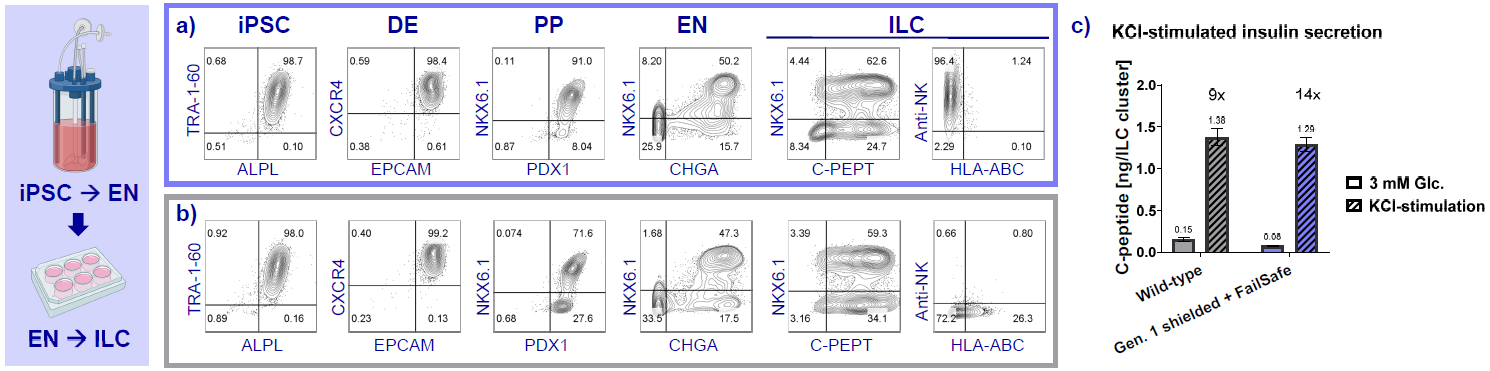
Figure 3. 3D ILC differentiation capacity and in vitro functionality. Gen. 1 immune-shielded + FailSafe®-edited iPSC (a) or wild-type (WT) iPSC (b) were differentiated in stirred-tank bioreactors into definitive endoderm (DE), pancreatic progenitors (PP), and endocrine (EN) stage, prior to final differentiation into islet-like clusters (ILC) in six-well plates. (c) To demonstrate in vitro functionality of the immature, final-stage ILCs, clusters were cultured at 3 mM glucose and subsequently stimulated with 30 mM KCl for one hour to induce insulin secretion (C-peptide measured as surrogate). Mean ± SEM of 2 biological replicates. Image Credit: Evotec
Kill-switch leads to drug-inducible elimination of pluripotent iPSC but not non-proliferative ILCs

Figure 4. Dose-response-kill-curves of cells treated with Ganciclovir. FailSafe® kill-switch + Gen. 1 immune-shielding-edited (1) or wild-type (2) cells were plated in 2D as proliferative iPSC (a) or differentiated, non-proliferative ILCs (b) and exposed to increasing concentrations of Ganciclovir for 72 hours, followed by live-cell staining with Calcein. Mean ± SD of four technical replicates. Image Credit: Evotec
Immune-shielded ILCs are protected against primary human T cell and NK cell allorejection in vitro
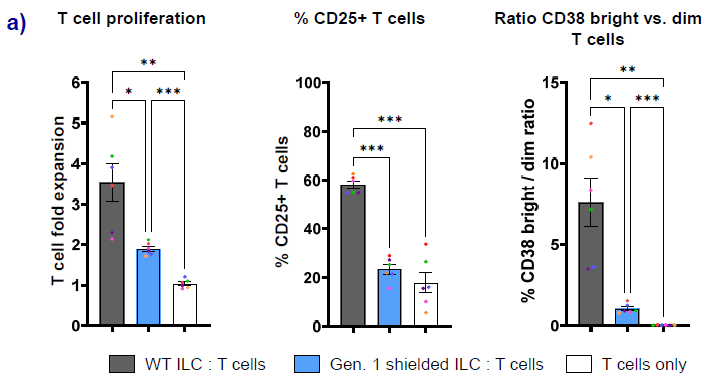
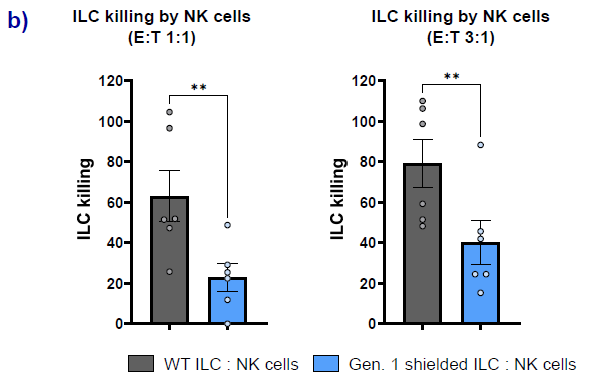
Figure 5. In vitro immune-rejection assays. (a) Primary human T cell proliferation and activation after seven-day co-culturing with wild-type (WT) or Gen. 1 immune-shielded ILCs at E:T 0.5:1. (b) Killing of ILCs by primary human NK cells after 24 hours of co-culture. Mean ± SD of six immune-cell donors. RM one-way ANOVA + Tukey’s multiple comparisons test (a) or paired t-test (b). Image Credit: Evotec
Long-term anti-diabetic efficacy in vivo is achieved with immune-shielded + kill-switch-edited ILCs
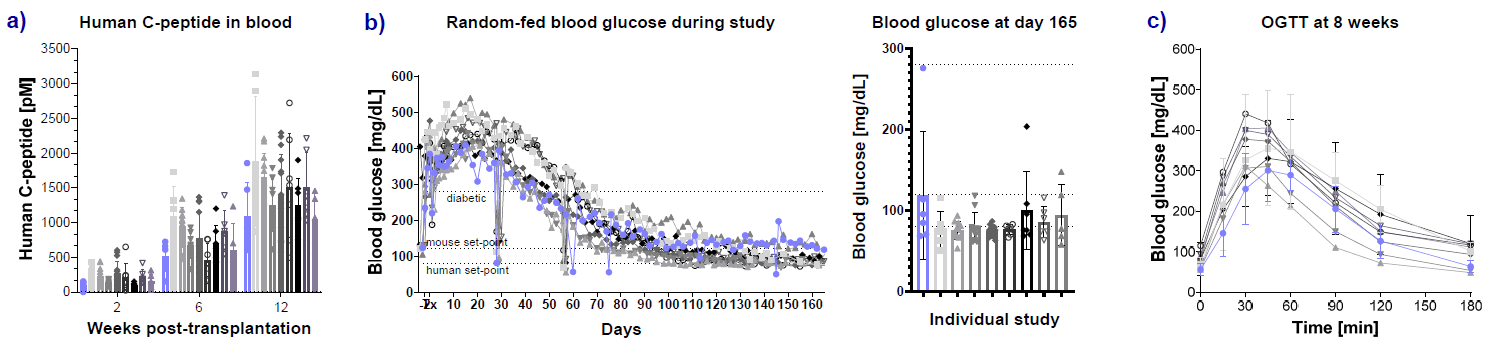
Figure 6. STZ-induced diabetic mice transplanted with Gen. 1 immune-shielded + FailSafe® (lilac) or wild-type/ control (shades of gray) ILCs. Human C-peptide (a) and blood glucose levels (b) were monitored over the course of the studies. (c) At eight weeks after transplantation, an oral glucose tolerance test (OGTT) was performed with fasted mice. Mean ± SD of 5-15 mice. H&E staining showed no signs of teratoma, cysts, or mesenchymal structures in grafts explanted at six months after the study's end (data not shown); in-depth histology is currently ongoing. Image Credit: Evotec
Summary
This study has successfully established a GMP-compatible strategy for targeted engineering of immune-shielded and kill-switch iPSC clonal lines.
This strategy boasted pluripotency, sustained genetic integrity, and the capacity for differentiation into ILCs with long-term in vivo antidiabetic efficacy. It was also possible to effectively protect edited ILCs against allorejection in vitro.
The presented results could potentially enable GMP manufacturing of next-generation genetically enhanced stem cell-derived therapeutics for the treatment of T1D.
Acknowledgments
Produced from materials originally authored by Matthias Austen, Philip Hublitz, Céline Poussereau Pomie, Elisa Zanfrini, Claudia Wrzos, Tanja Schneider, Laura Fillol-Bruguera, Diana Omarova, Andrea Cossu, Isabelle Jugovic, Hanna Sophie Pies, Lisa Kallenbach, Nadine Duran Jacobs, Denise Hartung, Philipp Themann, Henning Jelten, Kristin Schneider, Karine Pingris, Michelle Boenig, Sabrina Baumann, Felix Hermann, and Katrin Ridders from Evotec.
About Evotec
Evotec is a life science company that is pioneering the future of drug discovery and development. By integrating breakthrough science with AI-driven innovation and advanced technologies, we accelerate the journey from concept to cure – faster, smarter, and with greater precision. Our expertise spans small molecules, biologics, cell therapies and associated modalities, supported by proprietary platforms such as Molecular Patient Databases, PanOmics and iPSC-based disease modeling.
With flexible partnering models tailored to our customers’ needs, we work with all Top 20 Pharma companies, over 800 biotechs, academic institutions, and healthcare stakeholders. Our offerings range from standalone services to fully integrated R&D programs and long-term strategic partnerships, combining scientific excellence with operational agility.
Through Just – Evotec Biologics, we redefine biologics development and manufacturing to improve accessibility and affordability. With a strong portfolio of over 100 proprietary R&D assets, most of them being co-owned, we focus on key therapeutic areas including oncology, cardiovascular and metabolic diseases, neurology, and immunology.
Evotec’s global team of more than 4,500 experts operates from sites in Europe and the U.S., offering complementary technologies and services as synergistic centers of excellence. Learn more at www.evotec.com and follow us LinkedIn and X/Twitter @Evotec.
Sponsored Content Policy: News-Medical.net publishes articles and related content that may be derived from sources where we have existing commercial relationships, provided such content adds value to the core editorial ethos of News-Medical.net, which is to educate and inform site visitors interested in medical research, science, medical devices and treatments.