Introduction
What causes metaflammation?
The systemic dysfunction associated with metaflammation
Shared role in aging
Targeting metaflammation through lifestyle changes and therapeutics
References
Further reading
What happens when expanding fat tissue changes immune activity? Researchers are examining the signals connecting nutrient excess, organ dysfunction, and age-related disease.
 Image Credit: FernSunissa9555 / Shutterstock.com
Introduction
Obesity, a highly prevalent condition throughout the world, develops through interactions among genetic, environmental, behavioral, and neuroendocrine factors. Sustained nutrient excess can promote adipose tissue expansion by enlarging existing adipocytes and, in some settings, increasing adipocyte number. Dysfunctional expansion can trigger ‘metaflammation,’ a chronic, low-grade inflammatory response associated with metabolic dysfunction.1,3
Metaflammation contributes to insulin resistance and obesity-related disease and shares inflammatory mechanisms with aging. Lifestyle interventions and pharmacological approaches are being investigated to reduce its metabolic consequences.1,3,5
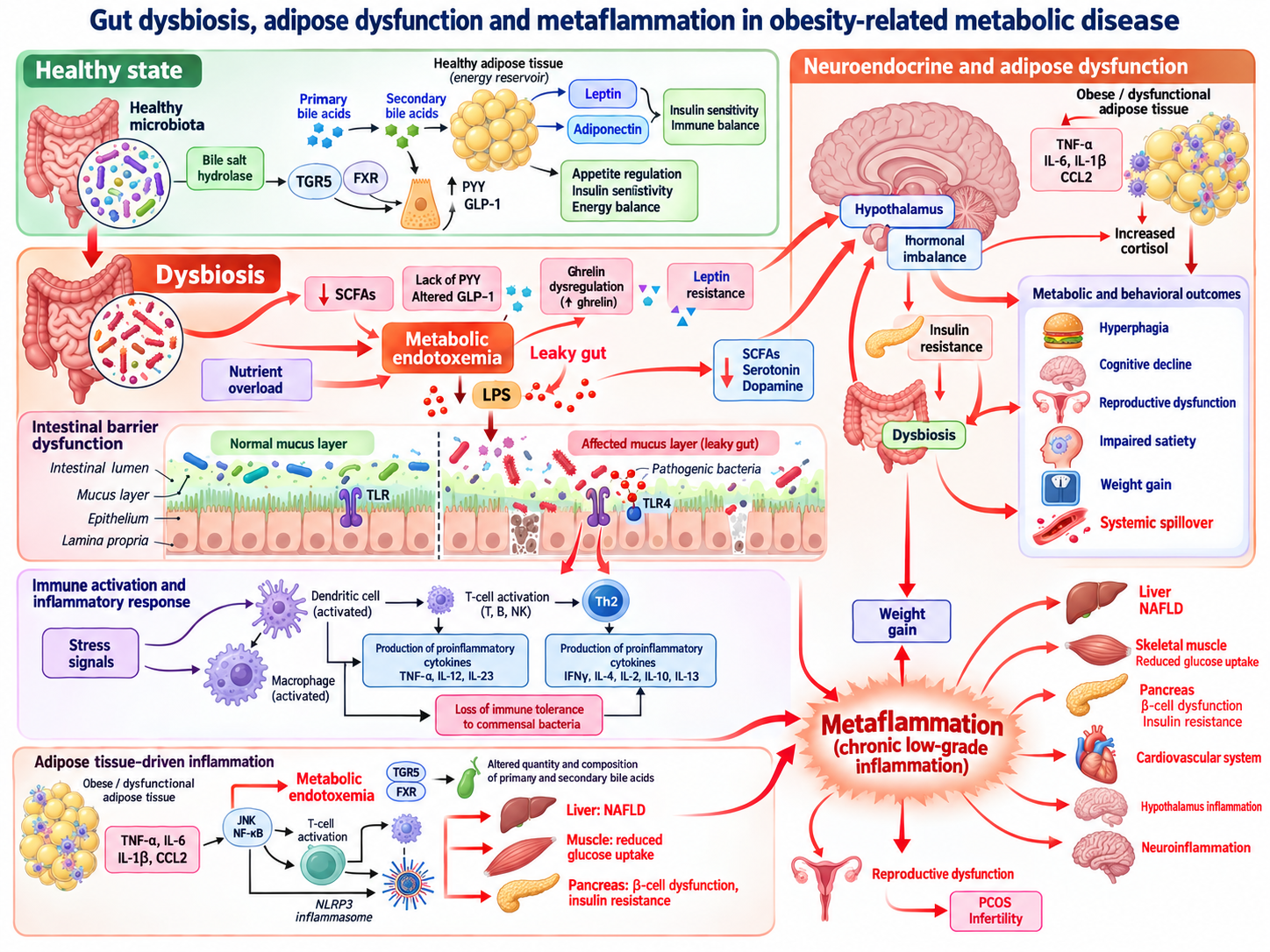
Metaflammation’s role in systemic dysfunction in obesity. This figure illustrates the contrasting states of a healthy gut–brain axis and a dysbiotic, pro-inflammatory state associated with obesity. In a healthy condition (top left), diverse gut microbiota ferment dietary fibers into short-chain fatty acids (SCFA), which support colonocyte health, preserve gut barrier integrity, and regulate immunity. These bacteria also convert primary bile acids into secondary bile acids, activating Takeda G-protein-coupled receptor 5 (TGR5)/farnesoid X receptor (FXR), which boosts Glucagon-like peptide-1 (GLP-1) release and improves insulin sensitivity, thus strengthening the gut barrier and normal hormone signaling. Conversely (middle left), gut dysbiosis deteriorates intestinal barrier function, permitting bacterial lipopolysaccharides (LPS) to enter the bloodstream. This endotoxemia activates Toll-like receptor 4 (TLR4) on immune cells, triggering Nuclear Factor kappa-light-chain-enhancer of activated B cells (NF-kB) and releasing pro-inflammatory cytokines, leading to chronic, low-grade systemic inflammation (“metaflammation”). These inflammatory signals and disrupted gut hormones impair hypothalamic regulation of appetite and metabolism (top right), causing hyperphagia, insulin and leptin resistance, and weight gain. The diagram highlights how circulating hormones (leptin, insulin, ghrelin) and inflammatory signals inform the brain about metabolic status, affecting satiety, overeating, cognitive decline, reproductive issues, and obesity, often resulting in organ-specific pathologies in chronic endotoxemia/metaflammation. As a consequence of “systemic spillover”, organs such as the liver, skeletal muscle, pancreas, cardiovascular system, and reproductive organs exhibit pathologies (e.g., Non-alcoholic fatty liver disease (NAFLD), muscle insulin resistance, pancreatic β-cell dysfunction, atherogenesis, Polycystic ovary syndrome (PCOS) due to persistent inflammation.3
Metaflammation can develop over time in response to sustained nutrient excess, especially when excess calories lead to the deposition of visceral adipose tissue. As adipose tissue expands, adipocytes become stressed and recruit immune cells, including macrophages and other innate and adaptive immune cells.
Hypoxia and endoplasmic reticulum stress, which occurs when the cell’s protein-folding machinery is overwhelmed, can further sustain this inflammatory response.3 Macrophages help maintain tissue function in lean adipose tissue. In obesity, these cells can show increased glycolysis and oxidative phosphorylation, two pathways that supply cellular energy, potentially reflecting changes in lipid availability, oxygen supply, and insulin and leptin signaling1.
These immune cells release pro-inflammatory agents such as tumor necrosis factor alpha (TNF-α), interleukin-6 (IL-6), and IL-1β. Persistent inflammatory signaling can disrupt normal insulin signaling, reduce glucose uptake, particularly in skeletal muscle, impair insulin-mediated suppression of fat breakdown, and promote fat accumulation in other organs such as the liver and muscles.1,3
Adipose tissue stress and inflammatory signaling can activate nuclear factor kappa B (NF-κB), which regulates inflammatory gene expression, and the NLRP3 inflammasome. This protein complex activates inflammatory responses and sustains cytokine production. Together with pancreatic beta-cell dysfunction, these disturbances contribute to the development of type 2 diabetes. Metaflammation is one of several mechanisms connecting excess adiposity with cardiometabolic complications.1,2,3
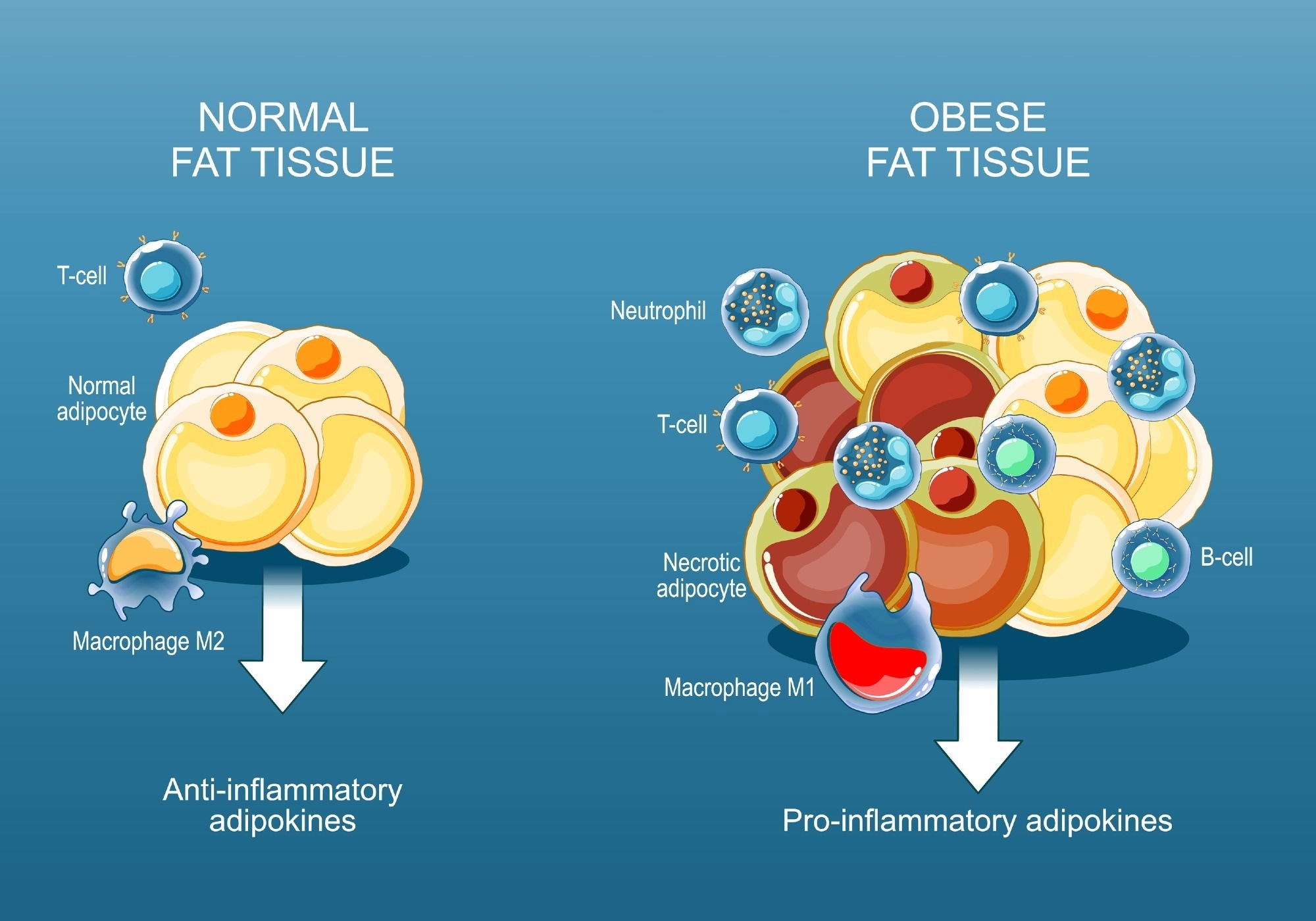 Image Credit: Designua / Shutterstock.com
Susceptibility to obesity-related metabolic dysfunction can begin before birth. For example, fetuses developing in an obesogenic environment characterized by maternal excess nutrient intake and gestational inflammation may undergo epigenetic alterations during their development that increase their risk of obesity and metabolic dysfunction later in life.3
Prenatal undernutrition followed by an energy-rich postnatal environment may also increase susceptibility. Animal studies support a connection with later adipose and liver inflammation; however, the corresponding mechanisms in humans remain incompletely established.4
Other environmental factors that can influence obesity risk include socioeconomic disadvantage and chronic psychological stress, which can affect food access, eating behavior, and neuroendocrine regulation. Gut dysbiosis, an alteration in the composition or function of intestinal microorganisms, may also contribute by altering microbial composition and function, including short-chain fatty acid (SCFA) production. Impaired intestinal barrier function can increase exposure to bacterial lipopolysaccharide, activating inflammatory signaling through Toll-like receptor 4 (TLR4).2,3
Once established, metaflammation can contribute to systemic organ dysfunction, affecting the cardiovascular system, liver, muscle, pancreas, brain, and reproductive organs. People with obesity have increased risks of conditions including non-alcoholic fatty liver disease (NAFLD), osteoarthritis, and polycystic ovary syndrome (PCOS).
Obesity-associated neuroinflammation is also being studied in relation to cognitive impairment and neurodegenerative disease. These associations involve multiple mechanisms, and inflammation does not explain all obesity-related complications.3
How does obesity lead to chronic inflammation and cancer?
Shared role in aging
Metaflammation and inflammaging are closely related biological processes characterized by persistent, low-grade inflammation that contributes to chronic disease. Metaflammation is associated with nutrient excess and metabolic dysfunction, whereas inflammaging describes chronic, low-grade inflammation that develops during aging and is associated with frailty, disability, and an increased risk of age-related diseases.1,5
Both metaflammation and inflammaging involve persistent inflammatory signaling that differs from an acute, protective inflammatory response following injury or infection. Aging also promotes immunosenescence, age-related changes in immune function, and cellular senescence, a state of stable growth arrest in which cells can release inflammatory mediators. These changes can disrupt the balance between pro-inflammatory and immunoregulatory pathways, thereby sustaining chronic inflammation.5
These processes share several underlying mechanisms, including oxidative stress, mitochondrial dysfunction, persistent cytokine production, and immune dysregulation, all of which can impair tissue repair and metabolic homeostasis. These overlapping pathways support the study of anti-inflammatory interventions in metabolic and age-related diseases. Benefits in selected diseases do not establish that treating metaflammation slows human aging or extends lifespan.1,3,5
One of the most effective strategies to reduce obesity-associated metaflammation is weight loss, which can be achieved through lifestyle changes, medications, or surgical intervention1. Weight loss of approximately 5% can improve insulin sensitivity and other metabolic outcomes; these benefits can occur without measurable reductions in adipose tissue inflammation. In a clinical study discussed in the review, progressive weight loss of approximately 11-16% reduced systemic and adipose tissue inflammation. These percentages describe study findings and should not be interpreted as universal treatment thresholds.1
Limiting highly processed foods, increasing fresh fruits and vegetables, whole grains, and lean protein, and limiting refined sugars can support weight management and metabolic health.1 Consuming foods rich in fermentable fibers and prebiotics may improve gut microbial function and intestinal barrier integrity while reducing low-grade inflammation, though responses vary among individuals.3
Researchers have studied glucose-lowering medications like metformin, glucagon-like peptide-1 (GLP-1) receptor agonists (RAs), sodium-glucose cotransporter-2 (SGLT-2) inhibitors, and insulin for anti-inflammatory effects alongside their metabolic actions. These treatments affect body weight differently, as GLP-1 RAs and SGLT-2 inhibitors can promote weight loss, while insulin can promote weight gain.1
Human studies have reported inconsistent changes in inflammatory markers, and animal-model findings do not always translate into clinical benefits. It remains difficult to distinguish direct anti-inflammatory actions from effects mediated by weight loss or improved glucose control.1
Researchers are also investigating anti-inflammatory therapeutics for their potential to restore adipose tissue homeostasis by reducing inflammation, improving adipokine balance, and supporting adipose tissue remodeling. Other investigational treatments, such as fecal microbiota transplantation and therapies targeting bile acid signaling, have also been proposed. Evidence remains insufficient to establish these approaches as routine treatments for obesity-associated metaflammation.3
Emerging therapeutic paradigms should complement, rather than substitute, well-established interventions focused on energy balance, nutrition, and lifestyle modification.3
References
- Schleh, M. W., Caslin, H. L., Garcia, J. N., et al. (2023). Metaflammation in obesity and its therapeutic targeting. Science Translational Medicine 15(723). DOI: 10.1126/scitranslmed.adf9382. https://www.science.org/doi/10.1126/scitranslmed.adf9382
- Mukherjee, S., Kundu, R., & Vidaković, M. (2025). Editorial: Metaflammation in obesity and diabetes. Frontiers in Endocrinology 15. DOI: 10.3389/fendo.2024.1540999. https://www.frontiersin.org/journals/endocrinology/articles/10.3389/fendo.2024.1540999/full
- Crasan, I., Tanase, M., Delia, C. E., et al. (2025). Metaflammation’s Role in Systemic Dysfunction in Obesity: A Comprehensive Review. International Journal of Molecular Sciences 26(21). DOI: 10.3390/ijms262110445. https://www.mdpi.com/1422-0067/26/21/10445
- Itoh, H., Ueda, M., Suzuki, M., & Kohmura-Kobayashi, Y. (2022). Developmental origins of metaflammation: A bridge to the future between the DOHaD theory and evolutionary biology. Frontiers in Endocrinology 13. DOI: 10.3389/fendo.2022.839436. https://www.frontiersin.org/journals/endocrinology/articles/10.3389/fendo.2022.839436/full
- Andonian, B. J., Hippensteel, J. A., Abuabara, K., et al. (2025). Inflammation and aging-related disease: A transdisciplinary inflammaging framework. GeroScience 47(1); 515-542. DOI: 10.1007/s11357-024-01364-0. https://link.springer.com/article/10.1007/s11357-024-01364-0
Further Reading
Last Updated: Oct 29, 2026
 New global definition changes how childhood obesity is identified