Introduction
Bone density and musculoskeletal remodeling
Vascular response and hemodynamic health
Neuromuscular adaptation and chronic pain relief
Clinical protocols, contraindications and safety parameters
Conclusion
References
Further reading
Can standing on a vibrating platform influence bone strength, blood flow, and pain? Researchers are examining how the body responds and which effects translate into clinical benefits.
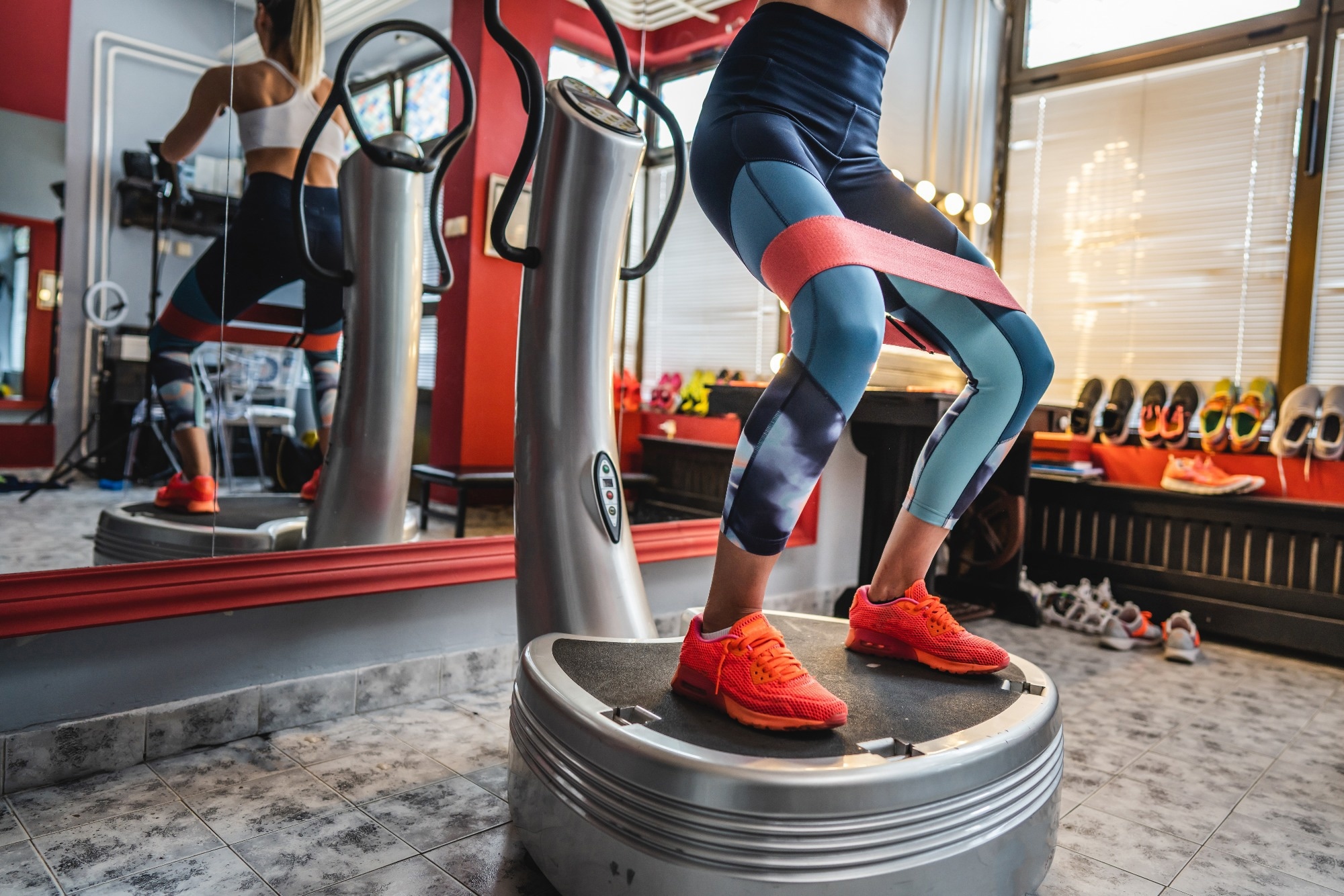 Image Credit: Miljan Zivkovic / Shutterstock.com
Introduction
Whole-body vibration (WBV) is a nonpharmacological intervention in which a platform generates mechanical vibrations transmitted through the body. Mechanical strain may promote bone formation, while vibration stimulates reflex muscle activity through mechanisms that vary with vibration parameters.
Researchers have investigated the effects of WBV in postmenopausal osteoporosis and chronic musculoskeletal pain, and studies have also examined neuromuscular function, balance, and vascular health. Reported benefits include changes in bone mineral density (BMD), muscle strength, balance, and pain.
At the same time, recent studies aim to assess the influence of this form of therapy on peripheral blood circulation and vascular function. However, substantial differences in vibration frequency, amplitude, duration, positioning, and platform design make it difficult to establish standardized therapeutic protocols.1,2,3,4
Bone density and musculoskeletal remodeling
Bone health is a principal area of WBV research, particularly in postmenopausal osteoporosis. After menopause, declining estrogen levels can lead to bone demineralization, low BMD, and deterioration of the bone structure.
Reduced muscle strength, impaired balance, and increased fall risk may further increase fracture risk. WBV has been investigated as a relatively low-impact intervention that may influence both skeletal and neuromuscular function.2,5
Experimental evidence provides a biological rationale for vibration-induced bone remodeling. Animal studies have observed that certain vibration frequencies stimulate osteoblast division and inhibit bone resorption. One experiment reported that 45-Hz vibration was particularly effective at stimulating osteoblast activity. Importantly, these findings come primarily from experimental models and cannot be extrapolated directly to clinical outcomes in humans.2
Nevertheless, several human studies have reported increases in BMD or reduced bone loss. In one study, 30-Hz WBV administered twice daily for 10 minutes over 12 months was associated with reduced bone loss at the spine and femoral neck.
Other studies reported increases in lumbar, femoral neck, or hip BMD following interventions lasting several months. One six-month program using 35-40 Hz vibration with progressively increased exercise produced a 0.93% increase in hip BMD.
WBV may also improve muscular strength and neuromuscular coordination, potentially reducing factors associated with falls and fractures. A proposed randomized controlled trial in older women with osteoporosis combines WBV with multicomponent training to examine effects on fall risk, strength, balance, functional capacity, and quality of life. The comparison with multicomponent training alone is intended to determine whether vibration provides additional benefits.2,5
Importantly, the evidence does not establish WBV as a replacement for resistance exercise or pharmacological treatment of osteoporosis. Results across studies are inconsistent, and the optimal vibration frequency and treatment parameters remain uncertain.
WBV is better characterized as a potential adjunct to established strategies for maintaining skeletal and muscular health. Changes in BMD or balance alone do not establish that WBV prevents fractures.2,5
What to know about vibration plates
Vascular response and hemodynamic health
Vascular function is another emerging area of WBV research. Mechanical vibration can induce involuntary muscle contractions that may increase venous return and shear stress on blood vessel walls, the frictional force exerted by flowing blood. Earlier research has reported improved leg blood flow in people with type 2 diabetes following WBV, including a 12-week program using 12–16 Hz vibration, 4-mm amplitude, and 12-20 minutes of exposure.3
These potential effects are particularly relevant to people with peripheral arterial disease (PAD), in whom atherosclerotic narrowing of lower-extremity arteries restricts the ability to increase blood flow during exercise. Exercise-related ischemia can cause intermittent claudication, leg pain during walking due to inadequate blood flow, reduced walking capacity, and impaired mobility and quality of life.
As conventional walking exercise can be challenging for some patients, WBV is being investigated as an alternative or complementary exercise modality. Findings from other populations cannot establish its effectiveness in people with both diabetes and PAD.3
Brachial artery flow-mediated dilation measures how the artery widens in response to increased blood flow, while glycated hemoglobin reflects longer-term glucose control. Previous studies have also reported effects on arterial function and arterial stiffness, though its proposed benefits in people with type 2 diabetes (T2D) and PAD remain to be established.3
Neuromuscular adaptation and chronic pain relief
WBV can induce reflex skeletal muscle contractions, though the tonic vibration reflex (TVR) does not explain every response. The TVR involves activation of muscle spindle sensory fibers and spinal pathways that stimulate alpha motor neurons. The reflex activated during WBV varies with the vibration frequency and other exposure characteristics.4
In one study investigating whether high-frequency WBV activates the TVR in seven healthy, recreationally active young men, 100-150 Hz vibration produced a reflex response consistent with TVR. In contrast, 30–40 Hz WBV produced a different, longer-latency muscular response. These findings demonstrate that vibration frequency affects the reflex response; however, they do not demonstrate improvements in muscle strength or recovery.4
Neuromuscular activation may have practical implications for balance, gait, and fall prevention by improving muscle strength and neuromuscular coordination, though a physiological response during vibration does not itself establish a lasting functional benefit. These outcomes should also be distinguished from faster recovery after acute muscle injury or exercise-induced muscle damage.1,2,4,5
A review of 34 randomized controlled trials involving 1,808 participants found that WBV significantly reduced chronic musculoskeletal pain compared with inactive controls immediately after intervention. Here, “immediately” refers to assessment after the treatment program ended, rather than necessarily after a single session. Inactive controls included usual care, waiting-list groups, or minimal intervention, depending on the trial.
Notably, WBV did not significantly outperform active interventions such as rehabilitation exercise or conventional physiotherapy. Thus, although these findings support considering WBV within rehabilitation programs, they do not demonstrate superiority to established active treatments or prove that adding WBV provides further benefit in every setting.1
The analgesic effect also appears to be predominantly short-term. At follow-up after treatment ended, a small, statistically significant benefit remained compared with inactive controls. Follow-up assessments ranged from two weeks to six months, and no significant advantage over active treatments was detected. Therefore, available evidence remains insufficient to establish clinically meaningful, sustained pain relief after WBV cessation.1
 Image Credit: HenadziPechan / Shutterstock.com
Clinical protocols, contraindications and safety parameters
WBV protocols differ according to frequency, amplitude, duration, rest intervals, platform design, body position, and whether participants remain stationary or exercise during vibration. For example, an osteoporosis protocol proposes using a side-alternating platform with frequency progressively increased from 12.6 to 30 Hz, a 4-mm peak-to-peak amplitude, 60-second vibration periods, and 10-30-second rest intervals. The planned program comprises 24 sessions over eight weeks, with vibration performed after multicomponent training.5
The PAD protocol proposes supervised WBV three times weekly for 12 weeks, with frequency progressing from 15 to 27 Hz and vibration bouts from three to five minutes. Amplitude will increase from 2 to 4 mm, with three bouts per session separated by one-minute rests. These examples illustrate planned progression schemes, though neither protocol establishes that its dosage is effective or optimal.3,5
There is no universally established optimal WBV dosage in the supplied evidence. Frequency alone is insufficient to characterize treatment, while platform movement, vibration amplitude, exposure time, and posture also affect the mechanical stimulus delivered to the body. Clearly reporting these characteristics is necessary for meaningful comparisons between studies.1,2,4
The PAD protocol excludes people with recent cardiovascular events, including myocardial infarction, stroke, or thrombosis, recent vascular surgery, severe symptomatic heart failure, pregnancy, and other conditions for which WBV may be inappropriate. The specified interval for cardiovascular events and vascular surgery is the preceding six months. Potential adverse events to monitor include dizziness, falls, leg tingling, temporary headache, knee pain, muscle fatigue, skin irritation, and delayed-onset muscle soreness (DOMS).3
Safety reporting remains incomplete, as many trials have not reported safety data. Meanwhile, six trials have reported adverse events affecting 25 participants, including dizziness, headache, orthostatic hypotension, and musculoskeletal pain. These reporting gaps prevent a reliable estimate of adverse-event frequency and limit conclusions about overall safety.1
Conclusion
WBV may serve as a low-impact adjunct to conventional exercise and rehabilitation, with the potential to reduce short-term pain. Future randomized trials are needed to compare clearly specified protocols, report adverse events consistently, and clarify which patient populations and clinical outcomes are most likely to benefit from WBV.1,2,3,4,5
References
- Montebello, T. R., de Oliveira, R. G., de Campos Pessoa, A. L., et al. (2026). Effects of whole-body vibration therapy on chronic musculoskeletal pain: a systematic review and meta-analysis of randomized controlled trials. European Journal of Integrative Medicine 86. DOI: 10.1016/j.eujim.2026.102708. https://www.sciencedirect.com/science/article/pii/S1876382026000892
- Weber-Rajek, M., Mieszkowski, J., Niespodziński, B., & Ciechanowska, K. (2015). Whole-body vibration exercise in postmenopausal osteoporosis. Przegląd Menopauzalny 14(1); 41-47. DOI: 10.5114/pm.2015.48679. https://www.termedia.pl/Whole-body-vibration-exercise-in-postmenopausal-osteoporosis,4,24444,1,1.html
- Nantakool, S., Chuatrakoon, B., Derraik, J. G. B., & Gusso, S. (2026). Whole-body vibration training on functional capacity, vascular function, and glycemic control in individuals with type 2 diabetes and peripheral arterial disease: Protocol for a randomized controlled trial. Frontiers in Endocrinology 17. DOI: 10.3389/fendo.2026.1734560. https://www.frontiersin.org/journals/endocrinology/articles/10.3389/fendo.2026.1734560/full
- Kalaoğlu, E., Bucak, Ö. F., Kökçe, M., et al. (2023). High-frequency whole-body vibration activates tonic vibration reflex. Turkish Journal of Physical Medicine and Rehabilitation, 69(1), 46- 51. DOI: 10.5606/tftrd.2023.10854. https://www.ftrdergisi.com/uploads/pdf/pdf_4420.pdf
- Souto Braz, R. R., Campos, S. L., Villela, D. W., et al. (2022). Effectiveness of whole-body vibration combined with multicomponent training on the risk of falls and quality of life in older women with osteoporosis: Study protocol for a randomized controlled clinical trial. Biology. 11(2). DOI: 10.3390/biology11020266. https://www.mdpi.com/2079-7737/11/2/266
Further Reading
Last Updated: Nov 10, 2026
 Semaglutide helps older adults lose weight without immediate bone loss