A decade-long study of postmenopausal women suggests tea may offer modest bone benefits, while very high coffee intake could raise concerns for hip strength later in life.
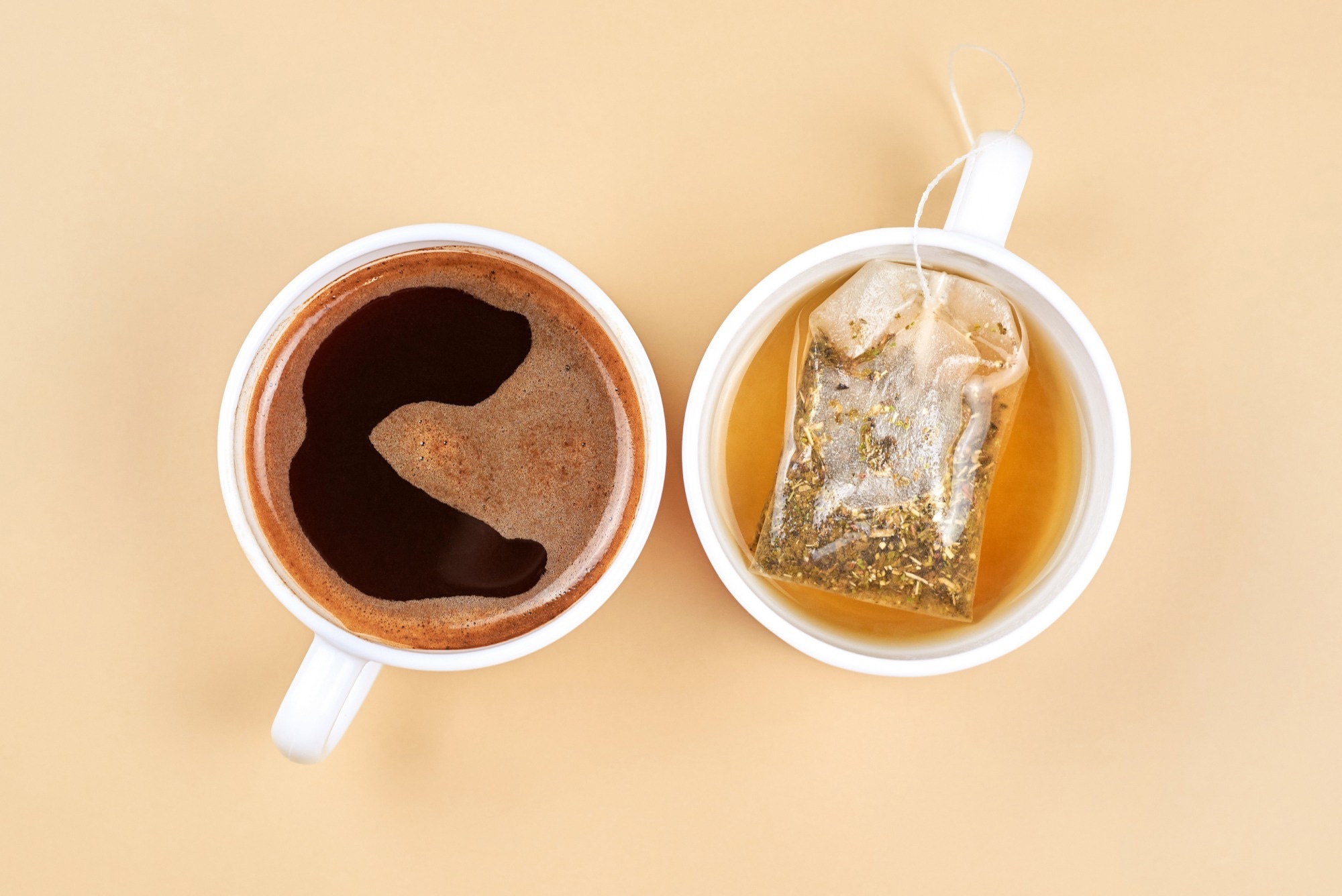 Study: Longitudinal Association of Coffee and Tea Consumption with Bone Mineral Density in Older Women: A 10-Year Repeated-Measures Analysis in the Study of Osteoporotic Fractures. Image Credit: osobystist / Shutterstock.com
Despite high consumption rates, it remains unclear whether tea and coffee intake have an impact on bone health. A recent study published in Nutrients examines the longitudinal associations between coffee and tea consumption and bone mineral density (BMD) in older women.
The global epidemic of osteoporosis
Osteoporosis is a disease characterized by reduced BMD, which subsequently leads to weak, brittle bones and an increased risk of fractures, especially in the hip, spine, and wrist. Osteoporosis is a significant global public health challenge that affects people of all ages, genders, and ethnicities.
Globally, approximately one in three women and one in five men aged 50 years and older experience an osteoporotic fracture. According to the Global Burden of Disease Study 2021, low BMD leads to millions of years of disability and about 477,000 deaths each year, with approximately 71 % of these deaths directly attributable to low bone mineral density.
As compared to men, women are particularly vulnerable to developing osteoporosis due to their lower bone mass and greater likelihood of experiencing more rapid bone loss after menopause. Osteoporotic fractures cause serious health issues and significantly increase health costs and long-term disability.
Coffee and tea are among the most popular drinks worldwide. Both beverages contain caffeine, a compound widely studied for its effects on health, including its impact on bone metabolism. Despite these studies, the effect of coffee or tea intake on BMD remains unclear.
Assessing the effect of tea and coffee consumption on bone health
In the current study, researchers assess the effects of tea and coffee intake on bone health using repeated-measures data from the Study of Osteoporotic Fractures (SOF), a long-term multicenter study. The SOF cohort monitored a total of 9,704 women aged 65 years and older for approximately 20 years, with all patients seen by study clinicians every two years.
BMD, as well as coffee and tea intake data, were collected from study participants at visits two, four, five, and six over a total period of 10 years. Other visits were excluded due to missing data, except for visits eight and nine, which were used for the sensitivity analyses.
All study participants completed a questionnaire on coffee and tea intake. Femoral neck and total hip bone density were measured at visits two, four, five, and six, with visit six considered the primary endpoint.
Associations between beverage intake and bone density were analyzed using both minimally and fully adjusted linear mixed-effects models. Subgroup analyses were conducted to determine whether the results differed by participant characteristics, using interaction terms in the models.
Associations between coffee, tea, and bone density
After exclusions for deaths and missing data, the final analysis included 24,638 observations. The average follow-up period was about eight years.
Over 10 years, bone density slightly decreased, with femoral neck BMD declining from 0.65 to 0.62 g/cm2, whereas total hip BMD was reduced from 0.76 to 0.73 g/cm2. During this period, the mean age of the study cohort increased from 73 to 80 years, whereas the BMI remained at approximately 26. Comorbidity scores rose with age, whereas the prevalence of smoking declined among the entire cohort.
Non-coffee and non-tea drinkers were more likely to consume more calcium, while coffee drinkers reported slightly less protein and higher alcohol intake. Tea drinkers reported slightly higher protein intake and lower alcohol intake than non-tea drinkers.
Physical activity was similar across groups. About 15 % of study participants were prescribed oral estrogen, with less than 3 % using steroid pills at baseline.
Tea consumption was associated with a small, statistically significant but clinically modest increase in total hip BMD at visit six, with this association persisting after adjusting for other factors. The observed difference was approximately 0.003 g/cm2, which the authors note may be below thresholds typically considered clinically meaningful at the individual level. Drinking two to three cups of coffee every day showed little evidence of affecting bone density; however, spline analyses suggested that drinking five or more cups of coffee per day may be associated with lower BMD. Tea intake exhibited a weak but positive relationship with total hip BMD.
The effect of coffee on femoral neck BMD was more positive for those who drank less alcohol, whereas the effect of tea was greater for obese women in interaction analyses. Sensitivity analyses using extended follow-up data indicated that high coffee intake was associated with lower femoral neck BMD at visit nine. In contrast, the association between tea intake and higher total hip BMD was observed at visits six and eight but not at visit nine.
Advanced modeling confirmed that while the primary models showed no overall statistically significant association between coffee intake and BMD, consuming over five cups of coffee daily was suggestive of lower BMD. In extended sensitivity analyses, the relationship between tea and total hip BMD was generally positive but not strictly linear.
Tea shows modest promise as bones age
Tea consumption correlates with slightly higher total hip BMD in older postmenopausal women. Although no overall association between coffee consumption and BMD was observed throughout the 10-year follow-up period, consuming more than five cups of coffee daily may be associated with lower BMD, based on suggestive nonlinear patterns.
Coffee negatively affected femoral neck BMD in women with higher alcohol intake, whereas tea was particularly beneficial among women with obesity in subgroup analyses that should be considered hypothesis-generating. Taken together, these findings highlight the importance of personalized dietary advice to promote bone health in aging women, while acknowledging that the study population consisted primarily of White older women in the United States, which may limit the generalizability of the findings to more diverse populations.
Download your PDF copy now!
Journal reference:
- Liu, R. Y. & Liu, E. (2025) Longitudinal Association of Coffee and Tea Consumption with Bone Mineral Density in Older Women: A 10-Year Repeated-Measures Analysis in the Study of Osteoporotic Fractures. Nutrients, 17(23). DOI: 10.3390/nu17233660. https://doi.org/10.3390/nu17233660.
 Low spinal bone density may predict faster brain aging