Daily prunes shifted some bone biomarkers in older men, but after 12 months, they did not deliver measurable gains in bone mineral density beyond standard calcium and vitamin D3 support.
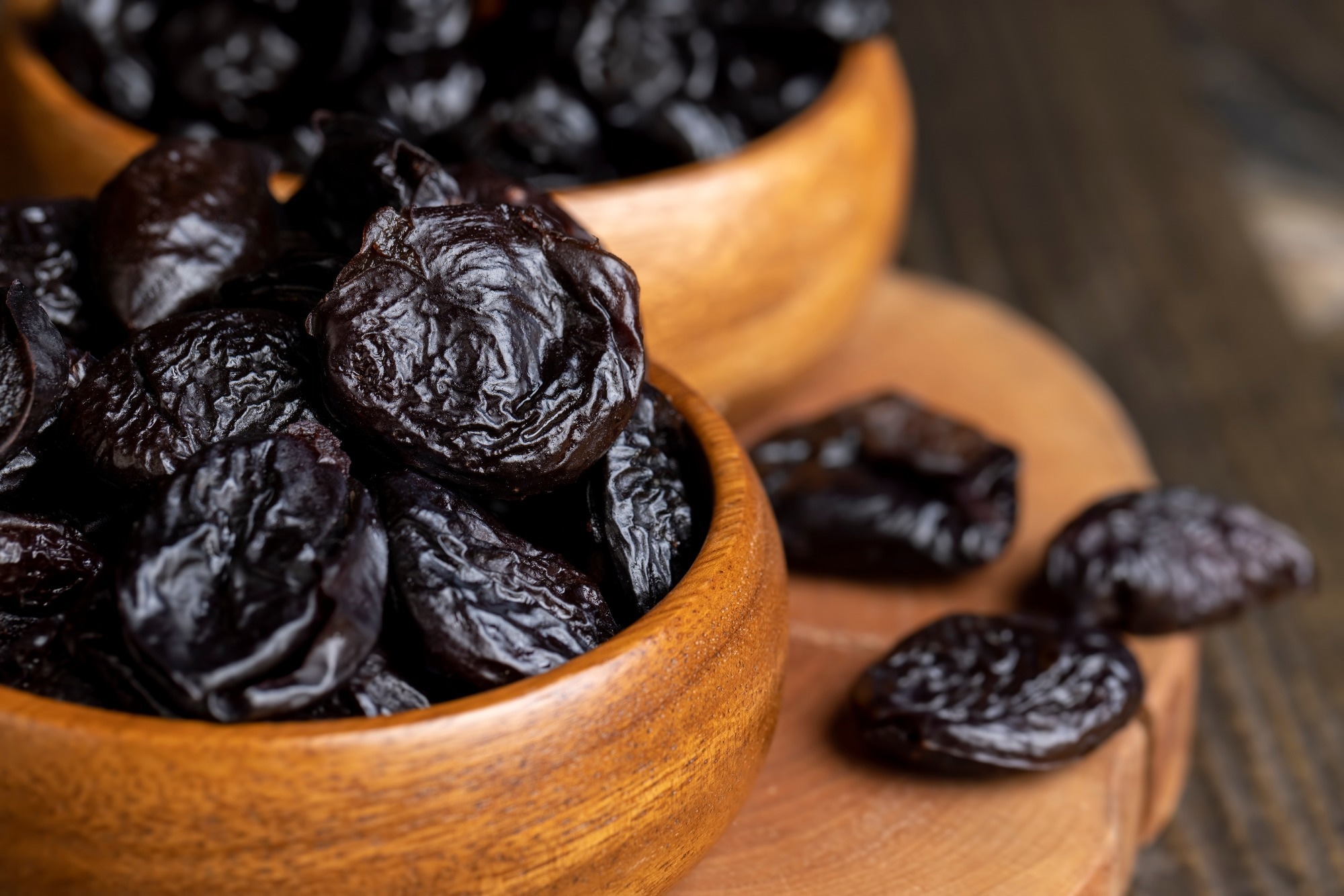
Study: Prune Consumption and Bone Health in Older Men: A One-Year Randomized Controlled Trial. Image Credit: rsooll / Shutterstock
In a recent study published in the journal Nutrients, researchers assessed the effects of 12 months of prune supplementation on bone health in older men with osteopenia.
Osteoporosis is characterized by reductions in bone quality and bone mineral density (BMD), elevating the risk of fractures, morbidity, and mortality. Over 53 million people aged ≥50 years or older have low bone mass in the United States (US). Of these, 10 million have osteoporosis, including two million males. Males lose about 0.5% to 1% of their bone mass each year after age 60.
Although pharmacological therapies are available for osteoporosis, they have poor adherence and adverse effects, including musculoskeletal pain, urinary and skin infections, and gastrointestinal distress. As such, alternative or complementary therapeutic approaches may be needed. Studies suggest that some vegetables and fruits contain polyphenols that are bone- and cardiovascular-protective.
In particular, prunes exhibit a high antioxidant capacity, with studies reporting positive physiological effects, including on bone metabolism. The bone-protective effects of prunes have been demonstrated in animal models, with positive findings reported in humans. However, studies on bone health and prune supplementation specifically in male populations are scarce.
About the Study
In the present study, researchers investigated the effects of prune consumption on bone health in older men with osteopenia. Eligible participants were men aged 55–80 years with a lumbar spine BMD T-score of −0.1 to −2.5 standard deviations below the mean, a range that included men with osteopenia and men with negative T-scores that did not meet osteopenia criteria. Men taking endocrine/neuroactive drugs or other agents that influence bone metabolism, and those who had recently initiated exercise programs that affect bone, were excluded.
Individuals with renal disease, diabetes, cardiovascular disease, cancer, metabolic bone disease, liver disease, gastrointestinal disease, respiratory disease, or any other chronic disease were also excluded. Participants were randomized to consume 50 g of prunes, 100 g of prunes, or a multivitamin (control; no prunes) daily for one year. All groups were supplemented with 800 IU vitamin D3 and 450 mg elemental calcium throughout the study period.
Compliance was self-reported using a daily dosing calendar. Participants visited the study laboratory at baseline and at three, six, and 12 months, when fasting blood samples were collected, anthropometrics were measured, and whole-body and lumbar spine dual-energy X-ray absorptiometry (DXA) scans were performed. A three-day food record was used to evaluate dietary intake at these time points.
Physical activity and sleep were determined using the Five-City Project Physical Activity Questionnaire at study visits. Blood pressure (BP) and resting heart rate (RHR) were recorded. C-reactive protein (CRP) and bone biomarkers, such as osteocalcin, osteoprotegerin (OPG), tartrate-resistant acid phosphatase 5b (TRAP5b), and sclerostin (SOST), were measured using enzyme-linked immunosorbent assays (ELISA).
Findings
Sixty-two men were enrolled, and 59 completed the 12-month study protocol. The mean age of participants was 67 years. At baseline, controls had significantly higher weight and waist circumference than the 100 g prune group and significantly higher body mass index (BMI) than both prune groups. There was a significant decrease in RHR in the 50 g prune group.
Systolic BP showed an overall decrease over time in all groups, but this was not reported as a prune-specific cardiovascular effect. Physical activity and sleep did not differ between groups and did not significantly change over time. Likewise, total BMD and lumbar BMD did not differ between groups, and there were no significant changes over time. Controls had significantly higher CRP than the 50 g prune group throughout the study, but CRP did not change significantly over time.
OPG decreased significantly over time in all groups, with the reduction greater in controls than in the prune groups. Osteocalcin did not differ between groups, and there were no significant temporal changes. SOST and TRAP5b showed significant increases over time across all groups. Notably, controls had a significantly greater increase over time in TRAP5b than the 100 g prune group, although these secondary biomarker differences did not correspond to detectable BMD changes and should be considered exploratory.
Conclusions
In sum, one-year prune supplementation did not improve lumbar spine or total BMD in older males. Moreover, supplementation did not help maintain bone density beyond levels attainable with vitamin D3 and elemental calcium. Although BMD did not decline significantly over the study period, this pattern was observed across all groups, including controls, so it cannot be attributed specifically to prune consumption.
The study’s limitations include a small sample size, group imbalance, COVID-19-related disruptions, a broad T-score eligibility range, relatively healthy participants, exclusion of men with major chronic diseases, limited geographic and demographic diversity, potential unmeasured confounding, and the lack of a true placebo arm that did not receive any supplementation, among others. Moreover, because compliance was self-reported, discrepancies may exist between logging forms and actual consumption.
Further, larger-scale, longer-duration research is required to deepen understanding of the impact of prunes on bone health in males.
Download your PDF copy by clicking here.
Journal reference:
- Ormsbee LT, Akhavan NS, Munoz J, et al. (2026). Prune Consumption and Bone Health in Older Men: A One-Year Randomized Controlled Trial. Nutrients, 18(12), 1854. DOI: 10.3390/nu18121854, https://www.mdpi.com/2072-6643/18/12/1854
 Targeting the STING pathway could help prevent osteoporosis