A placebo-controlled trial tested whether correcting vitamin D insufficiency could ease persistent endometriosis symptoms in women already receiving hormonal therapy, with findings that challenge hopes for a simple add-on treatment.
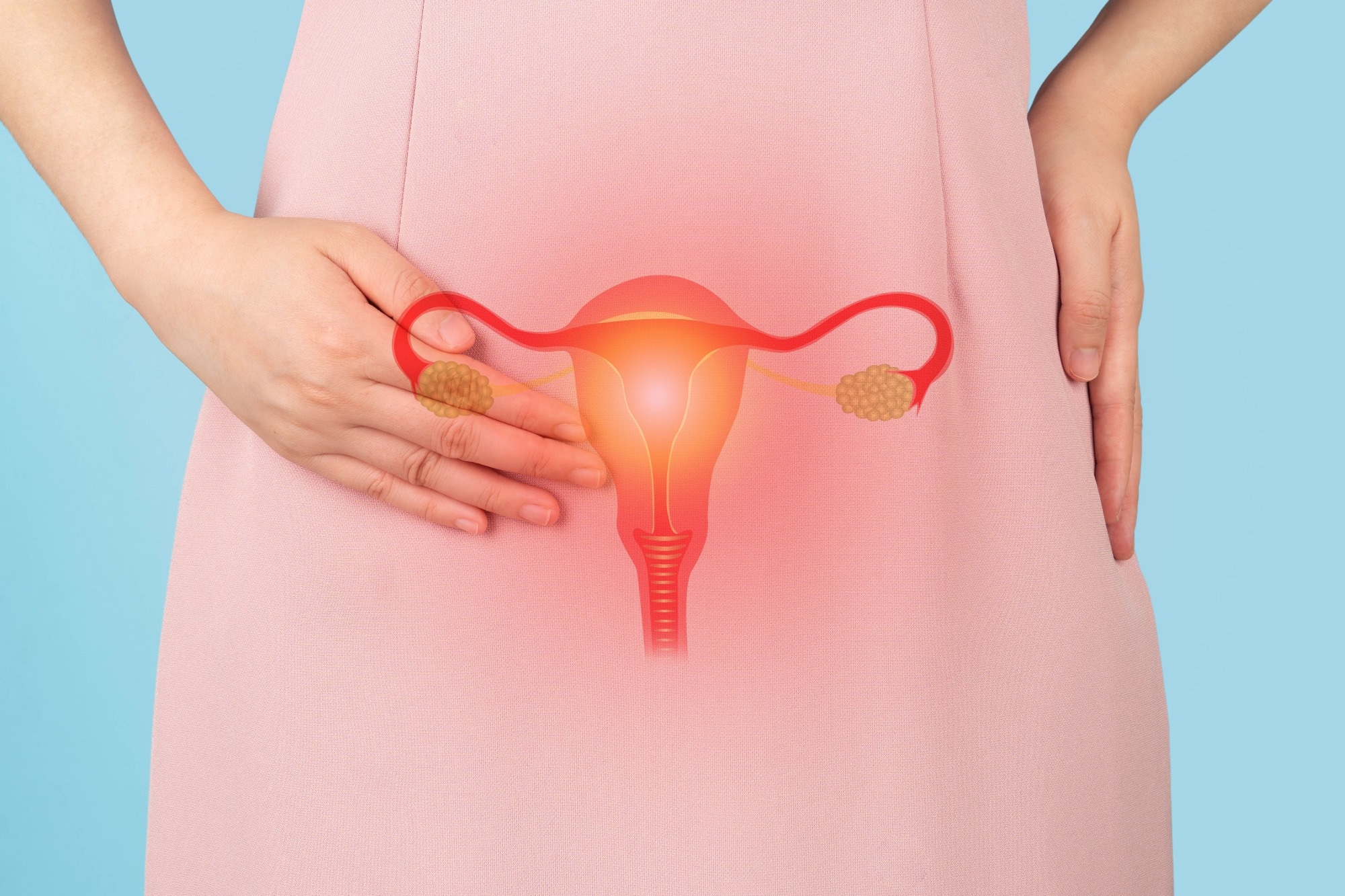
Study: Adjunctive vitamin D supplementation in women receiving dienogest therapy for endometriosis: a randomized controlled trial. Image Credit: Orawan Pattarawimonchai / Shutterstock
In a recent randomized controlled trial accepted for publication in the journal Scientific Reports, researchers explored vitamin D supplementation as an adjunct to dienogest (Verogest) therapy in women with endometriosis. After eight weeks of the trial, participants receiving vitamin D had numerically lower adjusted mean scores on the pain measures than those receiving a placebo. Nevertheless, the differences were neither statistically significant nor clinically meaningful, leaving the therapeutic role of vitamin D to be clarified in longer-term clinical trials.
Endometriosis affects millions of women worldwide and remains one of the leading causes of infertility. Individuals living with this estrogen-dependent condition experience debilitating pelvic pain due to the growth of endometrial-like glands and stroma beyond the uterine cavity. These lesions are most commonly found in the pelvic peritoneum and ovaries but can also occur at extra-pelvic sites such as the bowel and diaphragm and are associated with local inflammation, immune dysregulation, and chronic pain.
Owing to its effects on immune regulation, vitamin D has been proposed as a potential therapeutic option for people with endometriosis. In animal models, vitamin D reduced the area of endometriotic lesions and decreased fibrosis. In cultured human endometrial stromal cells, vitamin D3 also suppressed interleukin-1β and tumor necrosis factor-α responses. Nevertheless, clinical trials have shown mixed results. These preclinical observations have not yet translated into consistent clinical benefits for patients.
About the Study
In the present single-center, randomized, double-blind, placebo-controlled trial, researchers investigated whether vitamin D supplementation could reduce pain and improve quality of life (QoL) among women receiving dienogest therapy for endometriosis during 2023-2024.
The study comprised 66 married and sexually active women with gynecologist-confirmed symptomatic endometriosis, defined by a Visual Analog Scale score of at least 4, and vitamin D insufficiency, defined as serum 25-hydroxyvitamin D of less than 30 ng per mL. The diagnosis followed the European Society of Human Reproduction and Embryology (ESHRE) 2022 guidelines, based on a combination of clinical examination, history, and transvaginal ultrasound or magnetic resonance imaging (MRI), or previous laparoscopic confirmation. None had used vitamin D supplements in the previous three months or had comorbidities such as hypertension, thyroid disorders, diabetes, Cushing's syndrome, or hyperprolactinemia.
The team randomized participants in a 1:1 ratio to receive vitamin D supplementation (n = 33, intervention group, 4,000 IU every other day) or placebo (n = 33, control group) for 8 weeks. All participants had received a stable regimen of 2.0 mg dienogest daily for at least three months before study initiation and continued the therapy during the trial.
Before and after the study intervention, the researchers used the Visual Analog Scale (VAS) to measure pain severity and the Endometriosis Health Profile-30 (EHP-30) to assess QoL as a secondary outcome. They assessed changes in EHP-30 domains, including pain, control and powerlessness, social support, emotional well-being, and self-image. In addition, participants filled out the Painful Endometriosis Symptoms questionnaire (ENDOPAIN-4D) as another primary measure of pain symptoms. They also completed sociodemographic questionnaires to provide data on age, educational attainment, occupation, income, and obstetric history.
Results and Discussion
Baseline demographic and clinical characteristics showed several imbalances between the vitamin D and placebo groups. The largest difference was in age, with a standardized mean difference of 0.7. The intervention group participants were younger on average (30.7 versus 35.3 years), while the mean body mass index (BMI) was comparable between the groups (24.4 versus 24.7).
After eight weeks of the trial, the adjusted post-intervention ENDOPAIN-4D scores for usual pain averaged 38.8 and 50.1 among the intervention and placebo recipients, respectively, with an adjusted mean difference (AMD) of −11.3, a 95% confidence interval (CI) of −26.2 to 3.5, and p = 0.136. Regarding worst pain, participants receiving vitamin D averaged 23.6, whereas those receiving placebo averaged 25.6, with an AMD of −2.0, a 95% CI of −9.0 to 4.9, and p = 0.492. The adjusted VAS scores also yielded similar results, with lower scores reported by treated individuals compared with those receiving placebo (5.8 versus 6.2), with an AMD of −0.3, a 95% CI of −1.3 to 0.5, and p = 0.113.
Although participants receiving vitamin D reported numerically lower pain scores, none of the adjusted between-group differences in pain or QoL outcomes were statistically significant. No significant differences were observed across the five EHP-30 domains, and the adjusted VAS and EHP-30 differences remained below the reported thresholds for clinical importance. These findings do not establish a pain-reduction benefit from vitamin D supplementation.
The sensitivity analysis showed that adjusting for baseline sociodemographic differences did not materially alter the null findings. Meanwhile, both study treatments appeared generally well-tolerated, with no serious adverse events reported during the trial. Across the trial population, a few participants experienced mild events, including nausea, dizziness, fatigue, constipation, and diarrhea.
The authors proposed that background dienogest therapy may have created a “floor effect,” suppressing symptoms before vitamin D was added, thereby masking any potential benefit of vitamin D. In addition, the researchers did not repeat serum 25-hydroxyvitamin D measurements after the intervention to verify whether the supplementation achieved biochemical repletion among the study participants. If some individuals remained below the target vitamin D level despite supplementation, that could have influenced the results.
Generalizability was also limited by the small, single-center convenience sample, the inclusion of only married, sexually active women, the lack of stratification by endometriosis subtype, and the lack of control for diet and ultraviolet exposure.
Conclusions
The findings indicate that eight weeks of adjunctive vitamin D did not produce statistically or clinically significant improvements in pain or QoL among women receiving stable dienogest therapy compared with placebo. The findings, therefore, do not support the routine use of short-term vitamin D supplementation as an adjunct to dienogest. However, larger trials with longer follow-ups are required to determine whether longer treatment or specific endometriosis phenotypes might respond differently.
In future studies, researchers should include post-intervention measurements of serum vitamin D levels, evaluate individualized dosing strategies, and examine outcomes across different endometriosis subtypes for a more comprehensive assessment. Since this study evaluated vitamin D as an add-on treatment, it cannot establish whether vitamin D is effective as a standalone therapy.
Journal reference:
- Shabani, F., Hajizadeh, K., Hesami, M. et al. (2026). Adjunctive vitamin D supplementation in women receiving dienogest therapy for endometriosis: a randomized controlled trial. Scientific Reports. DOI: 10.1038/s41598-026-62548-6. https://www.nature.com/articles/s41598-026-62548-6
 Trial finds prunes do not outperform calcium and vitamin D for male bone density