A sweeping analysis of 1.5 million cancer cases shows that excess body weight may shape cancer risk more broadly than previously recognized, with risks varying by cancer type, sex, and region.

Study: Adiposity and cancer: systematic review and meta-analysis. Image Credit: Piyawat Nandeenopparit / Shutterstock
In a recent systematic review and meta-analysis published in the journal Nature Metabolism, researchers synthesized decades of peer-reviewed literature to re-evaluate the global relationship between body mass index (BMI) and cancer risk.
The analyses pooled data from more than 1.5 million documented cancer cases and found that an elevated BMI is positively linked to 19 distinct cancer types, substantially more than the 13 previously recognized by consensus reports. The review further identified notable regional and sex-based variations in these risks and found that genetic evidence generally supported many of the observational associations, although not uniformly across all cancer types.
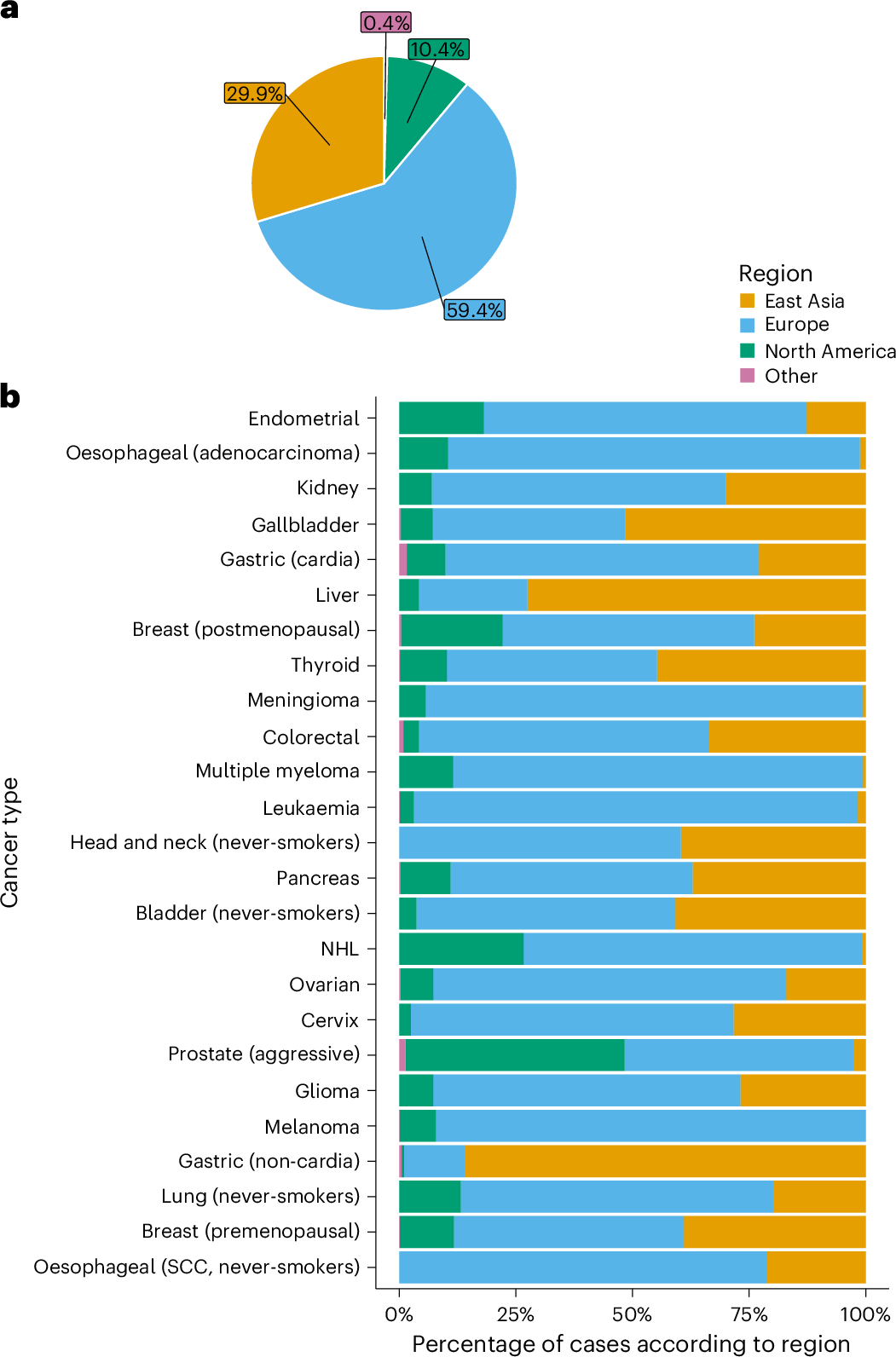
a, Sum of the 25 types of incident cancers. b, Individual cancers. Estimates from pooled studies spanning multiple regions for which country-specific case numbers were not available were excluded from this figure (head and neck). Numbers may not sum because of rounding.
Background
The association between excessive body weight and cancer risk is by no means a novel concept. For years, major health organizations like the World Cancer Research Fund (WCRF) and the International Agency for Research on Cancer (IARC) have warned that carrying excess weight increases the risk of developing at least 13 types of cancer.
However, as global obesity rates continue to demonstrate unprecedented growth, particularly in low- and middle-income countries, researchers emphasize significant gaps in our understanding of how these factors operate biologically.
For example, it remains unclear whether obesity-related cancer risks apply equally across different global populations or if alternative metrics, like waist circumference, offer a clearer picture of the association between adiposity and subsequent cancer risk.
While previous reviews have aimed to address these knowledge gaps, they lacked data from diverse geographic regions (most focused on American and European populations) and did not include data from next-generation genetic cohorts, thereby necessitating a re-evaluation of the variables that best explain these observational relationships.
About the Review
The present review aimed to meet these requirements and inform future weight management and oncological policy by comprehensively synthesizing prospective cohort studies from online scientific repositories (PubMed, EMBASE, and Scopus) from database inception through April 2025.
The review’s final publication set comprised 226 distinct peer-reviewed articles (n = 1,520,512 incident cancer cases) spanning data from 23 countries (6 major geographical locations) and capturing an unprecedented 557 separate BMI-cancer risk associations across 25 common cancer types.
For the meta-analyses, all risk ratios from included publications were standardized to a scale measuring a 5 kg/m² increase in BMI, thereby maintaining statistical uniformity and enabling direct comparisons between previously non-overlapping datasets.
Since most of the datasets were observational (identifying correlations), Mendelian randomization (MR) analyses were used to strengthen causal inference. MR analyses use inherited genetic variants as proxies for lifelong exposure to the variable under investigation (herein, elevated body weight).
Finally, to minimize the impacts of tobacco use (as a residual confounder), smoking-related cancers were evaluated using data from lifelong never-smokers.
Study Findings
The meta-analyses revealed statistically significant evidence linking higher participant BMI to an elevated risk of 19 distinct cancer types, with risk estimates varying nearly 20-fold in magnitude across cancer types. For example, at the highest extreme, the analyses showed that every 5-unit increase in BMI was associated with a 58% increase in endometrial cancer risk (relative risk [RR] = 1.58, 95% confidence interval [CI]: 1.51–1.67) and a 47% increase in esophageal adenocarcinoma risk (RR = 1.47).
Most importantly, the data uncovered positive links for leukemia (RR = 1.09), non-Hodgkin lymphoma (RR = 1.05), bladder cancer (RR = 1.04), and glioma (RR = 1.03), none of which have been previously recognized as malignancies associated with excessive BMI in previous consensus statements.
The authors also reported inverse associations for premenopausal breast cancer, lung cancer among never-smokers, and esophageal squamous cell carcinoma among never-smokers.
The study further identified significant regional disparities in the observed associations between BMI and cancer risk. For instance, postmenopausal breast cancer risks tied to a 5-unit BMI increase were found to show roughly double the excess relative risk in East Asian cohorts (RR = 1.25) compared to their European counterparts (RR = 1.11, p-heterogeneity = 7.6 × 10⁻⁶), highlighting the non-generalizability of results from the latter cohort on the former.
Similarly, sex-based differences were identified, as illustrated in colorectal cancer associations, which were substantially stronger in men (RR = 1.17) than in women (RR = 1.06, p-heterogeneity = 8.9 × 10−¹0). In contrast, the BMI-gallbladder cancer association was stronger in women (RR = 1.33) than in men (RR = 1.13, p-heterogeneity = 9.5 × 10⁻⁵).
Finally, when comparing BMI versus waist circumference as predictors of subsequent cancer risk, the review found that both variables yielded broadly similar risk estimates, although modest differences were observed for some cancer types.
Conclusions
The present review validates previous research indicating the substantial impact of obesity on cancer risk and global cancer burden, while highlighting that past frameworks heavily underrepresented regional risks, particularly in East Asian populations, where differences in hormone therapy use, estrogen exposure, gallstone etiology, tumor subtype patterns, surveillance, or residual confounding may partly explain variation in susceptibility.
Furthermore, the review underscores that major regional limitations persist, with Africa, South Asia, and Central America (among other regions) remaining underrepresented by long-term cancer incidence cohorts even in the present study.
Future research should prioritize diverse, understudied populations to help elucidate a truly equitable understanding of modifiable cancer risk factors.
Download your PDF copy by clicking here.
Journal reference:
- Watts, E. L., Gonzalez-Feliciano, A., Gunter, M. J., Chatterjee, N., & Moore, S. C. (2026). Adiposity and cancer: systematic review and meta-analysis. Nature Metabolism. DOI: 10.1038/s42255-026-01542-8. https://www.nature.com/articles/s42255-026-01542-8
 Is stroke risk higher after a cancer diagnosis?