A new study suggests that clearing symptom-driving nasal viruses could calm allergic inflammation and open a fresh treatment path for millions with allergic rhinitis.
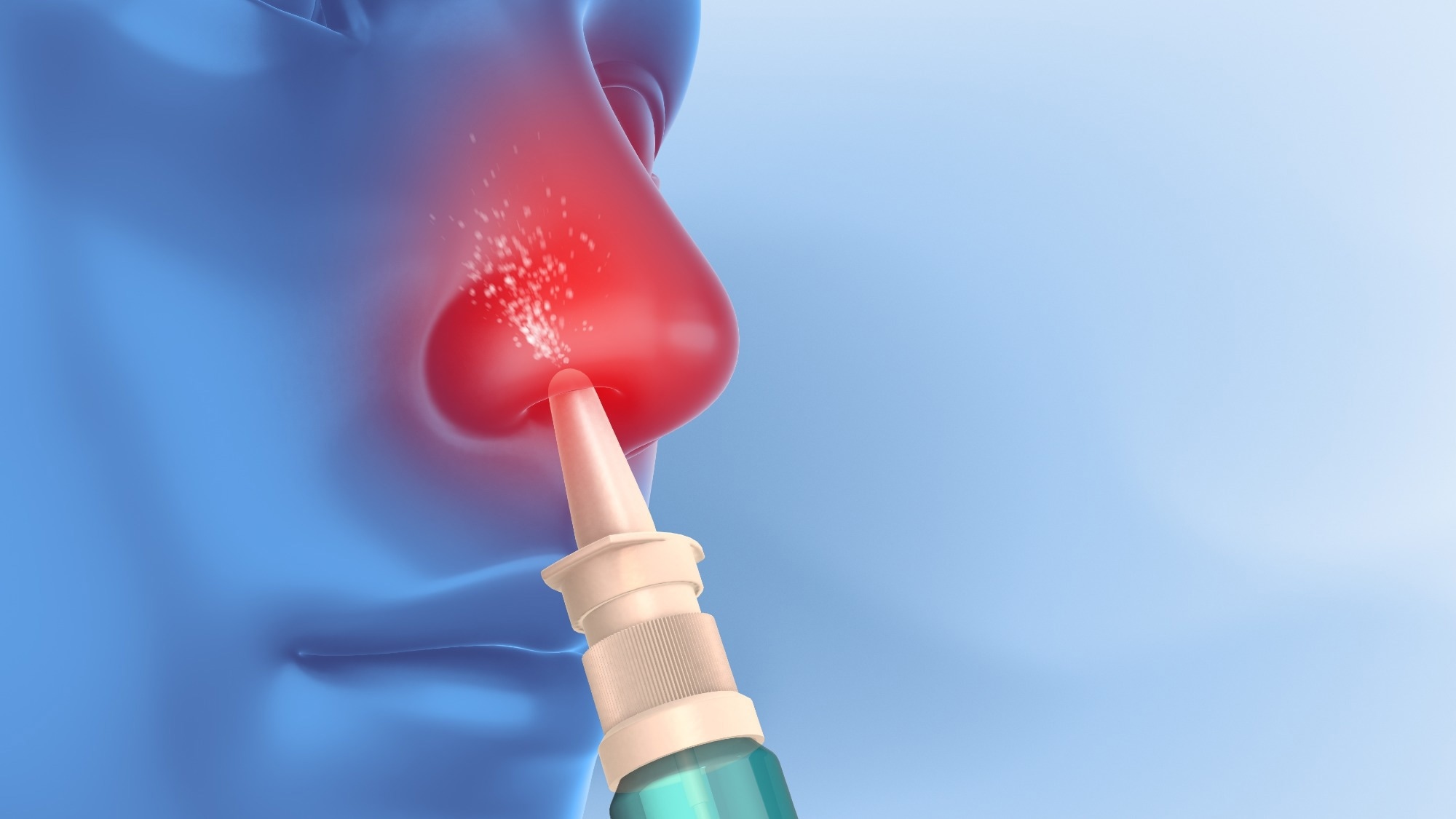
Study: Therapy of allergic rhinitis using ribavirin spray to clear nasal commensal viruses. Image Credit: Cinefootage Visuals / Shutterstock
In a recent study published in the journal Signal Transduction and Targeted Therapy, researchers explored how viruses residing in the nasal cavities contribute to the development of allergic rhinitis (AR). They found that clearing commensal viruses from the nose with intranasal ribavirin drops improved symptoms in mice, while ribavirin spray improved symptoms in patients in a small phase 2 trial, suggesting a role for these viruses in AR development.
Viruses that normally inhabit the nasal cavity without causing overt infection activated innate immunity sensors, triggering the accumulation of type I interferon (IFN)-associated neutrophils. These cells then formed neutrophil extracellular traps (NETs) that appeared to promote AR development.
AR is a common disorder of the upper airways that causes frequent sneezing, nose rubbing, and itching. If left unmanaged, the nasal passages may become obstructed in advanced cases. As a result, such individuals may not sleep well, and their work efficiency may also be reduced.
Scientists are therefore trying to identify biological pathways that drive AR progression and target them to develop new strategies that improve the standard of care. Researchers are particularly trying to investigate whether viruses that occupy the nasal cavity contribute to AR development.
About the study
In the present study, researchers explored mechanisms by which viruses normally inhabiting the nose may promote AR development in mice. They then evaluated the safety and efficacy of ribavirin treatment in 43 AR patients screened between April and May 2024, of whom 42 were randomized.
The team first developed murine models of AR. They then collected nasal lavage fluid (NLF) from these animals to identify viral populations in their nasal cavities. They administered intranasal ribavirin drops daily for seven days to reduce nasal viral abundance and elucidate their role in AR pathophysiology. They then conducted 16S ribosomal RNA amplicon sequencing on the collected NLF samples.
The researchers reintroduced NLF into control mice after ribavirin treatment and, separately, treated AR mice with favipiravir to verify the findings. Single-cell RNA sequencing (scRNA-seq) efforts revealed the effects of the viral commensals on nasal immune cell populations. The team also performed knockout experiments, in which they deleted innate sensors and transcription factors of IFN-related genes, followed by administering IFN-α1b drops.
The researchers then conducted a single-center, phase 2, randomized controlled trial (RCT), the Ribavirin-Spray Therapy for Allergic Rhinitis (R-STAR) study. In this trial, participants received ribavirin or a placebo for 4 weeks. They then evaluated AR symptoms using the total nasal symptom score (TNSS).
The team additionally assessed secondary outcomes using the rhinitis control assessment test (RCAT) scores and the visual analog scale (VAS). They also obtained NLF from the participants to examine cytokine levels and examined serum-specific immunoglobulin E (IgE) levels to identify allergens. They additionally performed metatranscriptomic analysis to identify the most abundant viruses in AR patients.
Results
In murine models, ribavirin administration reduced commensal viral abundance in the nose and improved AR symptoms such as sneezing and scratching. Nasal mucosal samples collected from these animals showed reduced eosinophil counts. These white blood cells often accumulate in allergic inflammation and can contribute to chronic inflammatory reactions and tissue damage in these cases. The production of type I IFN and interleukins (ILs) 4, 5, and 13 was also reduced in NLF, alleviating mucosal pathology.
Among immune cells, neutrophils decreased most significantly in the murine nasal mucosa. In particular, neutrophil populations that upregulate cluster of differentiation 14 (CD14) receptors and IFN-stimulated genes (ISGs) during inflammation decreased following ribavirin therapy.
Reintroducing NLF from controls restored AR symptoms and type II cytokine production after ribavirin, whereas administering favipiravir independently reduced AR symptoms and type II cytokine production, supporting the findings. Knockout of IFN-related genes and innate sensors also alleviated AR symptoms, whereas administering IFN-α1b drops aggravated the symptoms.
The R-STAR study provided early clinical support for the findings. Ribavirin-treated patients demonstrated significantly fewer viral commensals in the nose with improved TNSS, RCAT, and VAS values after four weeks of therapy. Ribavirin therapy also significantly reduced IL-4, 5, 13, and 17A cytokine levels and NET activity, with these cytokines positively correlated with IFN-α and IFN-β in NLF samples.
The treatment also reduced the Betaretrovirus genus and viral sequences classified as the candidate Betaretrovirus species enzootic nasal tumor virus 2 (ENTV-2) and bovine retrovirus CH15 (BoRV CH15) in the samples.
The therapeutic effects were more pronounced in participants with severe symptoms or high nasal commensal virus abundance, and some benefits persisted at 1-year follow-up after the 4-week treatment course.
The team identified house dust mite and dust mite sensitization as the most common allergens. Half of the participants tested positive for them. Three participants required rescue medications, including cetirizine and emedastine, to manage their AR symptoms. There were no grade ≥3 adverse events, serious adverse events, or adverse drug reactions.
Conclusions
The findings uncover a novel mechanism driving AR development and an innovative approach to treating affected individuals.
The results suggest that viruses residing in the nasal cavity can worsen AR symptoms, and that ribavirin may represent a promising investigational therapeutic strategy with potential longer-term benefits.
If validated in further studies, ribavirin could provide an alternative to existing treatments such as glucocorticoid nasal sprays, antihistamines, and allergen immunotherapy by addressing limitations related to treatment-associated side effects and variable long-term efficacy. However, larger multicenter phase 3 trials are needed, nasal viruses may reappear after treatment withdrawal, and the candidate viruses linked to human AR require further causal validation.
The authors also note that ribavirin may affect bacteriophages and the nasal bacterial ecosystem.
Want to read later? Download your PDF copy by clicking here.
Journal reference:
- Zhou, Y., Wang, T., Fan, Y. et al. (2026). Therapy of allergic rhinitis using ribavirin spray to clear nasal commensal viruses. Signal Transduction and Targeted Therapy, 11, 249. DOI: 10.1038/s41392-026-02744-y. https://www.nature.com/articles/s41392-026-02744-y
 Brain MRI surveillance without prophylactic cranial irradiation reduces cognitive failure risk in patients with SCLC