Brief exposure to dark chocolate odor helped fasted men complete more resistance exercise repetitions while reducing hunger, offering early evidence that food-related scents could influence training performance without consuming calories.
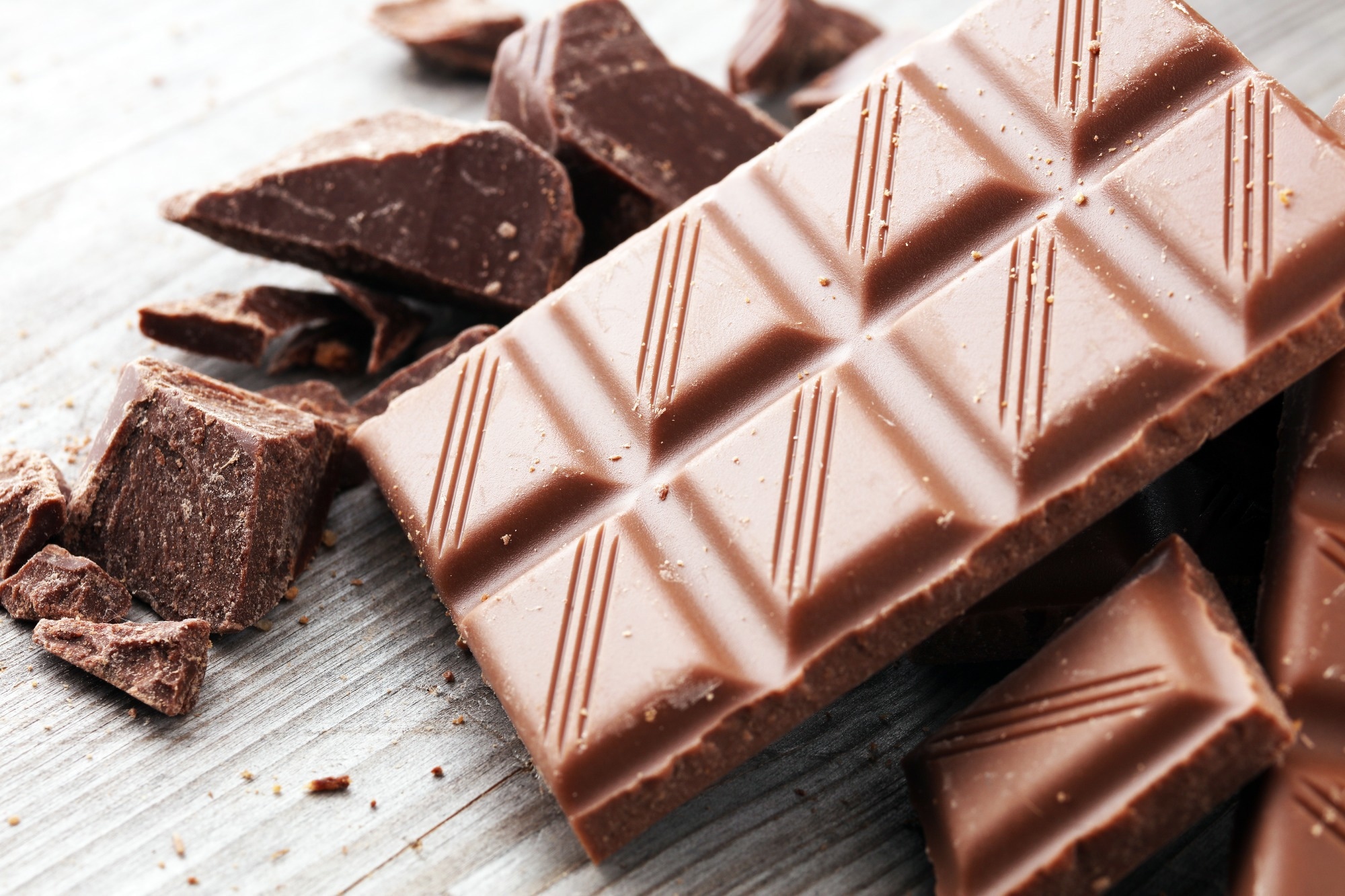 Study: Chocolate odor enhances resistance exercise performance through appetite suppression in the fasted state: an exploratory study. Image credit: beats1/Shutterstock.com
A recent Frontiers in Physiology study investigated whether exposure to chocolate-related odors can alter appetite perception, odor pleasantness, and resistance exercise performance in moderately trained men in a fasted state.
Chocolate odors may influence hunger and exercise performance
Resistance exercise is widely used to build strength and muscle, but training on an empty stomach or while restricting calories can make workouts feel more difficult and reduce performance. While this has traditionally been attributed to reduced energy availability, researchers are increasingly interested in whether the sensation of hunger itself also plays a role.
Previous studies have shown that simply changing how full people feel, without giving them any additional calories, can influence exercise performance. This suggests that appetite may affect training through psychological as well as physiological pathways.
One possible way to influence appetite is through smell. Because the brain's olfactory system is closely linked to regions involved in appetite and emotion, food aromas can alter hunger and eating behavior. Sweet, familiar scents such as milk chocolate have been linked to increased appetite, whereas darker, more bitter chocolate aromas may promote feelings of fullness.
Although researchers have investigated how food odors affect appetite, mood, and physical performance separately, few studies have examined whether these effects are connected. Understanding this relationship could help identify simple, non-food strategies to support athletes who train while fasting or restricting their calorie intake.
Study compared dark, milk, and control odors
The current randomized, double-blind, crossover trial investigated whether specific scents of 90% dark chocolate (90DC), milk chocolate (60MC), and a non-food control (CON) influenced resistance exercise performance by affecting appetite. In a repeated-measures crossover design, participants were exposed to these odors while their appetite, odor pleasantness, and leg extension performance were measured.
A total of 23 healthy men participated in the study, with an average age of 23 years and a body mass index (BMI) of 22.4 kg/m². All participants were nonsmokers, habitually consumed breakfast, reported no aversion to cocoa-related or sweet food odors, and trained with resistance exercise at least twice a week for the previous two years. Individuals were excluded if they had olfactory dysfunction, substance abuse issues, metabolic or cardiovascular disease, or injuries that could affect performance.
Participants completed five lab visits, with trials separated by at least four days. The main outcome was total repetitions; secondary outcomes included number of sets, repetitions per set, perceived exertion, appetite ratings, and odor pleasantness.
During the first visit, participants completed a warm-up and a 10-repetition maximum (RM) test on the leg extension machine to determine their exercise loads. The second visit was used to introduce the study procedures, including odor exposure and appetite assessments.
Appetite was measured using 100-mm visual analog scales for hunger, fullness, desire to eat, and prospective food consumption before exercise, whereas only hunger and desire to eat were assessed between exercise sets.
Chocolate scents increased resistance exercise volume
All 23 participants completed the study, and pre-trial diet and fasting duration were comparable across all three conditions. During the 15-minute pre-exercise period, repeated 30-second exposures to the 90% dark chocolate odor consistently reduced hunger and desire to eat, increased feelings of fullness, and lowered prospective food consumption compared with both the 60MC odor and the control.
Despite these appetite-related changes, participants did not find the dark chocolate odor significantly more pleasant than either the milk chocolate or control conditions. Instead, the milk chocolate odor was rated as the most pleasant throughout the pre-exercise period, suggesting that the appetite-related effects observed with the dark chocolate odor were not simply explained by how enjoyable participants found the scent.
Participants exposed to the 90DC odor completed the most repetitions, followed by those exposed to the 60MC odor, with the CON condition producing the lowest exercise volume. On average, participants completed 18 more repetitions with 90DC than with the control, nine more with 60MC than with the control, and nine more with 90DC than with 60MC. Those in the 90DC condition also completed more sets than participants in either of the other two conditions, whereas the milk chocolate and control conditions did not differ. Together, these findings suggest that both chocolate-related odors increased resistance exercise volume.
Although participants completed more work after smelling chocolate odors, their perceived exertion increased similarly across all conditions as the exercise progressed. The authors note, however, that because only post-set ratings of perceived exertion were collected, they cannot rule out effects on other aspects of motivation, fatigue, or effort perception.
The appetite ratings recorded during exercise followed a similar pattern to the performance results. Hunger remained lowest in the 90DC condition, was intermediate in the 60MC condition, and was highest in the control condition, while the desire to eat was also consistently lowest after exposure to the dark chocolate odor. In contrast, the milk chocolate odor continued to receive the highest pleasantness ratings throughout the exercise task, whereas the dark chocolate and control conditions did not differ.
To explore whether these appetite changes explained the performance improvements, the researchers performed additional analyses. Participants who reported lower hunger and greater fullness before exercise generally completed more repetitions and sets, whereas odor pleasantness was not related to performance. However, the exploratory mediation analyses did not find statistical evidence that hunger, fullness, or pleasantness directly accounted for the differences in exercise performance between the odor conditions.
Finally, the researchers assessed whether blinding had been successful. Participants were generally unable to identify the two chocolate odor conditions, indicating effective masking. However, the odorless control was readily recognized, which the authors acknowledge could have introduced expectancy or nocebo-like effects. Consequently, some of the observed differences between the active odor conditions and the control may not have been driven solely by the odors themselves.
Chocolate odors show promise for fasted training
The current study underscores the complex relationship between olfactory cues and exercise performance. The observed effects on subjective appetite, odor pleasantness, and exercise volume point to a multifaceted influence of food-related odors. However, because the mediation analyses were exploratory and inconclusive, the study does not establish that appetite suppression or odor pleasantness directly caused the improvements in performance.
Future studies should validate the findings in larger, more diverse populations and explore the underlying mechanisms using comprehensive physiological and neurobiological assessments. The authors also note that the findings are limited to young, resistance-trained men performing a fasted, single-joint leg-extension task, and that objective hormonal, autonomic, and neurophysiological measurements will be needed to determine how food-related odors influence exercise performance. This could provide valuable insights into how sensory stimuli may be leveraged to optimize performance and well-being during exercise.
Download your PDF copy now!
 Existing drug could target neuroinflammation in Alzheimer's patients