An eight-week Korean trial links ALA-rich perilla oil to changes in platelet behavior and immune signaling, while highlighting important limits to the cardiovascular evidence.
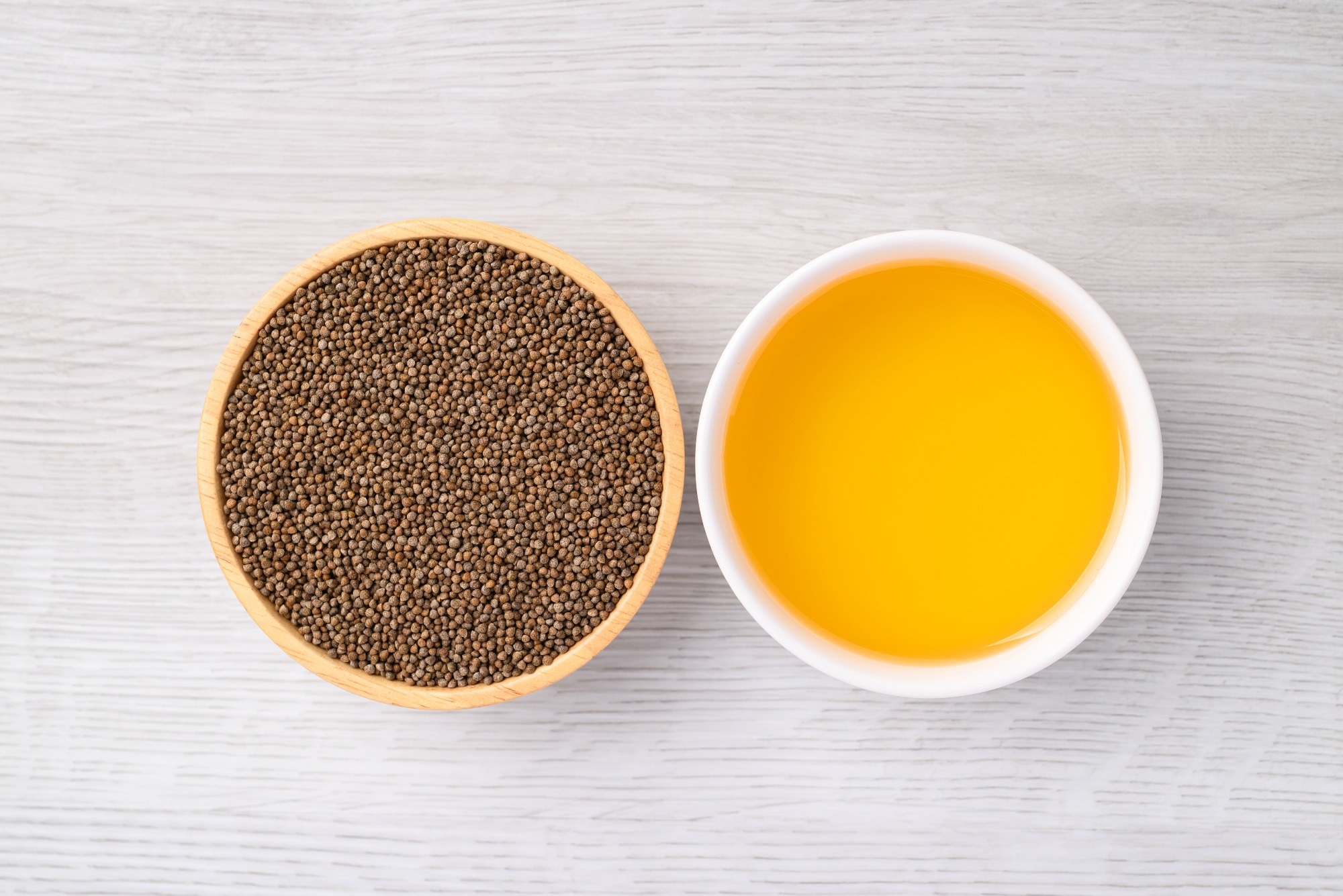
Study: Effects of perilla oil on platelet and inflammatory responses in healthy smokers: a randomized, double-blind, placebo-controlled, parallel trial. Image Credit: Nungning20 / Shutterstock
A randomized controlled trial from South Korea, published in the journal Food & Function, found that eight weeks of perilla oil, which is a rich source of the plant omega-3 fatty acid α-linolenic acid (ALA), may improve markers of platelet function and inflammatory gene expression in healthy smokers.
Background
Cardiovascular disease (CVD) is the leading cause of death worldwide and the second-leading cause of death in South Korea. It is associated with high societal and economic costs, making its prevention and management a major public health concern.
Smokers are nearly twice as likely to die of CVD compared to non-smokers. This is likely due to the multiple toxins in cigarette smoke, including reactive oxygen species and free radicals that promote inflammation and reduce nitric oxide (NO) bioavailability, driving oxidative stress, endothelial dysfunction, and platelet aggregation. These effects can increase thrombotic risk.
As a result, smoking is a major modifiable risk factor for CVD.
ALA and Cardiovascular Markers
Perilla frutescens is an aromatic herb widely used in East Asia, where its leaves, seeds, and oil are commonly used in food. ALA comprises up to 70% of perilla oil and may support cardiovascular health through reported antithrombotic, anti-atherosclerotic, antioxidant, and anti-inflammatory effects.
In addition, its metabolites, eicosapentaenoic acid (EPA) and docosahexaenoic acid (DHA), have also been shown to have antithrombotic, anti-inflammatory, and triglyceride-lowering effects. However, these are more commonly found in marine foods, compared to ALA, which is found in plant-derived foods such as flaxseed, chia seeds, walnuts, and perilla oil.
In Japan, products providing 2.6 g of ALA daily may carry authorized claims related to blood pressure and cholesterol management, while European guidance recognizes daily intakes of 2-3 g as supporting cardiovascular health, making perilla oil a potential functional ingredient. However, there is little established evidence on the effects of perilla oil on the circulation.
The current study aimed to fill this research gap by evaluating the effects of perilla oil supplementation at 4.8 g per day on platelet and inflammatory markers, and postprandial vascular and metabolic responses during a high-fat, high-glucose loading test.
Study Characteristics
The researchers conducted a randomized, double-blind, placebo-controlled, parallel-group trial involving 80 healthy smokers aged 19-69 years. The per-protocol analysis included 65 participants, 61 of whom were male.
Participants were randomly assigned to receive either 4.8 g of perilla oil or a placebo containing corn oil daily for eight weeks. The mean age was 40 years in the intervention and 38 years in the placebo group. Smoking levels were comparable, although alcohol intake differed during the intervention, and the statistical analyses were adjusted accordingly.
The perilla oil contained 62% ALA, and 74% of the total fatty acids were polyunsaturated fatty acids (PUFAs).
The researchers compared platelet function, inflammation-related gene expression, vascular inflammatory markers, and the fatty acid composition of plasma and red blood cells before and after the intervention.
Increased ALA and EPA Levels
The intervention group had greater increases in ALA in plasma and red blood cells, but there were no significant between-group changes in DHA or the combined DHA+EPA content of red cells.
EPA increased only in plasma, while the red-cell omega-3 index did not change significantly. The authors postulate that these findings, consistent with earlier studies, might indicate limited conversion of ALA to DHA.
Previous research cited by the authors suggests that men convert very little ALA to DHA, almost zero in some studies, versus 9% in women. Men convert 8% of ALA to EPA, but women convert 21%. Notably, almost all participants were male.
Variants of the gene encoding the enzyme fatty acid desaturase (FADS) can also affect its activity, influencing the final EPA and DHA levels. Also, the study period might have been inadequate to capture changes in the omega-3 composition of red blood cells (RBCs), as their lifespan is approximately 120 days.
Omega-6:Omega-3 Ratio
Plasma levels of the monounsaturated fatty acids myristoleic acid and eicosenoic acid increased. In RBCs, the n-6 PUFA dihomo-γ-linolenic acid (DGLA) was lower, while levels of the n-3 PUFA eicosatrienoic acid were elevated.
The plasma n-6/n-3 ratio decreased in the intervention group, but not in the RBCs. These shifts in plasma might reflect greater n-3 fatty acid availability relative to n-6 fatty acids, which was not reflected in the RBCs due to their longer turnover time.
Longer Platelet Closure Time
Platelet function was measured using collagen/ADP closure time, a laboratory test of platelet-dependent plug formation under simulated high-shear flow conditions. After eight weeks of supplementation, C-ADP closure time increased by 12% from baseline (group-by-time P = 0.045).
This finding suggests that perilla oil may reduce ADP-mediated platelet reactivity, potentially supporting cardiovascular health.
Effect on Inflammatory Response
The study measured the expression of selected inflammatory genes in peripheral blood mononuclear cells after supplementation. The researchers found that tumor necrosis factor-alpha (TNF-α) messenger RNA (mRNA) increased 1.4-fold in the placebo group but decreased by 30% in the intervention group (group-by-time P = 0.027). TBX21 mRNA increased 1.8-fold with placebo but decreased by 60% with perilla oil (group-by-time P = 0.022).
Both factors contribute to pro-inflammatory immune signaling.
The reduced expression of these genes suggests that perilla oil may exert anti-inflammatory effects by influencing immune cell activity, although mRNA changes do not establish corresponding changes in protein or cytokine production.
However, other inflammation-related markers, including interleukin (IL)-6, IL-10, IL-4, forkhead box P3 (FOXP3), interferon (IFN)-γ, and GATA-binding protein 3 (GATA3), showed no change.
TBX21 is a transcription factor involved in regulating immune responses, particularly those associated with T helper 1 (Th1) cells.
Exploratory Correlations Between Omega-3 Status and Vascular Markers
Exploratory analyses conducted within the perilla oil group found that changes in omega-3 fatty acid levels were associated with several vascular and inflammatory markers, although the relationships were inconsistent.
For instance, increases in plasma EPA showed a positive association with longer C-ADP closure time and changes in serum amyloid A (SAA). However, changes in DHA and combined EPA-DHA were inversely correlated with changes in IL-6 and activated partial thromboplastin time (aPTT), a measure of blood coagulation.
Higher plasma ALA at week eight was positively associated with both triglyceride area under the curve (AUC) and C-ADP closure-time AUC. AUC, or area under the curve, represents the overall response across the test period. The higher triglyceride AUC may reflect greater exposure to triglyceride-rich lipoproteins or slower fat clearance, whereas the longer C-ADP closure-time AUC indicates slower platelet plug formation.
Higher plasma ALA was also associated with higher triglyceride levels at 0, 120, and 240 minutes, longer C-ADP closure times at 0 and 120 minutes, and longer collagen/epinephrine (C-EPI) closure times at 240 and 480 minutes. Red-cell ALA was associated with triglyceride levels only at the initial time point.
Plasma EPA, however, was inversely associated with C-ADP closure time, while red-cell EPA was inversely associated with C-EPI closure time. Plasma EPA was also positively associated with D-dimer, a marker of fibrin breakdown, at 480 minutes. The authors suggested that variability in ALA conversion might partly explain these unexpected patterns, although the correlations cannot establish a mechanism.
Despite the mixed correlations, the authors interpreted the intervention findings as suggesting that “sufficient conversion occurred in most participants to produce meaningful cardiovascular improvements, though individual metabolic differences may contribute to response heterogeneity.” However, conversion efficiency was not directly measured, and these exploratory correlations should be interpreted cautiously.
Limited Change in Other Cardiovascular and Metabolic Parameters
Other measured coagulation, fibrinolysis, lipid-profile, and endothelial markers did not differ significantly between groups, perhaps because this was a healthy population. No significant between-group differences emerged in any measured postprandial marker or its 0-480-minute AUC. The authors suggested this may be because the fatty acid composition of a mixed meal is not a primary determinant of postprandial lipemia in metabolically healthy adults, and because perilla oil accounted for only a small fraction of the total fat intake in this study.
No clinically significant safety abnormalities were identified, and supplementation was well tolerated over eight weeks.
Limitations
The observed transcriptional changes need not reflect altered protein or cytokine expression. Perilla oil intake among Korean consumers can reach 8.43 g per day, meaning the 4.8 g study dose may be lower than some real-world intakes. Most participants were male, limiting generalizability, especially given sex-specific differences in ALA conversion.
The per-protocol analysis excluded 15 of the 80 randomized participants, and numerous exploratory correlations were tested with no reported correction for multiple comparisons. The study assessed surrogate biomarkers over eight weeks and did not determine whether perilla oil affects clinical cardiovascular outcomes.
Conclusion
Taken together, the findings provide preliminary evidence that perilla oil may represent a useful dietary source of ALA capable of increasing plasma and red-cell ALA and plasma EPA, while altering platelet function and inflammatory gene expression. However, the unchanged omega-3 index, wider coagulation and endothelial markers, and postprandial outcomes mean the findings do not establish improved vascular health or CVD prevention. Longer trials involving more diverse populations are needed.
Journal reference:
- Lee, S., Kim, K. J., Park, S., et al. (2026). Effects of perilla oil on platelet and inflammatory responses in healthy smokers: a randomized, double-blind, placebo-controlled, parallel trial. Food & Function. DOI: 10.1039/d6fo01112h, https://pubs.rsc.org/fo/article/17/12/5394/1242682/Effects-of-perilla-oil-on-platelet-and
 Review finds blueberry and grape polyphenols may improve vascular health