A simple change in when healthy adults ate spinach, oil, and starch revealed striking differences in how their bodies handled the same high-glycemic meal.
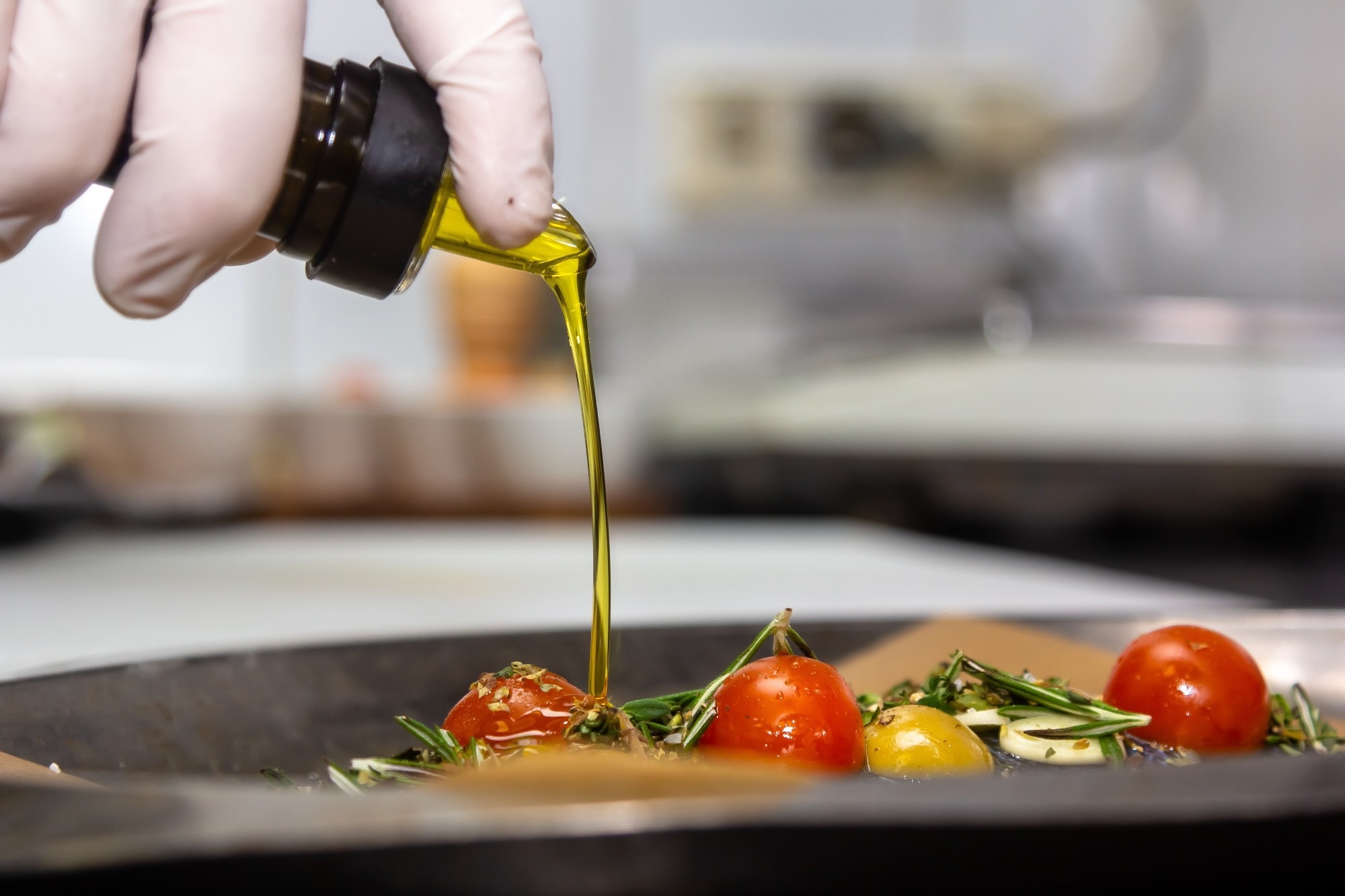
Study: Vegetable-oil preloading modulates postprandial glycemic and insulin responses to a high-glycemic meal in healthy adults. Image Credit: Milanchikov Sergey / Shutterstock
In a recent study published in the journal npj Science of Food, researchers showed that consuming an oil-containing leafy vegetable preload before a starchy meal attenuated postprandial glycemic and insulinemic responses.
Glycemic carbohydrates are vital energy sources and can significantly affect postprandial glycemia. Starchy foods with a high glycemic index are associated with higher risks of cardiovascular disease, type 2 diabetes, and obesity. While food processing strategies (e.g., acidification in salads) can decrease starch digestibility, modifying eating behaviors or mealtime structure could offer a food-first approach to curb postprandial metabolic excursions.
Preloading introduces an interval between consuming a small amount of nutrients (fat and protein) and a starchy meal, allowing the nutrients to reach the small intestine and induce physiological signaling. Consuming vegetables before starchy foods can significantly reduce postprandial insulin and glucose levels. However, most preloading strategies have focused on fat and protein or specialized foods, with whole-food preloads remaining underexplored.
The study and findings
In the present study, researchers investigated whether leafy vegetables are an effective preload to modulate postprandial insulin and glucose. This study involved two phases: an exploratory pilot trial and a primary trial. The pilot trial was conducted to present proof of concept and ascertain the optimal interval between preload and a starchy meal. Spinach was selected as the leafy vegetable, while mashed potatoes served as the starchy meal.
The pilot trial included 10 healthy Chinese males who underwent seven treatments in a randomized crossover design. These included a Co-ingestion control, a No Preload control, and five preload groups before consuming a starchy meal consisting of 300 g of mashed potatoes. The preload treatment comprised 200 g of spinach drizzled with 20 g of canola oil, consumed 0, 5, 10, 15, or 20 minutes before potatoes. Co-ingestion involved the simultaneous intake of leafy vegetables (mixed with oil) and mashed potatoes.
The pilot trial indicated that preloading substantially modulated postprandial kinetics relative to both controls. Specifically, postprandial insulinemic and glycemic profiles were blunted with preloading at all intervals. Moreover, significant delays in gastric emptying were evident across preload treatments compared to No Preload. The 10-minute interval was selected for the primary trial because it consistently attenuated early insulinemic and glycemic peaks in most subjects and offered greater practical feasibility.
The primary crossover trial included 22 healthy, normal-weight Chinese males, including the 10 participants who completed the pilot phase. It comprised five treatments: canola oil only (Oil Preload), spinach only (Veg Preload), spinach mixed with canola oil (Veg + Oil Preload), Co-ingestion, and No Preload. Two distinct patterns of postprandial responses were identified. One pattern, type 1, which included Veg Preload, Co-ingestion, and No Preload, was characterized by rapid, pronounced excursions in postprandial insulin and glucose levels.
No Preload resulted in the highest glucose levels at 15 minutes, whereas Veg Preload showed a marked spike between 15 and 30 minutes. Type 2, observed in Oil Preload and Veg + Oil Preload, showed more stable profiles, characterized by moderate, sustained insulin and glucose levels. Further, the researchers examined plasma glucagon-like peptide-1 (GLP-1) levels, subjective satiety, and gastric emptying rates.
The presence of oil in preloads affected plasma GLP-1 levels. Oil-containing treatments showed increases in GLP-1 levels by 15 minutes. GLP-1 levels were also significantly elevated with Co-ingestion, although the responses were lower than those of the effective oil-containing preload treatments. Furthermore, oil-containing treatments produced delays in gastric emptying comparable to those observed with No Preload.
Notably, Veg + Oil Preload showed a slightly more prolonged gastric emptying pattern than Oil Preload. Meanwhile, the gastric emptying dynamics of Veg Preload closely mirrored those of No Preload. In addition, no significant behavioral changes were noted. That is, composite satiety scores based on fullness, hunger, desire to eat, and prospective food consumption ratings did not differ significantly across treatments. Moreover, no significant differences were found in ad libitum energy intake across treatments.
The study was limited by its relatively small, homogeneous population of healthy, normal-weight Chinese men and the use of fixed quantities of 200 g of spinach and 20 g of canola oil, with the oil dose exceeding one tablespoon. The four-hour observation period may also have been too short to capture longer-term effects on hunger and subsequent food intake. The authors noted that larger, more diverse studies are needed to establish optimal preload timing and the minimum effective oil dose.
Conclusions
In summary, consuming leafy vegetables drizzled with unsaturated oil before a carbohydrate-rich meal, with a 10-minute interval tested in the primary trial and a 10- to 20-minute range supported by the exploratory pilot, significantly attenuated postprandial insulin and glucose excursions, resulting in a flatter, more stable, and sustained postprandial glycemic profile. These effects were likely due to transient spikes in GLP-1 and delayed gastric emptying, and the benefits of preloading were likely driven primarily by the oil component.
Journal reference:
- ElHindawy MMM, Amirruddin NS, Yusri H, et al. (2026). Vegetable-oil preloading modulates postprandial glycemic and insulin responses to a high-glycemic meal in healthy adults. npj Science of Food. DOI: 10.1038/s41538-026-01087-w, https://www.nature.com/articles/s41538-026-01087-w
 Short bursts of exercise may improve fitness and blood sugar in sedentary adults