From turmeric and cinnamon to honey and traditional remedies, researchers investigate how familiar natural products interact with the biological pathways involved in diabetes and what this could mean for future treatments.
Review: Natural Products in Diabetes Mellitus: A Narrative Review of Mechanistic Insights into Metabolic Regulation and Therapeutic Potential. Image Credit: Rimma Bondarenko / Shutterstock
In a recent narrative review published in the journal Nutrients, researchers at Texas Tech University synthesized decades of mechanistic, preclinical, and clinical literature to assess the potential of natural bioactive compounds in diabetes management. The authors drew on peer-reviewed literature and evaluated plant-derived polyphenols, functional foods, culinary spices, and traditional remedies to examine how their multiple biological effects may influence metabolic dysfunction.
The authors reported that several natural compounds may influence cellular oxidative stress, chronic inflammation, and mitochondrial dysfunction (impaired cellular energy production), processes associated with diabetic complications. Evidence that these effects prevent vascular damage in patients remains limited.
Background
Diabetes mellitus is among the world’s most prevalent chronic metabolic conditions. The condition is characterized by persistently high levels of sugar (glucose) in the blood (hyperglycemia) and occurs in two main forms: type 1 diabetes mellitus (T1DM), caused primarily by autoimmune destruction of insulin-producing cells, and type 2 diabetes mellitus (T2DM), which accounts for approximately 90% to 95% of all diagnosed cases worldwide. Although the review considered both forms, most of the supporting evidence concerned T2DM, and findings cannot be directly applied to autoimmune T1DM.
Conventional treatments have often focused on lowering patients’ blood glucose levels to alleviate hyperglycemia, but diabetes involves disturbances beyond glucose regulation, including lipotoxicity, in which chronic nutrient excess results in cellular injury driven by toxic lipid accumulation.
Research also links diabetes with endoplasmic reticulum (ER) stress and excess production of reactive oxygen species (ROS) that damage cellular proteins, lipids, and DNA.
Persistent hyperglycemia also promotes the formation of advanced glycation end products (AGEs), which bind to the receptor for advanced glycation end products (RAGE), amplifying oxidative stress and inflammatory signaling that can impair insulin action.
While established therapies such as metformin improve glycemic control and can reduce certain complications, they may not fully address the underlying oxidative and inflammatory processes associated with macrovascular and microvascular organ injury.
Researchers are investigating natural products as potential additions to established diabetes treatments. Evidence about their proposed molecular actions remains scattered across experimental and clinical studies.
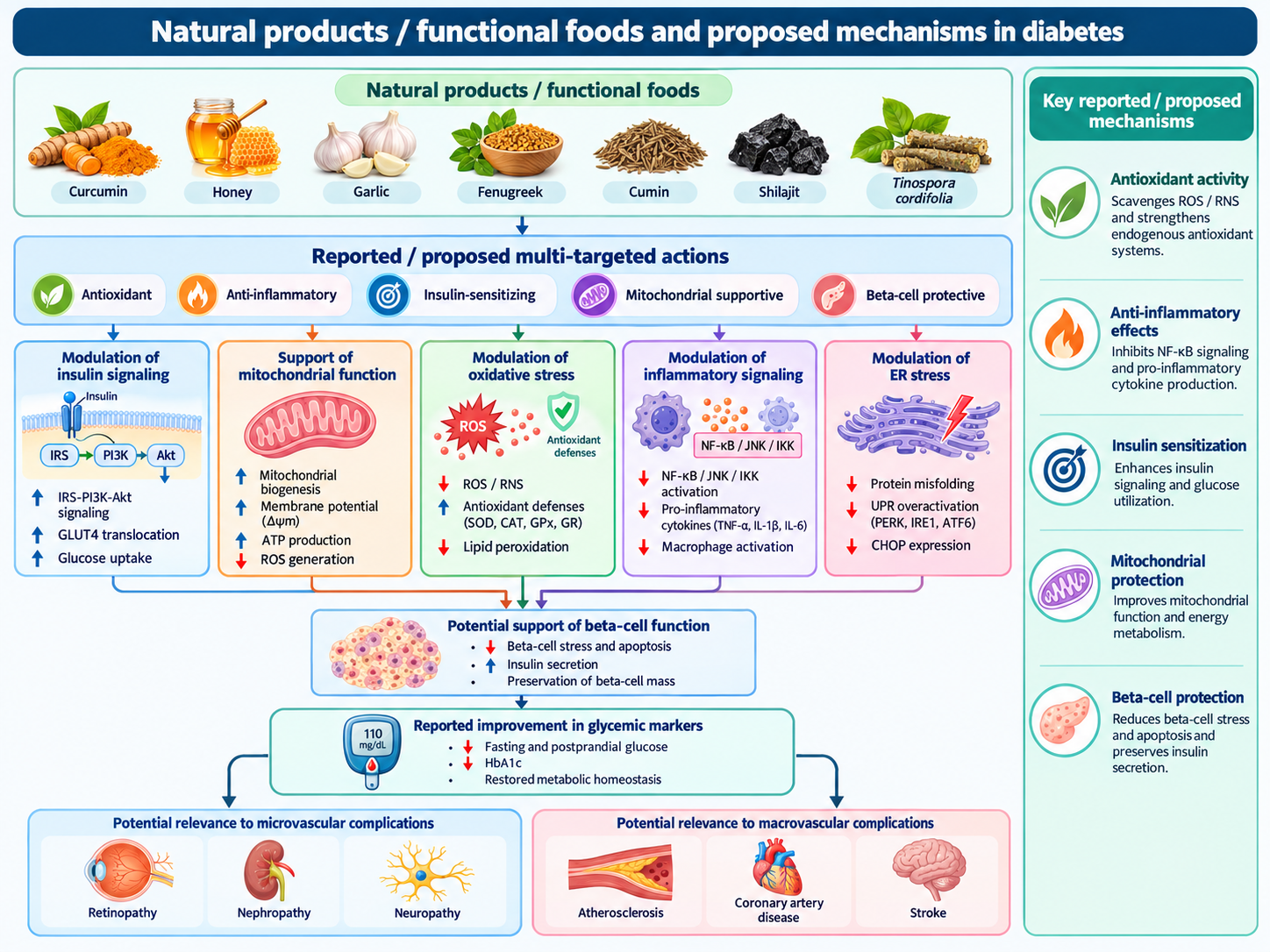
Proposed mechanisms by which natural products and functional foods may influence metabolic dysfunction and diabetes-associated complications. Curcumin has been reported to modulate insulin signaling, oxidative stress, inflammatory pathways, mitochondrial function, and endoplasmic reticulum (ER) stress. Honey has been associated with antioxidant, anti-inflammatory, and mitochondrial protective effects. Garlic may improve insulin signaling and antioxidant defenses while modulating inflammatory and ER stress pathways. Fenugreek has been linked to improved insulin sensitivity, reduced oxidative stress and inflammation, and pancreatic β-cell protection. Cumin has been reported to influence glucose uptake, AMPK/SIRT1-associated signaling, mitochondrial function, and proteostasis. Shilajit has demonstrated potential antioxidant, insulin-sensitizing, and mitochondrial-supportive properties. Tinospora cordifolia has been reported to exert antioxidant, immunomodulatory, mitochondrial, and glucose-regulatory effects. The pathways shown represent mechanisms reported in experimental or clinical studies and should not be interpreted as demonstrating direct causality between individual natural products and diabetic complications.
About the review
This review aimed to address these translational knowledge gaps and inform future research by critically examining peer-reviewed literature on the potential metabolic effects of natural products and functional foods. The authors used a narrative methodology and drew on evidence from cellular assays, rodent models, and human clinical trials identified through PubMed searches and relevant reference lists, without formal systematic-review screening or meta-analysis.
The authors focused on four groups of representative natural interventions: 1. Curcumin (Curcuma longa), 2. Honey, 3. Culinary spices, including garlic, fenugreek, cumin, coriander, ginger, and cinnamon, and 4. Traditional preparations, including shilajit and guduchi (Tinospora cordifolia).
The paper also examined reported effects of these natural bioactives on key molecular pathways, including nuclear factor erythroid 2-related factor 2 (Nrf2), peroxisome proliferator-activated receptor gamma (PPARγ), c-Jun N-terminal kinase (JNK), and the movement of glucose transporter type 4 (GLUT4) to cell membranes, where it helps glucose enter cells.
Review findings
The authors described potential multi-target effects of the selected natural products, presenting preclinical findings suggesting that curcumin can suppress nuclear factor kappa B (NF-κB) and activate Nrf2 pathways, increasing the activity of endogenous antioxidant enzymes (e.g., superoxide dismutase [SOD] and glutathione peroxidase [GPx]) and reducing pancreatic beta-cell (β-cell) apoptosis (programmed cell death) in experimental models.
The authors also cited clinical evidence from a small, single-center, placebo-controlled, randomized, double-blind trial reporting improvements in glycated hemoglobin (HbA1c) and fasting plasma glucose with nano-curcumin micelles (80 mg daily) over three months in 70 adults with T2DM. The findings cannot be assumed to apply to standard curcumin supplements.
Evidence for culinary spices varied by preparation and study design. Some small clinical trials of fenugreek preparations reported reductions in fasting and postprandial glucose, while experimental studies suggest that the amino acid derivative 4-hydroxyisoleucine may stimulate glucose-dependent insulin secretion.
Garlic preparations containing organosulfur compounds such as allicin have reduced lipid peroxidation in experimental models and modestly lowered serum cholesterol in some clinical studies, while a meta-analysis of 24 randomized controlled trials (RCTs) examined cinnamon's effects on glycemic control and insulin resistance, with inconsistent results across studies.
The authors also found that honey, while rich in polyphenols with antioxidant and anti-inflammatory activity, showed variable effects on glycemic control. The authors attributed this variability partly to differences in honey composition and its high carbohydrate content, and cautioned against unrestricted use as a sugar substitute.
Finally, the review’s discussion of traditional preparations identified preliminary antioxidant and metabolic effects: guduchi and shilajit showed possible cellular protective activity mainly in experimental studies. Both lack adequate clinical evidence for diabetes treatment. The authors also identified reports of liver injury linked to guduchi and concerns about potentially toxic metals in some shilajit preparations.
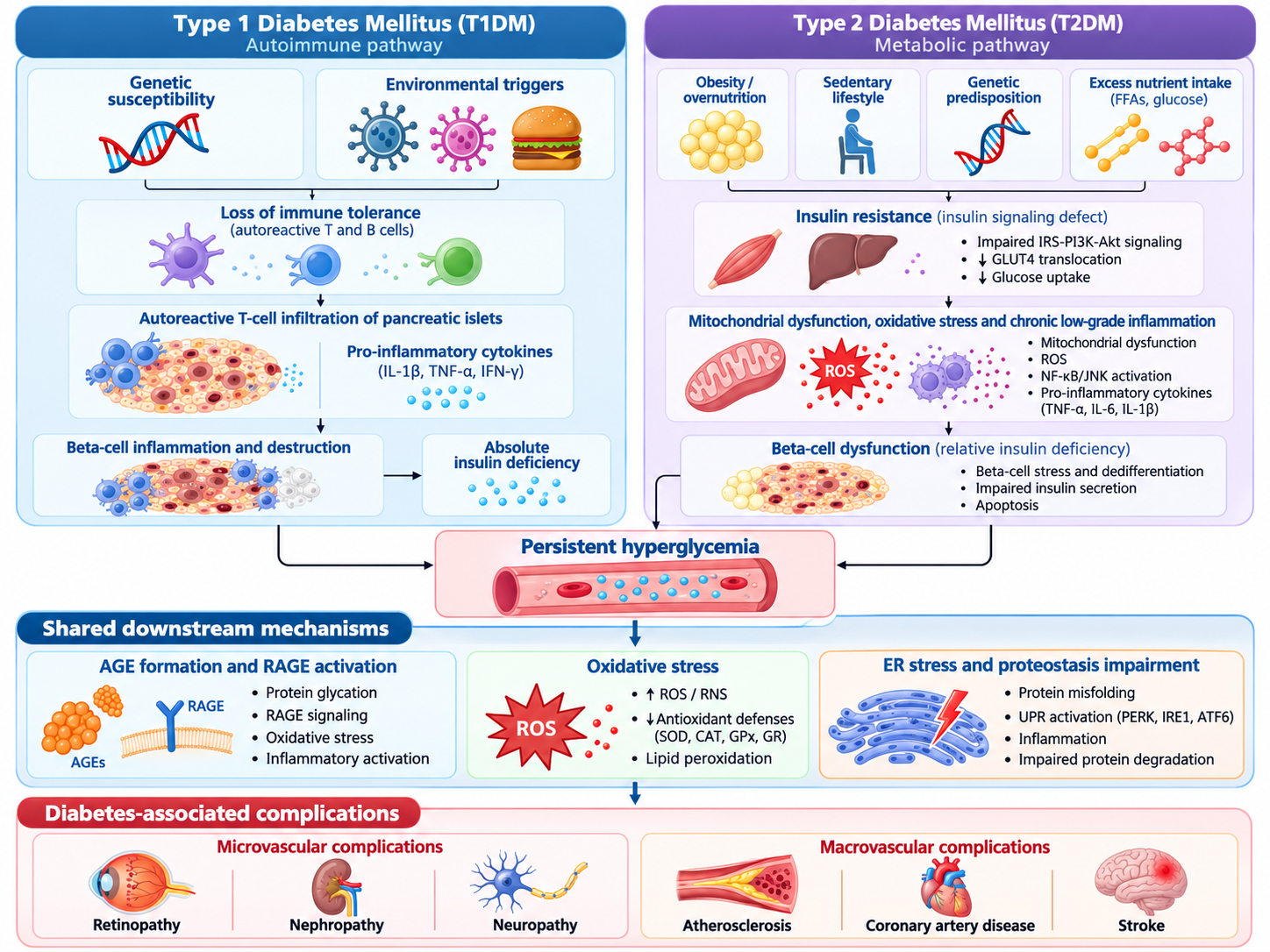
Integrated pathogenesis of T1DM and T2DM. T1DM is initiated by autoimmune β-cell destruction leading to absolute insulin deficiency, whereas T2DM is primarily driven by insulin resistance and progressive β-cell dysfunction. Both pathways converge on hyperglycemia, oxidative and ER stress, AGE–RAGE signaling, and inflammation, contributing to microvascular and macrovascular diabetic complications.
Conclusions
The present review indicates that selected natural products and functional foods warrant further investigation as possible additions to conventional diabetes pharmacotherapy, but their clinical benefits remain uncertain. Barriers include inconsistent formulations, insufficient long-term safety data, and a shortage of large clinical trials, along with poor oral bioavailability, as exemplified by the rapid metabolism and elimination of native curcumin.
Moving forward, the authors recommend standardized chemical profiling, improved delivery formulations where appropriate, and rigorous multicenter RCTs assessing meaningful clinical outcomes and long-term safety before these products are considered for routine diabetes management.
Journal reference:
- Deshmukh, H., Kshirsagar, G. J., & Gollahon, L. (2026). Natural Products in Diabetes Mellitus: A Narrative Review of Mechanistic Insights into Metabolic Regulation and Therapeutic Potential. Nutrients, 18(20), 3318. DOI: 10.3390/nu18203318, https://www.mdpi.com/2072-6643/18/20/3318
 Type 1 diabetes incidence rose by 11% after rotavirus vaccine rollout in Norway