Researchers tracked prenatal exposure to public-water fluoride across 34 US states to examine whether concentrations during pregnancy were associated with children’s later emotional and behavioral health.
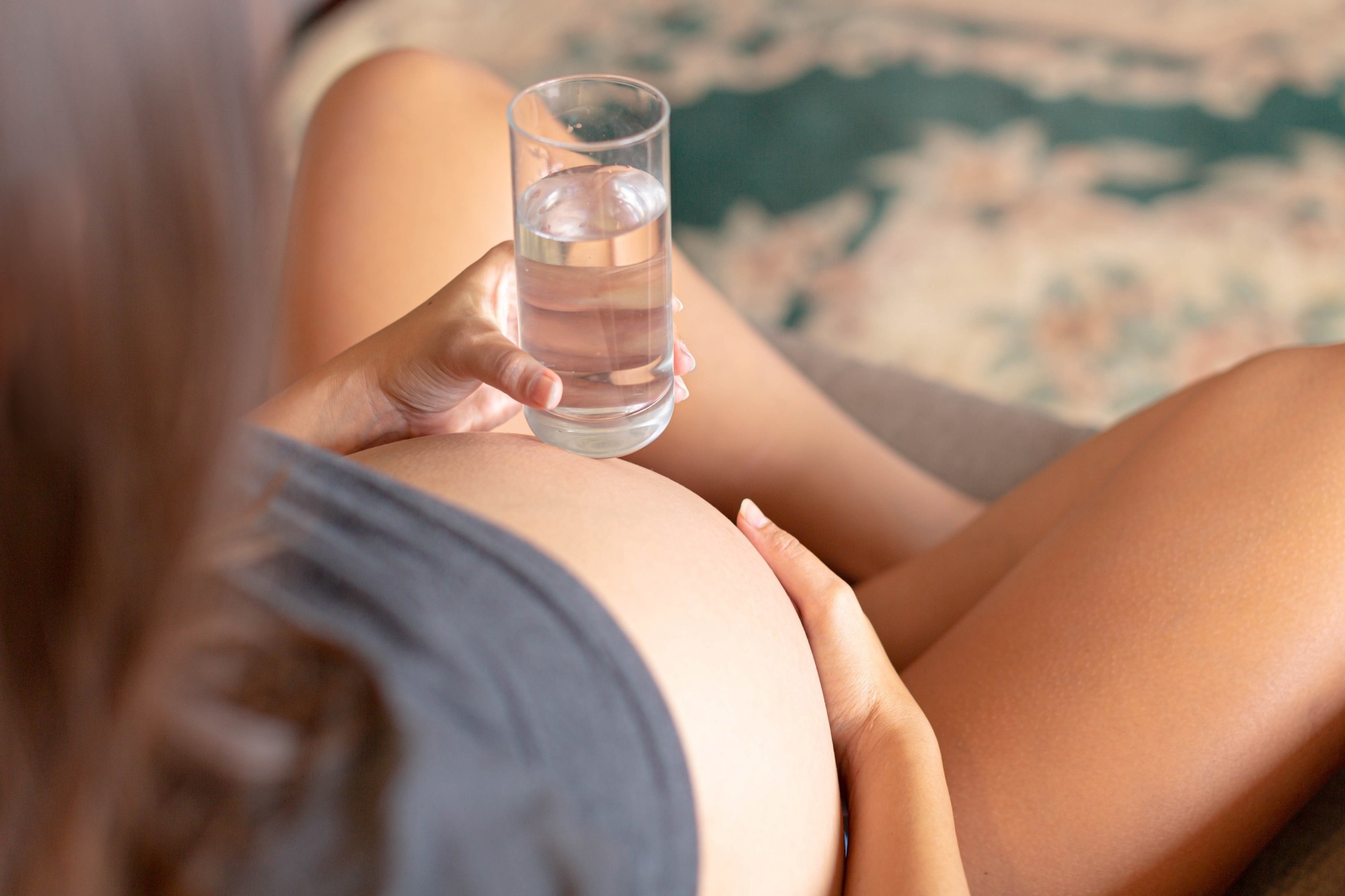
Study: Prenatal Water Fluoride Exposure and Children’s Behavioral Problems. Image Credit: christinarosepix / Shutterstock
A recent study published in the journal JAMA Network Open found that prenatal exposure to fluoride in public drinking water was not associated with emotional or behavioral problems in children overall.
Background
Fluoride is commonly used to help prevent tooth decay, but its addition to drinking water is regulated at both the state and local levels in the USA. The US Public Health Service (USPHS) recommends an optimal fluoride concentration in drinking water of 700 mcg/L.
This recommendation aims to balance dental benefits with the minimization of potential harms at higher exposure levels. Previous ecological studies have associated fluoride exposure above 4000 mcg/L in drinking water with skeletal fluorosis, kidney and thyroid dysfunction, and negative effects on the central nervous system. Some studies have also reported associations between prenatal fluoride exposure and poorer socioemotional outcomes, since this is a period of vulnerability for systems involved in emotional and behavioral regulation.
But the evidence for this comes from a few studies that used state- or region-level designs or biospecimens such as maternal urine rather than census-tract-level water estimates. The use of biomarkers integrates fluoride exposure from all sources, making it harder to isolate the contribution from drinking water and to develop targeted interventions and appropriate regulatory mechanisms.
Prior studies have reported positive associations between fluoride concentrations in urine and drinking water in several populations. Based on this, the current study aimed to assess the association of prenatal fluoride exposure via drinking water and indicators of behavioral-emotional issues in children in the US.
Study characteristics
The study used data from the Environmental Influences on Child Health Outcomes (ECHO) Cohort, cycle 1, which included 69 ongoing pregnancy and pediatric cohort sites covering the US and Puerto Rico. The current sample included 5,520 children from 20 cohort sites with a mean age of 5.8 years, comprising 2,849 boys and 2,671 girls.
Most were White (60.5%), 24.8% Hispanic, 15.2% Black, and 11.5% reported multiple races or ethnicities. Race and Hispanic ethnicity were reported separately, so these categories were not mutually exclusive. They lived in 2,604 census tracts over 34 states.
Fluoride levels in public drinking water sources were assigned at the census tract level from public water compliance records and linked to each month of pregnancy using residential address histories. Census tract estimates were averaged over three-year monitoring periods, allowing time-weighted prenatal exposure estimates that accounted for residential moves. Children’s emotional and behavioral problems were measured using the Child Behavior Checklist (CBCL), a parent-report assessment of internalizing and externalizing problems among children.
The analyses were adjusted for the sex of the child, the season of conception, the age at CBCL assessment, maternal education and age at delivery, smoking in pregnancy, and parity. Socioeconomic vulnerability was also factored in, as was population density at the census-tract level.
The authors chose not to adjust for race or ethnicity because doing so could obscure existing disparities in exposure and/or outcomes.
Fluoride levels
Prenatal fluoride exposures via drinking water ranged from <1.4 mcg/L to 3,272.5 mcg/L. Overall, 1,522 participants (27.6% of the total) were exposed to drinking water fluoride above the USPHS optimal fluoridation concentration of 700 mcg/L.
No overall association in primary analyses
After adjustment, the analysis did not find associations between fluoride exposure and children’s behavioral or emotional problems in either continuous or categorical analyses. There was also no difference between fluoride exposure above the USPHS guideline and exposure at or below it.
Sensitivity analyses showed results consistent with the main model.
Exploratory linear change-point sensitivity models showed that the slope of the association between fluoride exposure and externalizing problem scores changed at a fluoride level of 625 mcg/L. This was a model-derived inflection point rather than an established biological or safety threshold. Above this point, the adjusted mean difference in scores was 1.59 points per 500 mcg/L increase in fluoride exposure, indicating a positive association at higher exposure levels.
For internalizing problems, the change point was at 1,825 mcg/L. With fewer than ten children above that level, the researchers did not interpret the association above this point.
Internalizing problems were negatively associated with fluoride levels in the multiracial subgroup, with an adjusted mean difference of −1.34 points per 500 mcg/L increase in fluoride.
Conversely, externalizing problems were positively associated with fluoride exposure in the older subgroup aged six years or above.
Neither interaction was statistically significant for race/ethnicity or age, respectively.
According to the authors, the post-inflection increase in externalizing problem scores suggests that such associations may emerge at higher levels of exposure and warrant further study.
Prior studies have reported associations using biospecimens such as urine samples or state-level measures of public water fluoride exposure. The authors noted that methodological differences may contribute to the contrasting findings. The current study used census-tract-level water estimates rather than state-level measures or biospecimens that reflect fluoride exposure from multiple sources.
Limitations
The study could not adjust for postnatal fluoride exposures or other sources of fluoride exposure. It also assessed only one source of fluoride exposure, whereas water fluoride measurements may not accurately reflect individual-level intake or total exposure. Exposure misclassification could also reduce the ability to detect an association.
Detailed water-drinking behavior was not captured. Non-residential sources of drinking water were not accounted for. Finally, the sample was predominantly White and non-Hispanic, and most mothers were college-educated, limiting generalizability.
Conclusions
This cohort study did not demonstrate associations between prenatal fluoride exposure via public drinking water and behavioral or emotional problems in children. The authors reported no association with the current USPHS-recommended concentration of fluoride in water.
The change point analysis found a positive association with externalizing problems above the model-derived inflection point. Exploratory subgroup analyses separately identified a negative association with internalizing problems in the multiracial subgroup and a positive association with externalizing problems among children aged six years or older, but the interaction tests were not statistically significant. Future studies should further examine these associations while assessing other sources of fluoride exposure that might affect children’s psychological and developmental health.
 What mothers eat in pregnancy may shape a child’s weight years later