Why does cranberry juice appear to work for some women but not others? Differences in urinary metabolism and natural defenses against UTI-causing bacteria may offer an explanation.
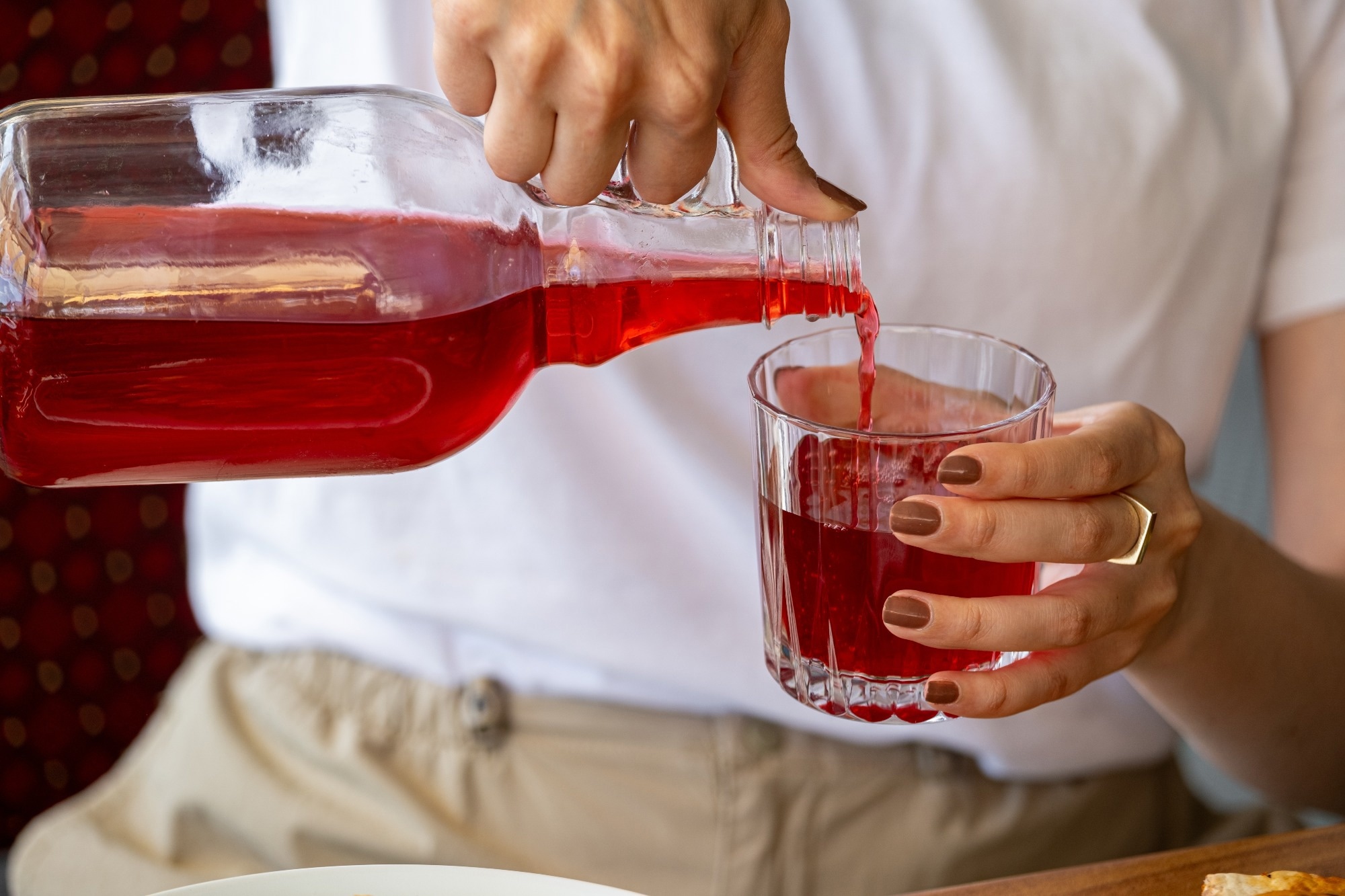 Study: Metabolic Phenotyping Identifies Distinct Urinary Anti-Adhesion Phenotypes and Differential Responses to Cranberry Juice Intake in Healthy Women. Image credit: demirbaslperen/Shutterstock.com
Cranberry juice is a widely used preventive against female urinary tract infections (UTIs), but the results from clinical trials have been inconsistent. A recent phenotyping trial published in the journal Nutrients demonstrated that urinary anti-adhesion activity against a common urinary pathogen in healthy women shows interindividual differences at baseline and in response to cranberry juice intake.
Cranberries target a key step in UTI development
UTIs affect 60% of women at some point in their lives, with a 10% annual prevalence. Over 90% of diagnosed UTIs are caused by uropathogenic Escherichia coli (UPEC) with P-type or 1 fimbriae.
P-fimbriated UPEC initiate infection by adhering to urinary tract epithelial cells. P fimbriae are found in nearly all, and potentially all, UPEC strains causing acute pyelonephritis and urosepsis in otherwise healthy individuals.
P fimbriae allow UPEC to bind strongly to glycolipid receptors on uroepithelial cells. This adhesion is strong enough to counter the constant flow of urine and facilitate successful colonization.
Cranberry juice has been reported to inhibit adhesion by P-type UPEC, largely attributed to its A-type procyanidin content. However, previous trials have yielded conflicting results. This led the researchers to hypothesize the existence of metabolic differences among women that affect the degree of change in urinary anti-adhesion activity following cranberry juice intake.
Such differences are vital to personalized nutrition approaches. As a screening trial, the current study aimed to provide a phenotypic picture of baseline and post-intervention anti-adhesion activity in the urine of healthy women. It would also evaluate the urinary metabolic profile among women with high or low anti-adhesion activity. The researchers intended the screening trial to identify potential phenotypes in preparation for a future randomized controlled trial.
Urinary defenses before and after cranberry juice
The trial included 152 healthy women aged 21-65 years, with 150 completing the cranberry juice intervention and post-consumption collection. Most women were aged 21-35 years. The majority were non-Hispanic or Latino, at ~60%, with Asians comprising another ~20%, African Americans ~6%, and Hispanic/Latino individuals making up 12.5%.
The study began with 10 days of avoiding all cranberry products, specified polyphenol-rich foods and dietary supplements, and limiting alcohol, coffee, and tea. Afterward, while maintaining the other dietary restrictions, participants took 10 ounces of pure cranberry juice daily for four days. Urine testing was performed at baseline (on days 9 and 10) and post-intervention on day 15.
The aim was to evaluate urinary anti-adhesion capacity by fluorometry, yielding anti-adhesion indices (AAI). The researchers compared the metabolite profile in 18 baseline urine samples with high AAI with that of the same number of baseline samples with low AAI.
Major phytochemicals in cranberry juice
The unsweetened pure cranberry juice used in this trial contained anthocyanins, flavonols (mostly quercetin and myricetin), and procyanidins at about 2.5-fold higher levels than in commercial 27% cranberry juice cocktail. Ten ounces of juice provided 89.5 mg of procyanidins per day, above the previously suggested minimum effective dose of 36 mg/day required to trigger urinary anti-adhesion activity.
Baseline urinary AAI
Baseline urinary AAI against P-type UPEC ranged from 84 to 170 in the women. Of these, 77 were classified as having a ‘UTI-susceptible’ phenotype because their baseline AAI was below the 50th percentile (AAI = 131). The remaining 75 were ‘UTI-nonsusceptible’.
The metabolome differed between high- and low-AAI urine samples. There were 165 discriminant metabolic features that distinguished low-AAI from high-AAI urine samples.
Positive responders vs nonresponders
After four days of cranberry juice intake, women with positive AAI changes above 10 were positive responders. The rest of the group was labeled non-positive responders. This included 34.2% of UTI-susceptible versus 18.9% of UTI-nonsusceptible women. Numerically, this corresponds to 26/76 susceptible women and 14/74 nonsusceptible women. Thus, the susceptible group had a higher proportion of responders than the nonsusceptible group, a statistically significant difference.
The authors suggest that this might be because humans show multiple metabolic pathways for the compounds present in cranberries. For instance, daidzein is converted to equol in 25-30% of human adults, while the remainder do not produce any equol.
Similarly, ellagitannins and ellagic acid are converted to urolithin A in 25%-80% of adults, but 10%-50% produce isourolithin A and/or urolithin B in addition. A third metabolic phenotype comprises people who produce no urolithins, estimated at about 5%-25% of individuals.
The gut microbiome is thought to explain much of this variation in metabolic phenotype.
Differences in urinary metabolome
The researchers found clear differences in the urinary metabolic profiles of women with high and low anti-adhesion activity. In total, 165 metabolic features distinguished the two groups, suggesting that some compounds in urine may help prevent UPEC from attaching to urinary tract cells, while others may have the opposite effect.
Identifying the specific compounds involved proved more difficult. The authors noted that most biological compounds are not represented in open mass spectral libraries, meaning only a small proportion of the metabolic features could be tentatively identified.
Among those tentatively identified, six metabolites were linked to higher anti-adhesion activity and five to lower activity. Those associated with higher activity included D-glucaro-1,4-lactone, an acylcarnitine, and several compounds related to dietary polyphenols. Several metabolites associated with lower activity were cysteine and alliin derivatives previously linked to consumption of allium vegetables such as onions and garlic.
Limitations
The participants were drawn from multiple ethnicities. However, most were younger, as expected of college campus recruitment. Only anti-adhesion activity against P-type UPEC was assessed.
Habitual dietary intake and physical activity patterns were not recorded during the trial. Cranberry juice was consumed as per protocol for only four days, so the study did not assess acute or chronic effects. Crucially, the trial did not measure whether participants subsequently developed UTIs, so the laboratory phenotypes and cranberry responses cannot yet be assumed to predict clinical UTI risk or prevention.
Individual metabolism could shape responses to cranberries
Healthy women showed distinct interindividual differences in their urinary anti-adhesion capacity against the UTI pathogen P-type UPEC at baseline and in response to cranberry juice. The authors suggest that individual metabolism differences may influence this variation and might explain the inconsistent findings of earlier trials.
However, further study is required to establish the effects of cranberries and cranberry juice on the urinary metabolome and the gut microbiome and to determine whether the identified phenotypes predict clinical responses to cranberry products.
“This study suggests that women need personalized recommendations on whether to use cranberry products to prevent UTIs based on their individual metabolic phenotype.”
Journal reference:
-
Li, S., Kamat, M., Taft, D. H., et al. (2026). Metabolic Phenotyping Identifies Distinct Urinary Anti-Adhesion Phenotypes and Differential Responses to Cranberry Juice Intake in Healthy Women. Nutrients. DOI: https://doi.org/10.3390/nu18193250. https://www.mdpi.com/2072-6643/18/19/3250
 Exercise may reshape your gut microbiome to support recovery