Most hand sanitizers offer little protection against recontamination between applications. A winter trial in Japanese households investigated whether a formulation designed to remain active on the skin could make a difference.
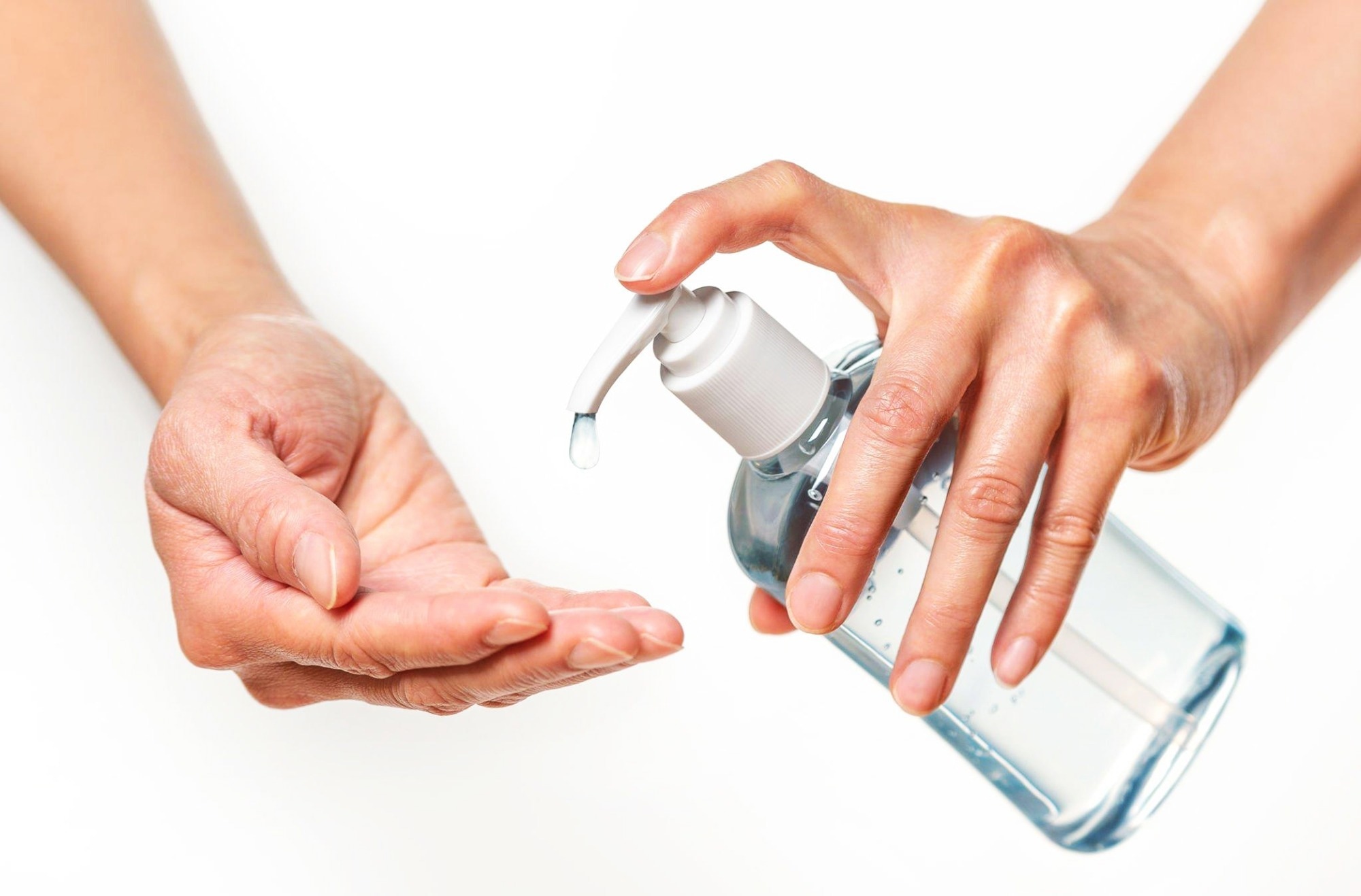
Study: Effects of a hand sanitizer formulation on upper respiratory symptoms and work restrictions: a double-blind household cluster-randomized controlled trial. Image Credit: chictype Montreal / Shutterstock
Hand sanitizers kill bacteria and viruses, but their effect lasts only a short time after application. They need to be used repeatedly to reduce contact transmission. A recent study published in the journal Scientific Reports found that repeated use of a custom formulation was associated with fewer upper respiratory symptoms and fewer illness-related work restrictions than a commercial ethanol-based sanitizer.
Background
Respiratory infections such as influenza are transmitted via droplets and aerosols and through contact with contaminated surfaces. Non-pharmaceutical interventions, including physical distancing, handwashing, hand hygiene, gargling, and mask use, can reduce transmission. Airborne transmission is considered more important for many respiratory viruses, but contact transmission may also contribute.
Commonly used alcohol-based hand sanitizers act quickly but have short-lasting activity, killing viruses and bacteria on contact. They have little residual activity, so recontamination can occur after contact with contaminated surfaces.
More frequent application might help, but using hand sanitizers too often can cause skin dryness and irritation. Sanitizers with residual antimicrobial activity could offer additional protection between applications for general use.
Human hands have intrinsic antimicrobial activity, which the authors call the “hand barrier.” This barrier is weaker in individuals who are more susceptible to the common cold and influenza. The authors previously developed a formulation intended to mimic this activity and provide residual antimicrobial activity on the skin for about two hours.
In the current study, the researchers used a more recent version that included lactic acid, 0.05% benzalkonium chloride, and 62% ethanol. The solution had a pH of 4.8, making it weakly acidic. It was previously shown to kill a broad range of microbes and provide residual antimicrobial activity on human skin for up to two hours.
The study aimed to assess its effectiveness against infection-related outcomes with repeated use in real-world settings, compared with a commercial ethanol-based hand sanitizer containing 79.7% ethanol.
Study characteristics
The investigators conducted a double-blinded cluster-randomized controlled trial. Each household comprised one cluster.
Participant households were randomly assigned to use either the new formulation or the commercial sanitizer (79.7 vol% ethanol-based) 5-10 times a day, for 72 days from December 20, 2023, to February 29, 2024. The participants recorded daily usage and health status.
All participants were aged 20 to 65 years. Each household included one Kao Corporation or Kao Professional Services, Ltd. employee and those living with them. The study excluded participants with existing hand eczema, dermatitis, itching, or steroid use at baseline, as well as those with recent serious illness or injury, non-daytime work hours, or an inability to abstain from other sanitizers or non-designated hand creams. Participants unable to use alcohol-based sanitizers were also excluded.
The target sample size was 624, based on a power calculation intended to provide at least 80% statistical power. The final analysis included 568 participants from 417 households, comprising 285 participants in the study-formulation group and 283 in the ethanol-based sanitizer group.
Formulation usage
The novel formulation was a gel delivered via hand pump, 0.5 mL per pump. Participants were expected to use one pump to coat both hands uniformly. Use was mandatory when going out, leaving work, and before lunch, and was recommended when entering a crowded place or after washing hands. Kao Corporation’s Biore u Moisturizing Milk was the only permitted hand cream, if used.
The primary outcome was the cumulative incidence of upper respiratory symptoms. Secondary outcomes included illness-related work restrictions and additional symptoms often accompanying upper respiratory infection. An episode of upper respiratory symptoms was defined as symptoms lasting two or more days and including at least one recorded temperature of 37.8 °C or higher. Only the first episode was counted during the intervention period.
Rapid microbial killing
Both formulations were previously shown to rapidly kill multiple bacteria and respiratory viruses, including the influenza virus and severe acute respiratory syndrome coronavirus 2 (SARS-CoV-2), in vitro.
Difference in upper respiratory symptoms
The study formulation group had fewer upper respiratory symptoms than the commercial formulation group: 35 affected individuals versus 58. This corresponds to an estimated 42% lower hazard of upper respiratory symptoms in the study formulation group.
Over the study period, the incidence was 20.5% in the commercial sanitizer group and 12.3% in the study formulation group, representing approximately 40% lower cumulative incidence. These symptoms were defined as fever of at least 37.8 °C coupled with one or more of the following: cough, sore throat, or a runny nose.
Illness-related work restrictions
The odds of illness-related work restrictions lasting one or more days were 51% lower in the study formulation group. These restrictions included absence from work or working remotely because of illness and affected 14.7% of the study-formulation group compared with 23.7% of the commercial sanitizer group.
Secondary outcomes
The study formulation group showed significant reductions in the estimated hazards of sneezing and fatigue of approximately 62% and 54%, respectively. Only these two symptoms remained statistically significant after multiple-comparisons adjustment.
Frequency of use
On average, both groups used sanitizer 5.7 times per day. Three adverse events were reported, none considered related to either sanitizer. No skin-related adverse events occurred. The authors comment that this suggests the reduction in upper respiratory symptoms in the study formulation group was unlikely due to more frequent use.
A further exploratory analysis adjusting for mask use, handwashing frequency, and gargling frequency found that the estimated hazard of upper respiratory symptoms was 46% lower in the study formulation group compared to the other group. This was consistent with the hypothesis that the formulation may provide more sustained antimicrobial activity on the hands, but did not establish this mechanism.
The authors note that the observed reduction in upper respiratory symptoms and work-related restrictions occurred during a season when upper respiratory diseases were common, providing an appropriate setting to examine differences in sanitizer efficacy as defined by infection-related outcomes.
The study did not measure hand recontamination or evaluate residual antimicrobial activity, so residual activity remains a hypothetical mechanism. Taken together, the findings do not indicate that healthcare workers can relax hand hygiene procedures.
Limitations
The study has several limitations. The symptom data used to determine the primary outcome were self-reported, and specific infections were not laboratory-confirmed. Participants may have been more aware of hygiene precautions than the general population, as the sample included employees and their families.
Households may have shared common environments, which could have blurred cluster boundaries. The study did not include a control group without sanitizer use, so the absolute preventive efficacy of either sanitizer could not be measured.
The immediate effect of using this dosage of either formulation on microbes present on the hands was not measured. The study also does not show that the study formulation is superior to an alcohol-based sanitizer used in the recommended volume, as the one-pump protocol was used in both groups.
The study did not evaluate standardized in vivo hand-disinfection performance for either sanitizer, and future studies should confirm efficacy with such tests. The final sample size was also smaller than planned, and the trial was registered in May 2024, after the intervention period had ended.
Conclusion
The study showed a lower incidence of upper respiratory symptoms and illness-related work restrictions in the study-formulation group compared with the ethanol-based sanitizer group during a study period that occurred in winter.
“These findings suggest that the residual antimicrobial activity of the study formulation may have contributed to the observed between-group differences and may provide additional benefits for hand hygiene in community settings.”
Future studies should use objective exposures and outcomes in more diverse populations to validate and extend these findings. Researchers also need to investigate the mechanism underlying the observed differences, including whether residual antimicrobial activity reduces hand recontamination during everyday use.
Kao Corporation funded the study, and all six authors were company employees. The experimental formulation was developed within Kao's research program, while the commercially available ethanol-based comparator was also a Kao product.
Source:
Journal reference:
- Yamanaka, N., Mizukoshi, K., Asaoka, K., et al. (2026). Effects of a hand sanitizer formulation on upper respiratory symptoms and work restrictions: a double-blind household cluster-randomized controlled trial. Scientific Reports. DOI: 10.1038/s41598-026-75205-9, https://www.nature.com/articles/s41598-026-75205-9
 Gut bacteria may help explain why endometriosis pain varies