Introduction
Environmental mechanisms
Host immune function changes
Viral epidemiology and transmission patterns
Behavioral and social factors
Implications for public health
References
Further reading
Why do respiratory viruses surge each winter? From cold air and indoor crowding to seasonal immune shifts and shifting RSV–influenza dynamics, the science reveals how winter creates the perfect storm for viral spread.
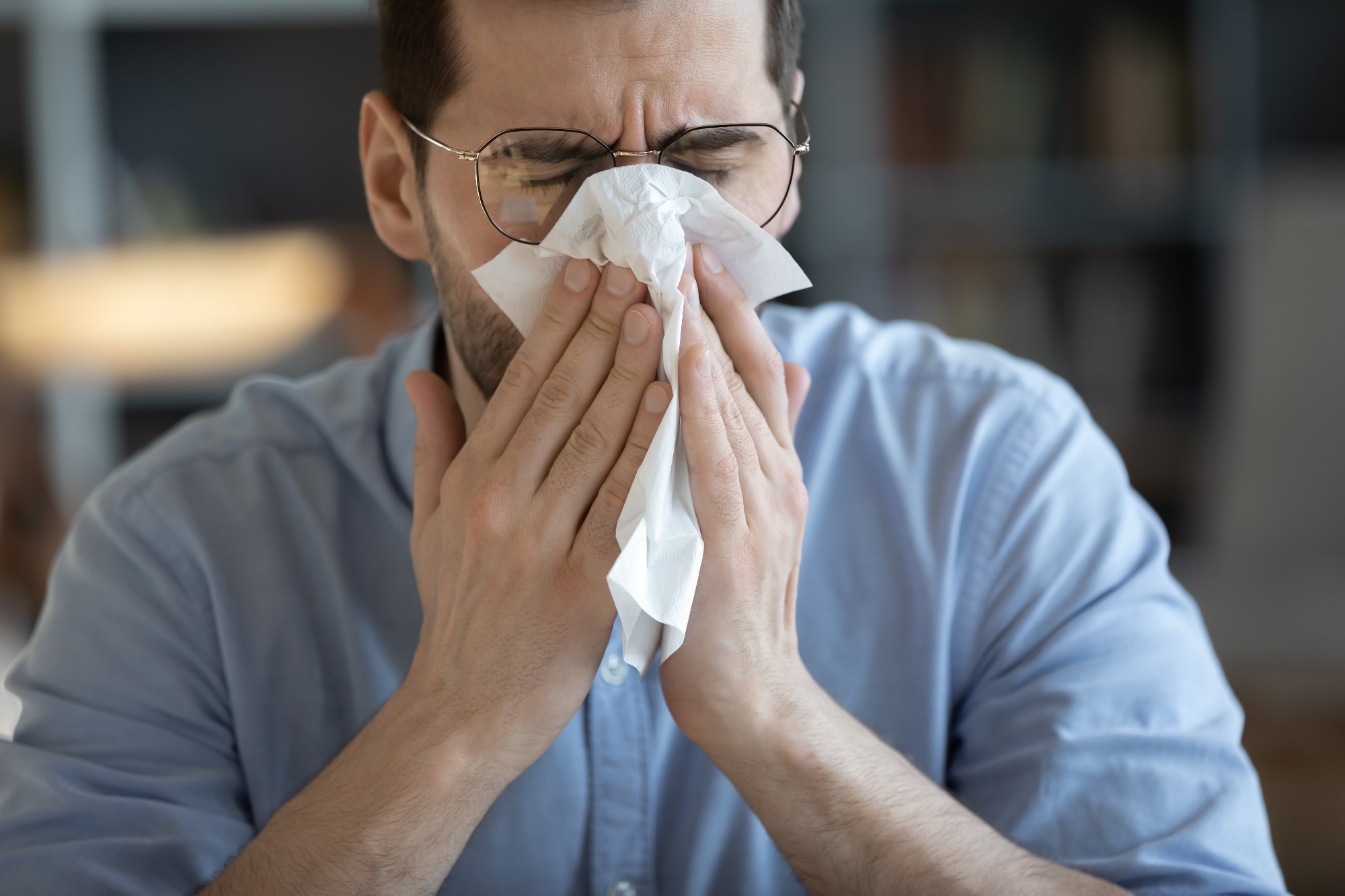 Image Credit: fizkes / Shutterstock.com
Introduction
Respiratory viruses exhibit distinct seasonal patterns, with influenza, respiratory syncytial virus (RSV), rhinoviruses, and human coronaviruses, including severe acute respiratory syndrome coronavirus 2 (SARS-CoV-2), infections often peaking in winter months. In temperate regions, wintertime peaks are well described for influenza, RSV, and endemic human coronaviruses, while some other respiratory viruses (e.g., rhinoviruses and certain parainfluenza viruses) may peak in spring or fall depending on subtype.1 The surge in influenza and RSV cases during the winter season significantly contributes to influenza-like illness (ILI), severe disease in young children, and increased mortality among older adults.1,2
Environmental mechanisms
Environmental conditions in winter, like low ambient temperatures and reduced humidity, enhance viral stability and prolong survival outside the host. For example, influenza viruses and some human coronaviruses are more stable and transmissible at 5 °C and 10-40% relative humidity, both of which are conditions typical of winter in temperate regions, although the magnitude of this effect varies by virus and experimental conditions.1 In contrast, higher temperatures and humidity levels during the summer months are associated with reduced viral viability.1
Cold, dry air also influences aerosol dynamics, increasing the likelihood of inhalation and infection, particularly in poorly ventilated indoor environments. After exhalation, virus-laden droplets rapidly lose water by evaporation, resulting in smaller aerosols that can persist in the air for extended periods and travel longer distances.1
Reduced exposure to sunlight decreases vitamin D synthesis in the skin, thereby increasing the risk of vitamin D deficiency, which has been associated in observational studies with worse outcomes or higher risk for some respiratory infections, although randomized trial evidence suggests only modest average effects of supplementation on common inflammatory/immune biomarkers (e.g., CRP).3 Vitamin D modulates inflammatory pathways and supports antimicrobial defense; therefore, reduced vitamin D levels, combined with winter-associated declines in temperature and humidity, may further weaken host resistance to infection.3
Host immune function changes
Seasonal alterations in host immune function may also increase susceptibility to respiratory infections during winter months.
The mucus layer that lines the upper airway epithelium serves as a critical first-line immune defense, trapping inhaled pathogens and facilitating their clearance through coordinated ciliary movements. Exposure to cold, dry air reduces airway humidity, thereby slowing mucociliary transport and delaying viral clearance. Low humidity can also disrupt airway epithelial integrity by promoting ciliary loss and epithelial cell detachment, further weakening the physical barrier to infection.1
Innate immune responses exhibit seasonal modulation, including altered cytokine profiles and immune gene expression observed in the winter months. Population-level studies also show seasonal variation in inflammatory markers (e.g., CRP), consistent with broader seasonal shifts in immune physiology.4
Seasonal variations in circulating white blood cell counts have also been reported during the winter months, as demonstrated by United Kingdom Biobank studies showing higher neutrophil counts in winter, peaking between December and January. Whereas elevated levels of C-reactive protein (CRP) have been concomitantly observed, lymphocyte counts show a seasonal pattern that peaks in spring (around March) and reaches a low point in autumn (around October), rather than a simple wintertime decline.4 Increased neutrophil-driven inflammation combined with seasonally shifting lymphocyte-mediated adaptive immune responses during the winter season may contribute to heightened susceptibility to respiratory viral infections.4
Why Flu Season Is In The Winter
Viral epidemiology and transmission patterns
Respiratory viruses spread through multiple transmission routes, including direct contact, airborne droplets and aerosols, and indirect contact via contaminated surfaces or fomites. Human-to-human transmission typically occurs following exposure to respiratory secretions expelled during coughing, sneezing, talking, or breathing, as well as contact with virus-contaminated objects. Furthermore, small aerosolized droplets five micrometers (µm) or less in diameter remain airborne for longer periods, allowing greater penetration into the lower respiratory tract and increasing the risk of severe disease, a mechanism described in detail for RSV and other respiratory viruses.1,6
During the coronavirus disease 2019 (COVID-19) pandemic, SARS-CoV-2 initially spread through immunologically naïve populations. Human behavior, social mixing, and large gatherings, rather than climate, primarily influenced SARS-CoV-2 transmission.
In contrast, endemic respiratory viruses typically display seasonal winter peaks in temperate regions. Widespread non-pharmaceutical interventions like social distancing, masking, school closures, and travel restrictions during the pandemic significantly interfered with these patterns and, as a result, also reduced RSV and influenza activity between 2020 and 2021 worldwide.1,5
RSV seasonality also varies by latitude and climate: peaks commonly occur in winter in temperate regions and during the rainy season in many tropical settings, reflecting the combined influence of environmental factors and contact patterns.6
Post-pandemic surveillance data indicate that RSV epidemics often peak a few weeks earlier than influenza during annual ILI seasons, whereas COVID-19 has shown less consistent seasonality. The co-circulation of RSV, influenza, and SARS-CoV-2 has added complexity to winter respiratory disease dynamics, thus emphasizing the importance of adaptive surveillance and preparedness strategies.2
Behavioral and social factors
In temperate climates, colder temperatures and adverse weather conditions cause people to remain indoors for prolonged periods, which increases close-contact interactions in homes, schools, workplaces, and public transportation. As a result, indoor environments during winter are often characterized by crowding, reduced ventilation, and low relative humidity, which facilitates viral survival and transmission through respiratory droplets, aerosols, and contaminated surfaces.1
Shorter daylight hours and colder temperatures similarly contribute to reduced outdoor activity and lower physical activity levels, as well as to disruptions of circadian rhythms and sleep patterns, all of which are important modulators of immune function. Large prospective cohort studies indicate that adults who complete at least 150 minutes/week of moderate-to-vigorous physical activity (MVPA) are 36-40% less likely to die from an infectious disease than inactive individuals. Conversely, physical inactivity has been associated with an approximately 32% higher risk of severe COVID-19 outcomes in large observational cohorts.5
 Image Credit: Orawan Pattarawimonchai / Shutterstock.com
Implications for public health
Understanding the seasonal dynamics of respiratory viruses has direct implications for public health preparedness and clinical decision-making. Specifically, anticipating the timing of seasonal epidemics enables healthcare systems to prepare effectively by adjusting staffing levels, increasing stockpiles of diagnostics, therapeutics, and protective equipment, and strengthening hospital surge capacity. Early detection of rising RSV activity often signals the start of the broader ILI season, enabling providers to brief caregivers and implement preventive measures before cases escalate.2,6
Seasonality-aware surveillance can also improve the timing and effectiveness of vaccination and prophylactic interventions. Vaccines and monoclonal antibody-based preventives are highly sensitive to administration windows, particularly for high-risk groups such as infants and older adults.
For example, RSV prophylaxis with a long-acting monoclonal antibody, nirsevimab, must be administered before an infant’s first RSV season, as a single intramuscular dose that provides season-long protection.6
Aligning these interventions with the local epidemic onset maximizes protection while minimizing the risk of early administration and waning immunity. Simultaneously, non-pharmaceutical preventive measures like maintaining adequate indoor humidity, improving ventilation, and mask use during high-risk periods remain critical for reducing transmission in enclosed settings.2,6
Advanced prediction and real-time surveillance tools guide public health communication, resource allocation, and regional preparedness. Monitoring outbreak patterns and deviations from historical seasonality supports precise, location-specific guidance.
By combining vaccination, prophylaxis, and targeted preventive measures, healthcare authorities can enhance compliance, improve disease outcomes, and reduce winter-associated hospitalizations, complications, and mortality. Ultimately, a proactive and seasonally informed approach can transform the risk of respiratory infections during winter from an inevitable burden into a manageable challenge.2,6
References
- Neumann, G. & Kawaoka, Y. (2022). Seasonality of influenza and other respiratory viruses. EMBO Molecular Medicine 14. DOI: 10.15252/emmm.202115352. https://link.springer.com/article/10.15252/emmm.202115352
- Dewey, G., Meyer, A. G., Garcia, R. G., & Santillana, M. (2026). Uncovering the post-pandemic timing of influenza, RSV, and COVID-19 driving seasonal influenza-like illness in the United States: A retrospective ecological study. The Lancet Regional Health - Americas 55. DOI: 10.1016/j.lana.2025.101359. https://www.sciencedirect.com/science/article/pii/S2667193X25003709
- Jeyakumar, A., Bhalekar, P., & Shambharkar, P. (2024). Effect of vitamin D supplementation on the immune response to respiratory tract infections and inflammatory conditions: A systematic review and meta-analysis. Human Nutrition & Metabolism 37. DOI: 10.1016/j.hnm.2024.200272. https://www.sciencedirect.com/science/article/pii/S2666149724000343
- Wyse, C., O'Malley, G., Coogan, A. N., et al. (2021). Seasonal and daytime variation in multiple immune parameters in humans: Evidence from 329,261 participants of the UK Biobank cohort. iScience 24(4). DOI: 10.1016/j.isci.2021.102255. https://www.sciencedirect.com/science/article/pii/S2589004221002236
- Nieman, D. C., & Sakaguchi, C. A. (2022). Physical activity lowers the risk for acute respiratory infections: Time for recognition. Journal of Sport and Health Science 11(6); 648. DOI: 10.1016/j.jshs.2022.08.002. https://www.sciencedirect.com/science/article/pii/S2095254622000886
- Asseri, A. A. (2025). Respiratory Syncytial Virus: A Narrative Review of Updates and Recent Advances in Epidemiology, Pathogenesis, Diagnosis, Management and Prevention. Journal of Clinical Medicine 14(11). DOI: 10.3390/jcm14113880. https://www.mdpi.com/2077-0383/14/11/3880
Further Reading
Last Updated: Feb 18, 2026
 Australia’s diphtheria outbreak shows why boosters, antibiotics, and better housing all matter