A 12-week clinical trial found that adults taking Lythrum salicaria extract lost body fat while placebo recipients gained it, offering early evidence of a potential plant-based approach to weight management.
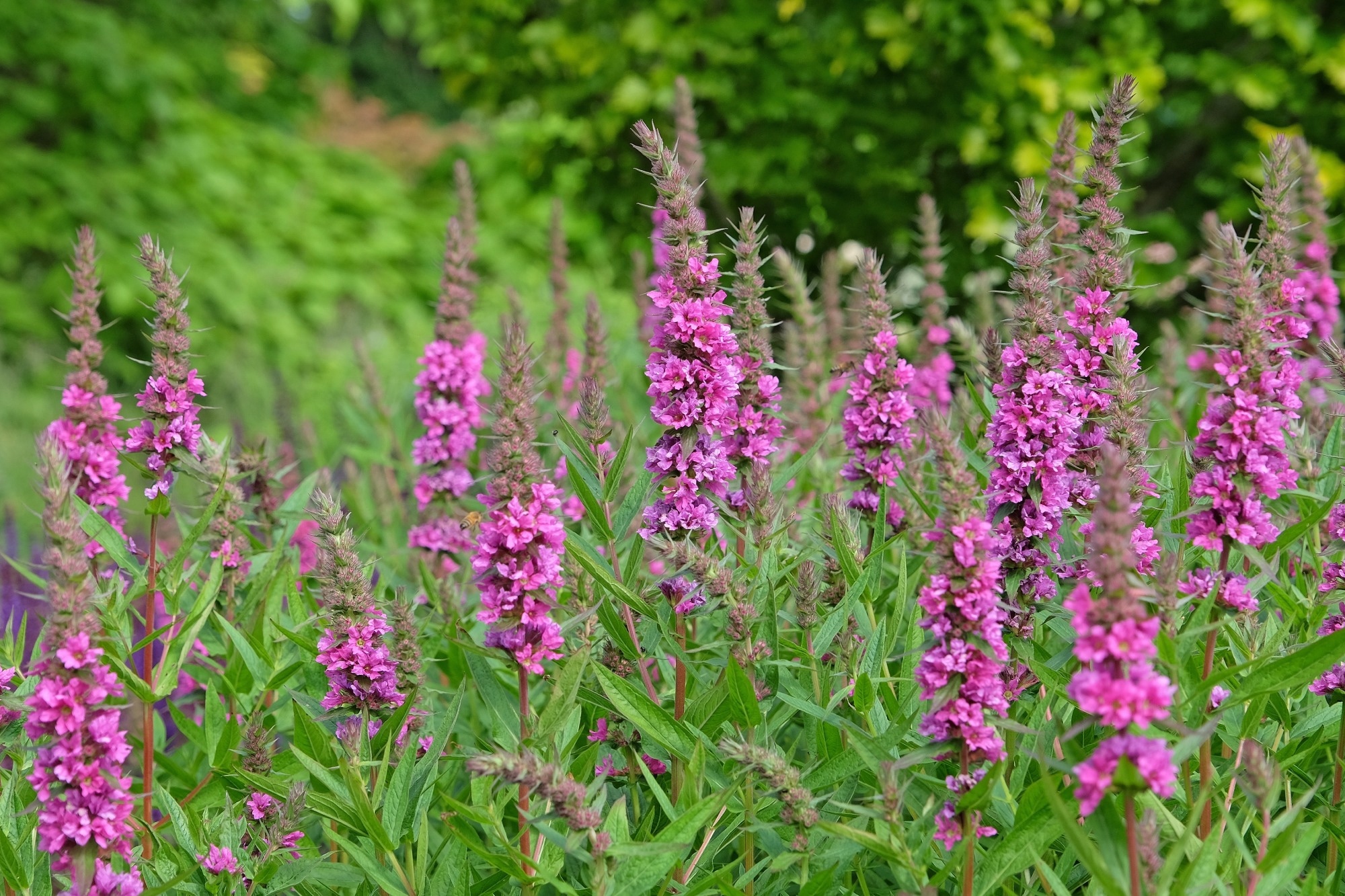 Study: Efficacy and Safety of Lythrum salicaria Extract on Body Fat Reduction in Adults with a BMI of 23–30 kg/m2: A Randomized, Double-Blind, Placebo-Controlled Trial. Image credit: Alex Manders/Shutterstock.com
A recent Nutrients study evaluated the efficacy and safety of Lythrum salicaria extract supplementation in reducing body fat in adults with a body mass index (BMI) of 23–30 kg/m².
Obesity assessment and management
Obesity, characterized by excessive body fat, substantially elevates the risk of metabolic and cardiovascular diseases. Body mass index (BMI) is widely used to screen for obesity because it is practical and simple, with international cutoffs of 25.0 and 30.0 kg/m² for overweight and obesity, respectively. However, Asian populations have higher body fat and metabolic risk at lower BMIs; therefore, a lower threshold of 23.0 kg/m² is used to identify increased metabolic risk. Korean guidelines classify a BMI of 23.0–24.9 kg/m² as overweight and ≥25.0 kg/m² as obesity.
Despite its widespread use, BMI does not differentiate fat from lean mass, limiting its value for evaluating interventions aimed at reducing body fat. Accurate body composition assessment, such as dual-energy X-ray absorptiometry (DXA), is necessary to quantify changes in fat, lean, and bone mass.
Standard obesity management encompasses dietary modification, behavioral intervention, and increased physical activity, while pharmacotherapy and bariatric surgery are reserved for selected cases. The search for long-term, safe, and sustainable strategies has increased interest in plant-derived compounds that may alter fat absorption, energy metabolism, adipocyte differentiation, and lipid metabolism.
L. salicaria L. is a perennial plant with bioactive polysaccharides and polyphenols, shown in preclinical studies to reduce adipogenesis and weight gain in high-fat diet models. However, clinical evidence for its independent anti-obesity effects is limited.
Efficacy of L. salicaria as a plant-based intervention for obesity
This single-center, randomized, double-blind, placebo-controlled superiority trial was conducted at Pusan National University Korean Medicine Hospital. The extract, derived from dried aerial parts of L. salicaria, was produced under Good Manufacturing Practice (GMP) conditions.
Adults aged 19–75 years with a BMI of 23–30 kg/m² were eligible. Exclusion criteria included recent severe cardiovascular or malignant disease, uncontrolled hypertension or diabetes, significant renal or liver dysfunction, severe gastrointestinal symptoms, alcohol abuse, recent smoking cessation, pregnancy or breastfeeding, allergy to study foods, or any condition deemed unsuitable by investigators.
Eligible participants were allocated equally to treatment arms using block randomization. The intervention group received 500 mg per day of L. salicaria extract powder (equivalent to approximately 400 mg of plant-derived extract solids, in 450-mg capsules, three times daily for 84 days). Placebo capsules matched in appearance and schedule. The dosing was based on preclinical mouse studies and adjusted to approximately 8 mg/kg per day, equivalent to 480 mg/day for a 60-kg adult. Adherence was monitored through intake diaries and returned capsules.
Study visits were scheduled at screening, baseline, day 42, and day 84 to assess eligibility, randomize participants, resupply product, and monitor adherence, efficacy, and safety. The primary endpoint was the change in body fat mass at 12 weeks, measured by DXA. Secondary endpoints included BMI, body weight, waist-to-hip ratio, body fat percentage, lean mass, lipid panel, free fatty acid (FFA), high-sensitivity C-reactive protein (hs-CRP), adiponectin, and leptin.
Efficacy analyses were performed in the per-protocol (PP) population, participants who were adherent and protocol-compliant, and supported by intention-to-treat (ITT) analyses, which included all randomized participants who took at least one dose.
L. salicaria extract led to greater body weight loss
Of the 94 adults screened, 90 were randomly assigned to receive either L. salicaria extract or a placebo, with 45 participants in each group. Six participants withdrew for reasons unrelated to the study procedures or outcomes, leaving 84 participants (42 per group) in the per-protocol (PP) analysis. All 90 participants were included in the intention-to-treat (ITT) analysis. Baseline characteristics were generally comparable between groups, although there was an age difference in the PP population.
After 12 weeks, participants taking L. salicaria extract lost an average of 0.58 kg of body fat, while those receiving the placebo gained 1.43 kg. The baseline-adjusted difference between groups was −2.01 kg, with similar results in the ITT analysis. Body fat decreased in 69% of extract recipients compared with just 2.4% of placebo recipients, while median changes also favored the extract.
Although these findings suggest a short-term fat-reducing effect, the researchers emphasized that the actual reduction in the extract group was modest and that the reasons for the increase in body fat among placebo recipients remained unclear.
The extract also showed favorable effects on body weight, BMI, and body fat percentage. Participants receiving the supplement lost an average of 0.98 kg of body weight, compared with a 0.79 kg gain in the placebo group. BMI and body fat percentage followed a similar pattern, with statistically significant between-group differences that were also supported by the ITT analysis. However, changes in waist-to-hip ratio and lean mass did not differ significantly between groups.
Further sensitivity analyses supported the body weight findings, with between-group differences ranging from −1.03 to −1.84 kg depending on how missing data were handled. Lean-mass results were less consistent, with one conservative scenario suggesting greater lean-mass loss among extract recipients. The researchers therefore cautioned that the findings did not establish whether the supplement preserved lean tissue.
Adiponectin rises with plant extract
Among blood-based markers, adiponectin, a hormone involved in metabolic regulation, increased in the extract group but decreased in the placebo group. This difference remained statistically significant after adjustment for baseline levels and in the ITT analysis. However, most other metabolic and inflammatory markers, including blood lipids, free fatty acids, and high-sensitivity C-reactive protein (hs-CRP), showed no significant between-group differences.
An additional analysis also suggested a reduction in leptin, a hormone involved in appetite and energy regulation, among extract recipients. Because the researchers did not adjust for multiple comparisons, the secondary findings, including the adiponectin increase, were considered exploratory and did not establish broader metabolic or anti-inflammatory benefits.
Changes in dietary intake and physical activity were similar between groups, suggesting that the observed differences in body composition were not explained by measured changes in these behaviors. However, the researchers acknowledged that self-reported dietary and activity data could not rule out unmeasured lifestyle changes. Supplement adherence exceeded 95% in both groups and was slightly higher among extract recipients.
The extract was generally well tolerated over the 12-week study. Seven mild adverse events occurred among six participants across both groups, with none considered related to the study products.
Promising body fat findings need longer-term confirmation
L. salicaria extract was associated with a modest reduction in body fat mass compared with placebo in adults with a BMI of 23–30 kg/m² over 12 weeks, alongside exploratory improvements in body weight, BMI, body fat percentage, and adiponectin.
No serious adverse events were reported, although the small sample and short duration limit conclusions about long-term safety. The study was also limited by its relatively small sample size, short duration, and single-center design. The researchers also acknowledged uncertainty surrounding the unexpected increase in body fat in the placebo group and whether the observed fat reduction would persist beyond 12 weeks.
Larger, multicenter studies with longer follow-up are needed to confirm these findings, determine optimal dosing, and evaluate long-term safety. Future research should also explore the mechanisms underlying the observed effects and assess the broader applicability of these results.
Journal reference:
-
Shin, B. J. et al. (2026). Efficacy and Safety of Lythrum salicaria Extract on Body Fat Reduction in Adults with a BMI of 23–30 kg/m2: A Randomized, Double-Blind, Placebo-Controlled Trial. Nutrients. 18(20), 3342. DOI: https://doi.org/10.3390/nu18203342. https://www.mdpi.com/2072-6643/18/20/3342
 A study links a blood protein to memory and brain changes in Down syndrome