Can a well-timed smartphone reminder help people with type 2 diabetes resist evening snacking? New research reveals promising early effects on overnight glucose patterns, but their rapid decline highlights the challenge of turning digital prompts into lasting healthy habits.
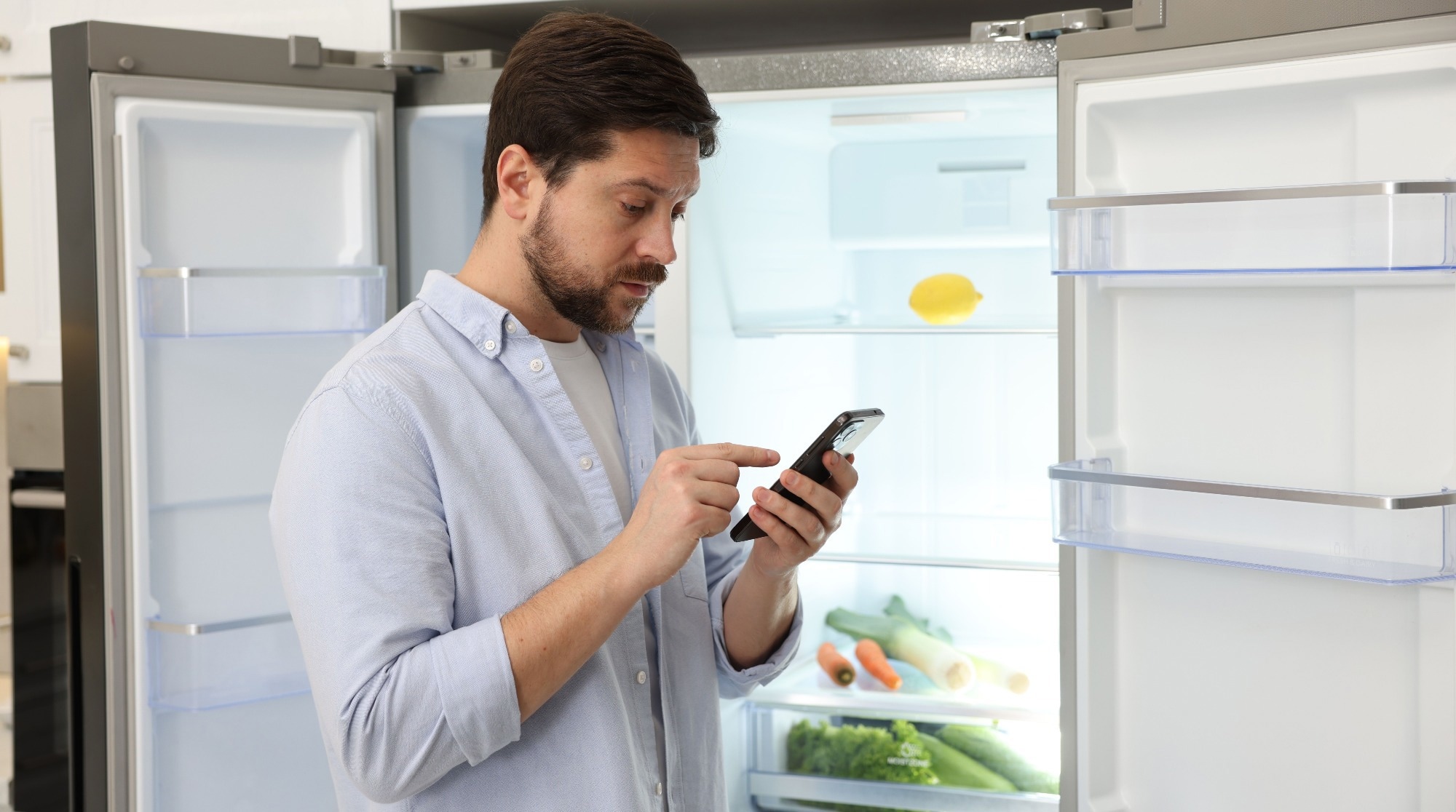 Study: Efficacy and Feasibility of Just-in-Time Nudging in Reducing Evening Snacking Measured by Continuous Glucose Monitoring in Adults With Type 2 Diabetes: A Micro-Randomized Study. Image credit: New Africa/Shutterstock.com
Late eating or snacking is both common among people with type 2 diabetes (T2D) and is linked to poorer control of blood glucose levels. A recent paper published online in the journal Diabetes, Obesity & Metabolism explored the efficacy of just-in-time nudging to reduce this behavior in this population. While smartphone prompts appeared to improve overnight glucose levels initially, their benefits faded over time, highlighting the challenge of sustaining healthier eating habits.
Late-night eating can disrupt blood glucose control
Global annual healthcare expenditure for diabetes exceeds $966 billion, much of it associated with complications arising from poor glycemic control. This emphasizes the need for better low-cost eating interventions to maximize the time spent in euglycemia. Late-night eating has been linked to poorer glycemic control, independently of body weight. This is likely due to the misalignment of food intake with circadian rhythms that regulate glucose metabolism across the day.
Time-restricted eating (TRE) shifts eating times toward the period when the body is metabolically most active. This can lower glycated hemoglobin (HbA1c) levels in type 2 diabetes (T2DM), indicating better glycemic control. However, maintaining adherence to TRE over time remains a challenge.
The role of nudging in correcting non-optimal eating behavior was explored in this study. Nudges are non-coercive, unincentivized behavioral prompts. They have shown promise for eating habits in general populations, but little is known about them in T2DM, and they have not been investigated for the regulation of after-dinner snacking in this group.
The authors asked whether a smartphone nudge, delivered shortly after dinner, reduces snacking in adults with T2DM.
Personalized smartphone prompts target evening snacking habits
This was a single-site micro-randomized trial (MRT) in Adelaide, Australia. An MRT randomizes the same person repeatedly over time, in this case day by day. That lets the investigators compare nudge days with no-nudge days within the same individual and see how the effect changes over time.
The participants were adults with T2DM managed by diet alone or by a stable dose of oral medication for at least three months. All reported snacking after dinner on three or more nights a week and owned a smartphone. People using insulin or sulfonylureas were excluded.
During the lead-in phase, lasting two weeks, participants wore a FreeStyle Libre Pro iQ CGM and took photographs of their dinners. A detection algorithm used the CGM data to identify glucose excursions consistent with after-dinner snacking, while timestamped dinner photographs were used to establish each person's usual dinner time.
This was followed by another two-week MRT phase. Eligible days were block-randomized in pairs (1:1) to a nudge day or a no-nudge day. On nudge days, one of seven pre-specified nudges was chosen at random. The nudges were pictographic messages, five being static images without audio and two incorporating audio alongside visual content. Each could be viewed in 15 seconds or less. These nudges were designed in collaboration with people living with T2DM through questionnaires, focus groups and a pilot.
They suggested alternatives such as walking, music, reading, meditation or lemon water, and they used time cues. One described the long-term health consequences of processed snacks.
Nudges were sent through the Intui Research app about 30 minutes after the average dinner time for each participant. Delivery times were further personalized using smartphone screen-activity data to increase the likelihood that participants would see the messages. An SMS reminder followed 15 minutes later.
The investigators set the primary outcome as the net incremental area under the glucose curve per hour (net-iAUC) from 90 minutes after dinner until 4 AM. This measure captures changes in glucose levels relative to an estimated baseline. The 90-minute delay was intended to minimize the influence of the dinner glucose rise itself, while the 4 AM cutoff limited the influence of early-morning changes in glucose regulation.
Various secondary outcomes were explored, such as positive iAUC, glucose peak frequency and magnitude, and time in range. Feasibility was judged by how quickly nudges were opened.
The authors focused on avoiding false negatives in this proof-of-principle study. They pre-specified a two-sided type I error of 0.10 for the nudge effect on CGM outcomes, with no multiple-testing adjustment.
Tracking overnight glucose in habitual evening snackers
Sixty-six participants completed the lead-in phase with CGM data. Fifty-nine were enrolled in the MRT, and 56 had usable MRT CGM data. About half the participants were women. The mean participant age was about 61 years, and mean BMI was 31.3 kg/m².
CGM captured 911 of 924 lead-in nights and 780 of 826 MRT nights. While 410 nudges were sent in total, there were 379 matched nudge/no-nudge pairs for analysis.
Smartphone nudges show promise but lack sustained benefits
Across the two-week intervention, smartphone nudges made no detectable difference to the primary measure of overnight glucose levels (net-iAUC), even after accounting for demographic factors and the timing of previous nudges. Most other glucose measures showed similar results, although participants experienced fewer glucose peaks on nudge nights.
However, looking more closely at how the response changed over time revealed a more promising picture. Exploratory analyses suggested that nudges initially improved overnight glucose patterns, but this apparent benefit gradually faded. The researchers observed a similar pattern across all secondary outcomes, suggesting that participants may have become accustomed to the messages or experienced message fatigue.
Getting participants to engage with the nudges at the right time presented another challenge. Technical problems prevented the researchers from fully tracking when most participants opened their messages. Nevertheless, among the 18 participants with complete records, 114 of 122 nudges were opened, with 108 (89%) accessed within 90 minutes of delivery. While encouraging, these figures may not reflect engagement across the wider study population.
Despite the incomplete records, the researchers found that 31 participants opened at least four of their seven nudges within 90 minutes. Engagement also appeared to vary with age and sex: among those with complete records, men and younger participants tended to open messages sooner than women and older participants, respectively. Interestingly, however, opening messages sooner was not significantly associated with better glucose outcomes.
Smartphone nudges may lose their impact
Smartphone nudges showed early promise in improving overnight glucose patterns, but their apparent benefits gradually faded. Across the two-week intervention, researchers found no overall improvement in overnight glycemic control, although glucose peaks tended to occur less frequently on nudge nights.
The researchers suggest that participants may have become accustomed to the messages or experienced message fatigue, reducing their effectiveness over time.
Despite technical problems with tracking message engagement, the available data suggested that participants were receptive to the nudges. Among the 18 participants with complete records, 89% of nudges were opened within 90 minutes of delivery.
Men and younger participants tended to open messages sooner than women and older participants, respectively. However, faster engagement did not translate into detectably better glucose outcomes.
Glucose monitoring cannot directly measure snacking behavior
The authors acknowledge three main limitations. The delivery system was manual, leading to human error and a reduced rate of nudge delivery. Complete access timestamp records were unavailable for 68% of participants. Finally, the nudge format or content may not have resonated with the recipients, despite the co-design process.
In addition, the authors also note a deeper measurement issue. CGM glucose excursions serve only as a proxy for snacking and can reflect a variety of underlying causes. For instance, blood glucose levels may change with dinner composition, delayed gastric emptying, activity, medication or individual metabolism. Conversely, snacks that produce only small glucose responses may go undetected.
Another possibility is that bedtime snacking may prevent or respond to nocturnal hypoglycemia. A single iAUC measure may therefore fail to distinguish between clinically different patterns of overnight glucose changes. Despite this caveat, participants in the current study spent very little time below target glucose range.
The authors recommend using CGM simultaneously with food diaries in future work to more accurately identify actual snacking events and validate glucose-based estimates of snacking behavior.
Smarter nudges could support better diabetes management
This pilot study provided preliminary evidence of the feasibility of just-in-time nudging among individuals with T2D, but found no overall effect on overnight glycemic control. The promising exploratory outcomes may encourage larger prospective studies to confirm their significance and develop more effective strategies for sustained benefit.
Journal reference:
- Zhao, L., Bidargaddi, N., Vakulin, A., et al. (2026). Efficacy and feasibility of just-in-time nudging in reducing evening snacking measured by continuous glucose monitoring in adults with type 2 diabetes: a micro-randomized study. Diabetes, Obesity & Metabolism. DOI: https://doi.org/10.1111/dom.71439. https://dom-pubs.onlinelibrary.wiley.com/doi/10.1111/dom.71439
 Personalized mobile health coaching reduces gestational diabetes among pregnant women