Many breast cancer survivors whose treatment caused them to develop problems with their heart function can safely stop their medication after their heart recovers and most won't need to continue treatment long-term, according to a study funded by the British Heart Foundation and presented at the European Society of Cardiology Congress in Munich.
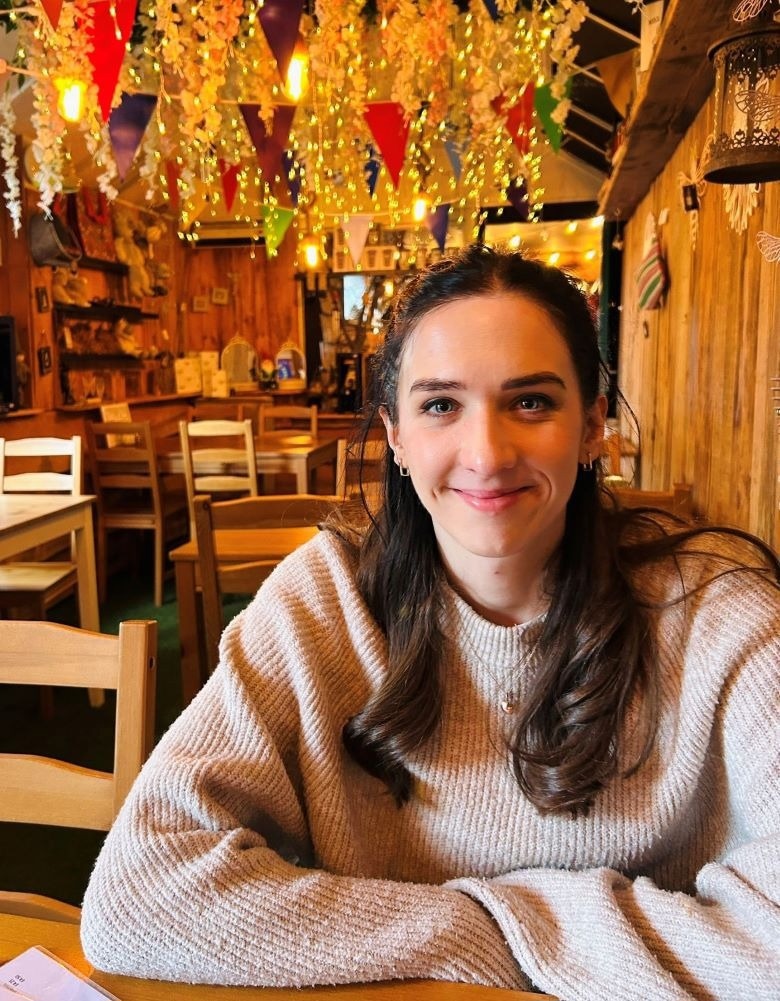
Lucy Shepherd. Image Credit: British Heart Foundation
The trial involved 90 women who had recovered from heart problems caused by a specific type of breast cancer treatment. Most were in their 40s and 50s and would previously have been advised to stay on heart medication for life, due to fears their heart function would decline once the drugs were stopped.
Researchers found that 98 per cent of the group who stopped taking their heart medication had no change in their heart function after one year, with only one woman experiencing a decline in her heart's pumping ability.
Women who came off their medication also reported a slightly better quality of life at 12 months than those who continued, based on their scores on questionnaires designed to measure quality of life in people with heart failure. The study is published in the European Heart Journal.
Lucy Shepherd from Hertfordshire was diagnosed with breast cancer shortly after her 33rd birthday. An echocardiogram during her treatment revealed that her heart function had declined and she was put on medication to help improve its function before starting another round of treatment.
Lucy, now 39, says “Living beyond my cancer treatment was difficult because no one could tell me whether I should stop or continue taking my heart medication. As I got fitter after my cancer treatment ended doctors gradually reduced my heart medication dosages, but I was still having side effects like a low heart rate and fatigue. I also had the mental burden of remembering to take them and the worry of what would happen if I missed a dose.
“Being part of the trial and having the chance to come off my heart medication has definitely improved my life. I’m still taking hormone therapy, but I don’t live with the same fear I once had. It has helped me to trust my body again - I feel strong and I know I can take on new challenges now.”
The women in the trial will continue to be followed up over the next five years to monitor their heart health. But the researchers suggest their findings can start important conversations between survivors and their doctors about whether they need to continue treatment long-term.
Professor Charlotte Manisty, Head of Clinical Cardiovascular Science at University College London and consultant cardiologist at Barts Heart Center and University College Hospitals London, led the trial. She said: "Modern breast cancer treatment is a remarkable success story. But the damaging effects of these drugs on the heart leaves survivors and their doctors with difficult questions about ongoing treatment to maintain their heart health.
"Our study provides the first evidence that heart failure therapies can be safely stopped in survivors whose hearts have recovered, with the support of ongoing close monitoring. We hope these findings will be encouraging for survivors and their doctors, giving hope for a future free from treatment."
Breast cancer is the most common cancer in the UK, with nearly 60,000 new cases diagnosed each year. Approximately 15 to 20 per cent of breast cancer cases are HER2-positive, meaning the breast cancer cells have higher than normal levels of a protein called HER2 on their surface. These patients are usually offered targeted biological treatments such as Trastuzumab (better known as Herceptin), which attach to HER2 receptors to help block the growth and spread of cancer.
But, in around 10 per cent of patients, this treatment causes problems with heart function, leaving them in need of treatment with multiple medications – such as beta-blockers and ACE inhibitors – to help recovery. Survivors are currently advised to stay on these drugs for life, even after their cancer treatment ends and their heart recovers.
The trial involved 90 breast cancer survivors at four hospitals in the UK who started taking heart failure medication after a diagnosis of HER2-targeted therapy-related cardiac dysfunction, but whose hearts later recovered following treatment. All study volunteers were women, with an average age of 50.
Everyone in the study was randomly assigned to either gradually withdraw from their heart failure medication (46 women) or to continue taking it (44 women). They were followed closely for one year with blood tests, quality-of-life questionnaires and cardiac MRI scans to check whether their heart function had worsened.
One woman in the group that stopped their medication experienced a decline in her left ventricular ejection fraction (a measure of the heart's pumping ability). She didn't report any symptoms, but the decrease was picked up on an MRI scan at 12 months. Her heart function improved when she started taking their heart failure medication again.
None of the group that continued to take their heart failure treatment saw a decline in their heart function.
Overall, left ventricular ejection fraction remained stable in both groups (minus one per cent in the withdrawal group and minus 0.2 per cent in the continuation group) with no significant differences between the two groups after one year (withdrawal group 55.2 per cent compared to 55.6 per cent in continuation group).
None of the women in the trial reported any heart failure symptoms, required hospital treatment or experienced any other heart problems during the trial.
These findings will be hugely encouraging for the thousands of breast cancer survivors whose heart health has been affected by lifesaving cancer treatment.
The study results give hope that many women will be able to safely stop medicines once their heart has recovered. The importance of ongoing monitoring is highlighted by the one study participant whose heart scan showed her heart function deteriorated but then bounced back when her heart treatment was restarted. More research is needed and the women will be followed up for longer, but in the meantime the good news for this group of breast cancer survivors is lifelong medications after heart complications need not be the default.”
Dr. Sonya Babu-Narayan, clinical director, British Heart Foundation and consultant cardiologist
The study was also supported by the National Institute for Health and Care Research Biomedical Research Centre: UCLH.
Lucy’s story
Lucy was diagnosed with triple positive breast cancer, meaning her cancer was positive for two different receptors as well as the HER2 protein. “I didn’t believe it for a while. I’d been working in clinical trials governance in the NHS for about five years when I was diagnosed, working in the team that issues approvals for oncology trials.
“Having triple positive breast cancer meant I was at higher risk, but also that there were targeted treatments available. I started on chemotherapy and about halfway through that I started on my first HER2-targeted treatment, followed by surgery.
“After surgery I was going to start taking a different HER2-targeted treatment. I was really keen to get going but, on the day I was meant to consent to the new treatment, a review of an echocardiogram I’d recently had showed that my heart function had declined.
“The doctors told me it was because of the HER2-targeted treatment and my heart function would need to improve before I could start the new protocol, but they couldn’t tell me if that would definitely happen or how long it would take.
“Being told I had heart problems from my cancer treatment was a shock – another thing to get my head around. I thought the worst had already happened, I’d been really unlucky with my breast cancer diagnosis but I didn’t really think about the other things that could happen because of my treatment. Before I started the HER2-targeted treatment the doctors told me that there was a chance it could impact my heart, but you don’t think that it’ll happen to you.
“I started taking medicines to improve my heart function. I was put on ramipril [an ACE inhibitor] and bisoprolol [a beta-blocker]. It was difficult finding the right dose to start with and I was having side effects. If I forgot to take one of my tablets I’d worry about my heart. It felt like a lot – another thing to think about on top of everything else I was dealing with going through cancer treatment.
“Thankfully, after about three months tests showed that my heart function had improved. I was able to start taking the new HER2-targeted drug, but I had to have more monitoring after that.
“I was really nervous when I was randomized to stop taking my medication after I’d signed up to the trial. Withdrawing from the medication was scary, I felt like it was the thing holding me together and keeping me well because, after my cancer treatment ended, the doctors could never say that it would be fine to stop.
“You have to make so many decisions when you have cancer and it can be a really lonely place. I hope this research will help people in the same position by giving them the answers they don’t currently have. I can put what happened in the past and enjoy the freedom that being able to stop my heart medication has given me.”
 SBRT improves bowel health related quality-of-life in patients with localized intermediate-risk prostate cancer