Introduction
What is snow fungus?
Key bioactive compounds
Emerging health applications
How snow fungus supports skin hydration and repair
Future research directions
References
Further reading
From skin hydration and gut microbiota to cognition and glucose control, snow fungus is attracting scientific interest, but how close is it to becoming an evidence-based functional food?
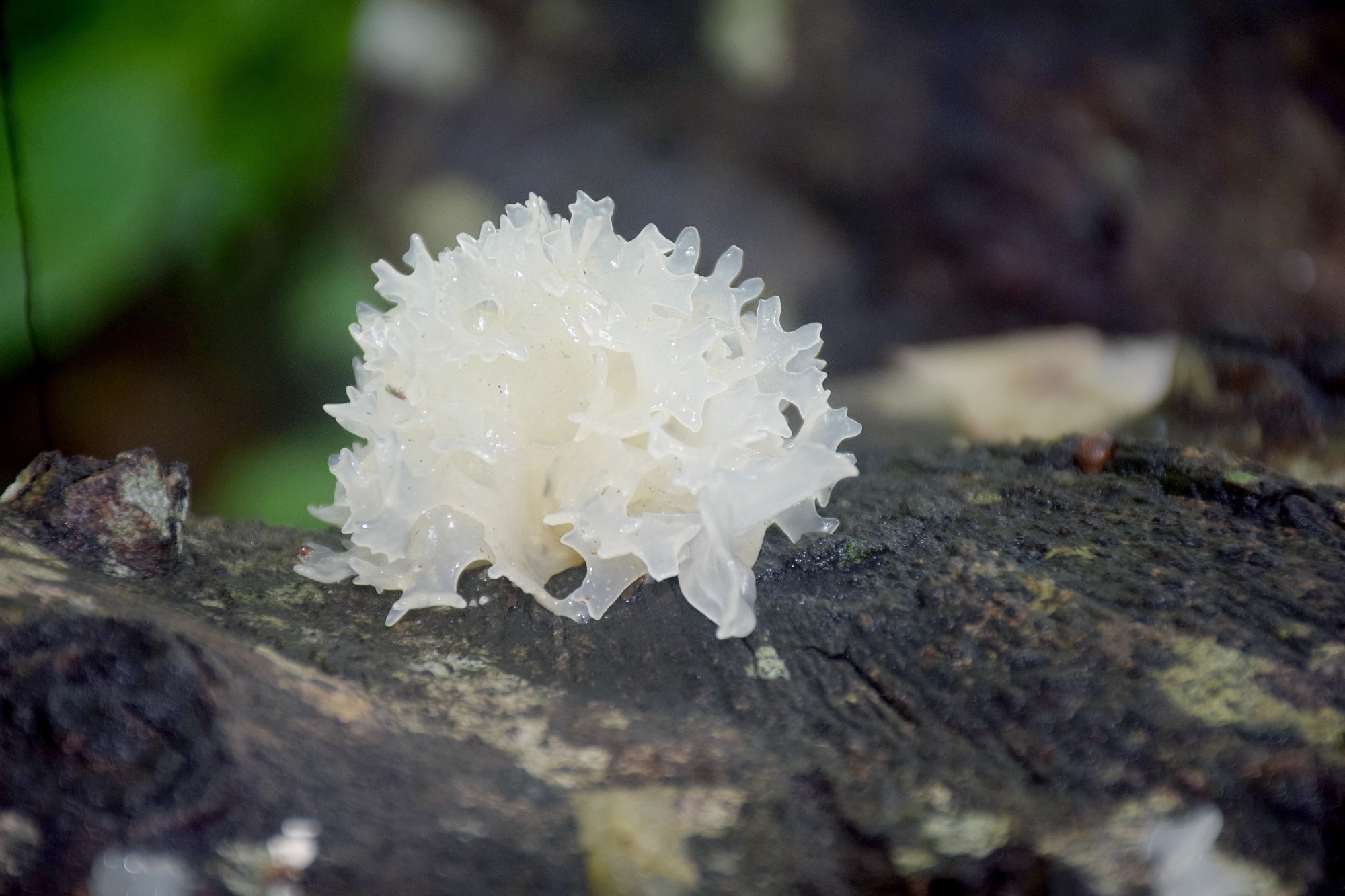 Image Credit: AlekhyaDev / Shutterstock.com
Introduction
Snow fungus is a traditional Eastern mushroom that has historically been used to manage a wide range of human ailments. Emerging research suggests potential biological effects, as isolated polysaccharides have been shown to regulate oxidative stress, immune responses, metabolic function, intestinal microbiota composition, and cognitive performance, although much of this evidence remains preclinical.1,2,3
What is snow fungus?
Tremella fuciformis is a gelatinous and white mycoparasitic basidiomycete, which belongs to the family Tremellaceae.1 Often referred to as snow fungus, this mushroom was traditionally cultivated throughout East Asia, with historical pharmacopeia texts describing its use in Chinese medicine to support pulmonary function, enhance immune resilience, and preserve dermal radiance.2
T. fuciformis primarily consists of non-starch polysaccharides and dietary fiber, with water-soluble structural glycans that may influence satiety, glucose metabolism, and intestinal fermentation.1,2,3 Dry-weight evaluations of the fungus also report a protein fraction characterized by amino acids, including lysine, leucine, and aspartic acid. Reported amounts of trace minerals like selenium, zinc, iron, and copper, as well as B-complex vitamins, vary with strain, cultivation conditions, fungal material, and analytical method.1,2
Whole fruiting bodies, mycelial preparations, fermentation products, and purified polysaccharide fractions are compositionally distinct and should not be regarded as interchangeable.1,2,3 Polysaccharides represent the principal bioactive constituents of T. fuciformis. These comprise acidic heteropolysaccharides, neutral heteropolysaccharides, acidic oligosaccharides, cell-wall polysaccharides, and exopolysaccharides, with reported molecular weights ranging from approximately 1.08 × 10³ to 3.74 × 10⁶ Da. Accumulating evidence suggests that molecular weight and branching patterns influence their biological activity, although the structure–activity relationship has not yet been fully elucidated.1
These discoveries have led the pharmaceutical and functional foods industries to explore scalable methods to extract beneficial bioactive ingredients from snow fungus. Submerged fermentation of mycelial or yeast-like cultures, for example, represents a more controllable method for biosynthetic production. In individual studies summarized by Ma and colleagues, this pH-sensitive method yielded 4.48 g/L of extracellular polysaccharides at a pH of 6.0, whereas maintaining pH at 7.0 resulted in a 74.8% enrichment of the acidic polysaccharide fraction; these values depend on strain and processing conditions.2
 Image Credit: Utikhrt / Shutterstock.com
Key bioactive compounds
Tremella fuciformis polysaccharides (TFPs) are complex heteropolysaccharides. Many characterized acidic fractions contain an α-(1,3)-linked D-mannan-rich backbone attached to D-xylose, β-D-glucuronic acid, L-fucose, and D-galactose side chains, although monosaccharide composition and branching vary among preparations.1,2,3 These highly branched sugar chains act as biological response modifiers and, in experimental systems, interact with immune-cell receptors and signaling pathways to alter macrophage, lymphocyte, and cytokine responses.1,2
T. fuciformis contains phenolic and flavonoid compounds that may contribute to antioxidant activity observed in chemical and experimental assays, including phenolic acids like 4-hydroxybenzoic acid, gentisic acid, and 4-coumaric acid. Flavonoids and triterpenoids are also present in snow fungus, although their bioavailability and clinical significance remain uncertain.1
The T. fuciformis cell wall is a source of glycoproteins and acidic heteropolysaccharides known as glucuronoxylomannans. Glucuronoxylomannans exhibit hygroscopic properties, forming a lightweight, protective matrix that effectively retains moisture. Acidic polysaccharide fractions have also been associated with immunomodulatory, antioxidant, hypoglycemic, and prebiotic effects in cell and animal studies.1,3
Emerging health applications
Growing scientific evidence supports the potential biological and therapeutic utility of T. fuciformis bioactive components across various organ systems. Within the immune system, TFPs have altered macrophage activity, lymphocyte responses, cytokine production, and other components of innate and adaptive immunity in cell and animal models.1,2
One tested TFP preparation increased sirtuin-1 (SIRT1) expression and protected cultured human skin fibroblasts from oxidative stress-induced injury. In one study, pre-treating human skin fibroblasts with TFPs across the tested concentration range reduced reactive oxygen species generation and apoptosis following hydrogen peroxide exposure, with associated changes in extracellular signal-regulated kinase (ERK) and protein kinase B (Akt) signaling.4
Cognitive effects have been observed in an eight-week randomized controlled trial of 75 adults with subjective cognitive impairment. Herein, oral T. fuciformis at 600 or 1,200 mg/day significantly improved subjective memory complaints, short-term memory, and executive functions.5 The short duration, small placebo group, and use of a specific preparation limit generalization to ordinary culinary consumption or diagnosed neurodegenerative disease.5
In a 12-week exploratory trial involving 56 overweight or obese prediabetic individuals who consumed a standardized T. fuciformis beverage, modest changes in two metabolic measures were observed. Specifically, glycated hemoglobin A1c (HbA1c) levels declined from 6.03% to 5.96%, and waist circumference decreased by approximately 1.7 cm.6 These preliminary findings require confirmation in larger trials with clear between-group analyses and longer follow-up.6
In high-fat-diet-fed mice, TFPs also modulated gut microbiota composition, increased short-chain fatty acid production, and altered satiety-associated intestinal hormones, including glucagon-like peptide-1 (GLP-1) and peptide YY (PYY).7 Fecal microbiota transplantation reproduced part of the anti-obesity effect, supporting a microbiota-dependent mechanism in this animal model rather than establishing efficacy in humans.7
 Image Credit: Ratmanant Yotsurin / Shutterstock.com
How snow fungus supports skin hydration and repair
HA is widely described as a highly water-binding polymer, while Tremella polysaccharides also possess substantial water-binding capacity and form a hydrating film on the skin.2,3,8 Direct comparative clinical evidence against topical HA remains insufficient, and the skin penetration of different TFP fractions has not been established.
Experimental studies indicate that TFPs protect skin fibroblasts against oxidative injury by increasing SIRT1 expression and modulating ERK/Akt signaling pathways, thereby reducing reactive oxygen species generation and apoptosis.4 These findings derive from cultured cells and do not yet demonstrate prevention or treatment of human skin aging.4
T. fuciformis also inhibits melanin production and accelerates cell migration in vitro. The melanogenesis findings were obtained in murine B16F10 melanoma cells, while migration was assessed in human keratinocyte and fibroblast wound-closure assays; clinical skin-brightening and wound-healing effects have not been established.9
In a DNFB-induced mouse model of atopic dermatitis, oral and topical TFP treatment improved transepidermal water loss, epidermal thickening, and ear edema, with oral treatment showing greater efficacy.10 These changes were associated with regulatory T-cell responses, altered fecal metabolites, and modified gut microbiota composition, but human efficacy has not been demonstrated.10
Future research directions
Despite these promising findings, most studies investigating potential clinical applications of T. fuciformis have been performed in cell culture and animal models, with relatively few well-designed human clinical trials currently available.1,3 Before these studies can be expanded, industrial processors must standardize extraction methods to ensure consistent molecular weights while preserving the activity of antioxidants and other bioactives.3
Future research should also clarify the structure–activity relationships of different polysaccharide fractions, establish standardized manufacturing protocols, evaluate long-term safety, and determine optimal dosing for specific clinical indications.1,3 Studies should clearly distinguish fruiting-body foods, mycelial products, fermentation-derived materials, and purified fractions while addressing bioavailability, pharmacokinetics, interactions, and clinically meaningful outcomes.1,2,3
References
- Li, S., Zhao, K., Li, J., et al. (2025). Recent advances in polysaccharides from Tremella fuciformis: isolation, structures, bioactivities and application. Frontiers in Nutrition 12. DOI: 10.3389/fnut.2025.1663327. https://www.frontiersin.org/journals/nutrition/articles/10.3389/fnut.2025.1663327/full
- Ma, X., Yang, M., He, Y., et al. (2021). A review on the production, structure, bioactivities and applications of Tremella polysaccharides. International Journal of Immunopathology and Pharmacology 35. DOI: 10.1177/20587384211000541. https://journals.sagepub.com/doi/10.1177/20587384211000541
- Fu, G., Li, Y., He, Y., et al. (2025). Extraction, structure and bioactivity of Tremella fuciformis polysaccharides: A review. Food & Medicine Homology 2(4); 9420038. DOI: 10.26599/fmh.2025.9420038. https://www.sciopen.com/article/10.26599/FMH.2025.9420038
- Shen, T., Duan, C., Chen, B., et al. (2017). Tremella fuciformis polysaccharide suppresses hydrogen peroxide-triggered injury of human skin fibroblasts via upregulation of SIRT1. Molecular Medicine Reports 16(2); 1340-1346. DOI: 10.3892/mmr.2017.6754. https://www.spandidos-publications.com/10.3892/mmr.2017.6754
- Ban, S., Lee, S., Jeong, H. S., et al. (2018). Efficacy and Safety of Tremella fuciformis in Individuals with Subjective Cognitive Impairment: A Randomized Controlled Trial. Journal of Medicinal Food 21(4); 400-407. DOI: 10.1089/jmf.2017.4063. https://journals.sagepub.com/doi/abs/10.1089/jmf.2017.4063
- Gitsomboon, S., Ratanapornsompong, G., Ongphiphadhanakul, B., et al. (2024). Tremella fuciformis beverage improves glycated hemoglobin A1c and waist circumference in overweight/obese prediabetic subjects: a randomized controlled trial. BMC Nutrition 10(1). DOI: 10.1186/s40795-024-00842-0. https://link.springer.com/article/10.1186/s40795-024-00842-0
- He, G., Chen, T., Huang, L., et al. (2022). Tremella fuciformis polysaccharide reduces obesity in high-fat diet-fed mice by modulation of gut microbiota. Frontiers in Microbiology 13. DOI: 10.3389/fmicb.2022.1073350. https://www.frontiersin.org/journals/microbiology/articles/10.3389/fmicb.2022.1073350/full
- NaturNext. (2024). Hyaluronic acid: how to replace it with a mushroom. NaturNext Insights, 1-3. https://www.naturnext.eu/en/hyaluronic-acid-how-to-replace-it-with-a-mushroom. Accessed on 04 June 2026.
- Chiang, J., Tsai, F., Lin, T., et al. (2022). Tremella fuciformis Inhibits Melanogenesis in B16F10 Cells and Promotes Migration of Human Fibroblasts and Keratinocytes. In Vivo 36(2); 713-722. DOI: 10.21873/invivo.12757. https://iv.iiarjournals.org/content/36/2/713
- Xie, L., Yang, K., Liang, Y., et al. (2022). Tremella fuciformis polysaccharides alleviate induced atopic dermatitis in mice by regulating immune response and gut microbiota. Frontiers in Pharmacology 13. DOI: 10.3389/fphar.2022.944801. https://www.frontiersin.org/journals/pharmacology/articles/10.3389/fphar.2022.944801/full
Further Reading
Last Updated: Aug 5, 2026