What is squid ink?
The antioxidant power of squid ink
Potential health effects under investigation
How squid ink is used around the world
Limitations of current research
Conclusions
References
Further reading
From black pasta to bioactive research, squid ink is emerging as more than a culinary pigment, with studies pointing to antioxidant and antimicrobial potential while reminding us that human health benefits are still far from settled.
 Image Credit: Brent Hofacker / Shutterstock.com
Interest in marine-derived bioactive compounds has grown significantly in recent years, particularly as researchers seek sustainable sources of functional ingredients. Cephalopod byproducts, such as squid ink, have been widely explored to reduce food waste and identify potential bioactive compounds with nutraceutical and biomedical properties.
What is squid ink?
Squid ink is a dark secretion that squids eject from their ink sac when they sense danger. Squid ink, upon getting discharged into water bodies, confuses predators while acting as a chemical signal to alert other cephalopods. It is produced in the ink sac and consists of a suspension of melanin granules in a viscous medium, often mixed with mucus from the funnel organ.1,2
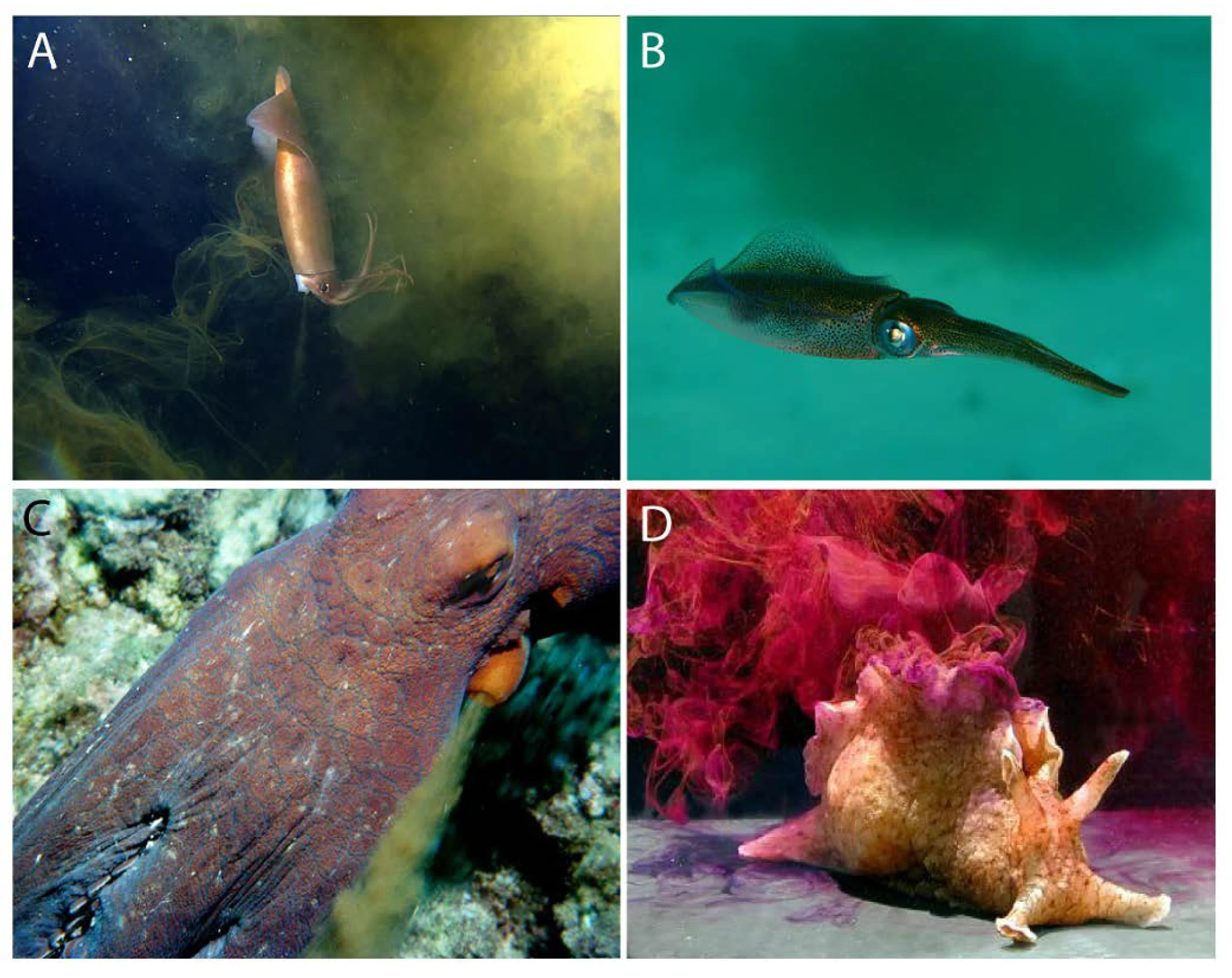
Inking mollusks. Three inking cephalopod mollusks (A–C) and one inking gastropod mollusk (D). (A) Humboldt squid, Dosidicus gigas (used with permission from the Monterey Bay Aquarium Research Initiative); (B) Squid with an ink cloud in the background (used with permission from Klaus Stiefel); (C) Octopus escaping and inking (used with permission from Jeffrey N. Jeffords); (D) Sea hare, Aplysia californica (used with permission from Genevieve Anderson). The sea hare’s use of ink as a chemical defense has been well studied and can be used as a model for exploring the cephalopods’ use of ink as a chemical defense.2
Squid ink is a complex biological mixture containing melanin (the dominant pigment), proteins, lipids, polysaccharides, glycosaminoglycans, enzymes, and trace metals such as copper and cadmium.1,2
Squid ink is a high-protein, low-carbohydrate, and low-fat product that contains minerals like calcium, phosphorus, and iron. Reported composition varies widely depending on species, sample preparation, and extraction method, with moisture often exceeding 60-80% and proteins generally representing the major component of the dry matter rather than a fixed nutritional percentage across all squid inks.4,6,7 The protein, carbohydrate, and lipid content of squid ink has been reported differently across studies like Loligo vulgaris and Loligo duvauceli and therefore should be interpreted as study-specific estimates rather than universal values.3,5
Squid ink is a rich source of melanin and bioactive chemical groups like amides, amines, alkenes, aldehydes, nitriles, alkanes, and carboxylic acids. Whereas whole seafood is typically consumed in large portions, squid ink is used in much smaller quantities as a flavoring and coloring agent, thereby limiting its contribution to daily nutrient intake.3,4
How Squids and Octopuses Create Ink Magic!
The antioxidant power of squid ink
Polysaccharides and melanin in squid ink can mitigate damage caused by highly reactive species such as superoxide anions, hydroxyl radicals, and nitric oxide radicals.1 Melanin, particularly eumelanin, appears to be a major contributor to this activity, although proteins, peptides, polysaccharides, and associated extractable compounds may also contribute depending on how the ink is processed.1,6,7
Squid ink also contains antioxidant enzymes, such as catalase and peroxidase, that further reduce oxidative stress and the proliferation of pathogenic bacteria by neutralizing unstable chemical ions in marine environments. In experimental models, squid ink extracts have demonstrated high radical-scavenging activity, including about 89% inhibition of nitric oxide production in one study and strong scavenging of DPPH, superoxide, and hydroxyl radicals in others.5,6,7
Water-soluble squid ink melanin (WSSM), prepared by alkaline extraction and purification, is a potent antioxidant; concentrations as low as 0.5-0.9 mg/mL reduce multiple free radical species by approximately 50%, while ethanolic extracts exhibit scavenging activity of up to 84%.1,4 More recent studies report even higher scavenging efficiencies for some radicals after enzymatic purification, underscoring how strongly the measured activity depends on extraction method, purity, and assay conditions.6
In chemical assays, the antioxidant capacity of squid ink extracts can, in some cases, approach that of standard antioxidant compounds like ascorbic acid when evaluated under similar conditions. However, these are not direct measures of clinical benefit, and assay-based comparisons should not be interpreted as proof that squid ink provides equivalent antioxidant effects in the human body.5,6
 Image Credit: Shutterstock AI / Shutterstock.com
Potential health effects under investigation
Preclinical studies on L. vulgaris extracts have reported antimicrobial activity against gram-negative bacteria, with inhibition zones of 21-28 mm for Escherichia coli, Klebsiella pneumoniae, and Pseudomonas aeruginosa.3,5 These antimicrobial effects have been linked to bioactive proteins, peptides, melanin-associated compounds, and other extractable constituents.1,3
In vitro, squid ink extracts inhibit protein denaturation by nearly 70%, a common marker of inflammatory activity. Additional studies also describe anti-inflammatory, immunomodulatory, and antitumor-related activities in experimental systems.1,2,4 Squid ink components may also induce apoptosis and inhibit tumor growth in certain models, with anticancer effects in liver epithelial cells attributed to the presence of ink peptidoglycans.1,3
Peptidoglycans affect cell division by inducing DNA damage and programmed cell death, both of which can interfere with the growth of cancer cells. However, most studies have been conducted using cell culture or animal models, underscoring the need for human research to accelerate clinical translation.2 At present, no clinical trials in humans confirm these proposed benefits.1,2
How squid ink is used around the world
Squid ink is primarily used as a flavoring and coloring agent rather than a nutritional ingredient in culinary applications. Squid ink imparts a dark color while deepening the savory taste of popular dishes like black pasta and risotto, Spanish arroz negro, Japanese ink-based soups, and Mediterranean seafood preparations.1,2
Cephalopod preparations differ regionally: in India, they are primarily dried, whereas in the Philippines, squid are first boiled in vinegar, then fried in oil with spices. Squid ink can also be found in both alcoholic and non-alcoholic beverages.2,4 Beyond cuisine, squid ink melanin is also being investigated as a natural food colorant, antioxidant ingredient, and potential functional material for food and biomedical applications.2,4,6
Squid ink is generally considered safe when consumed in culinary amounts; however, scientific data on its safety at higher doses or in concentrated forms remains limited. Individuals with seafood allergies, particularly mollusks, should exercise caution, as squid ink may trigger allergic reactions.2,4
Additionally, squid ink may contain trace amounts of heavy metals depending on environmental exposure, although some squid-ink melanin preparations can also bind and adsorb metals such as cadmium in experimental systems.4 The concentration of environmental contaminants like heavy metals can vary based on the source and habitat of the squid, thus emphasizing the importance of quality control, particularly if squid ink is to be developed for health-related applications.
Currently, there are no recommended intake levels for squid ink, further underscoring the need for controlled human studies to evaluate its safety profile.1,4 One recent study also reported increased mortality in Artemia nauplii at higher extract concentrations, suggesting that dose-dependent toxicity should be assessed carefully before concentrated squid ink products are promoted for health use.7
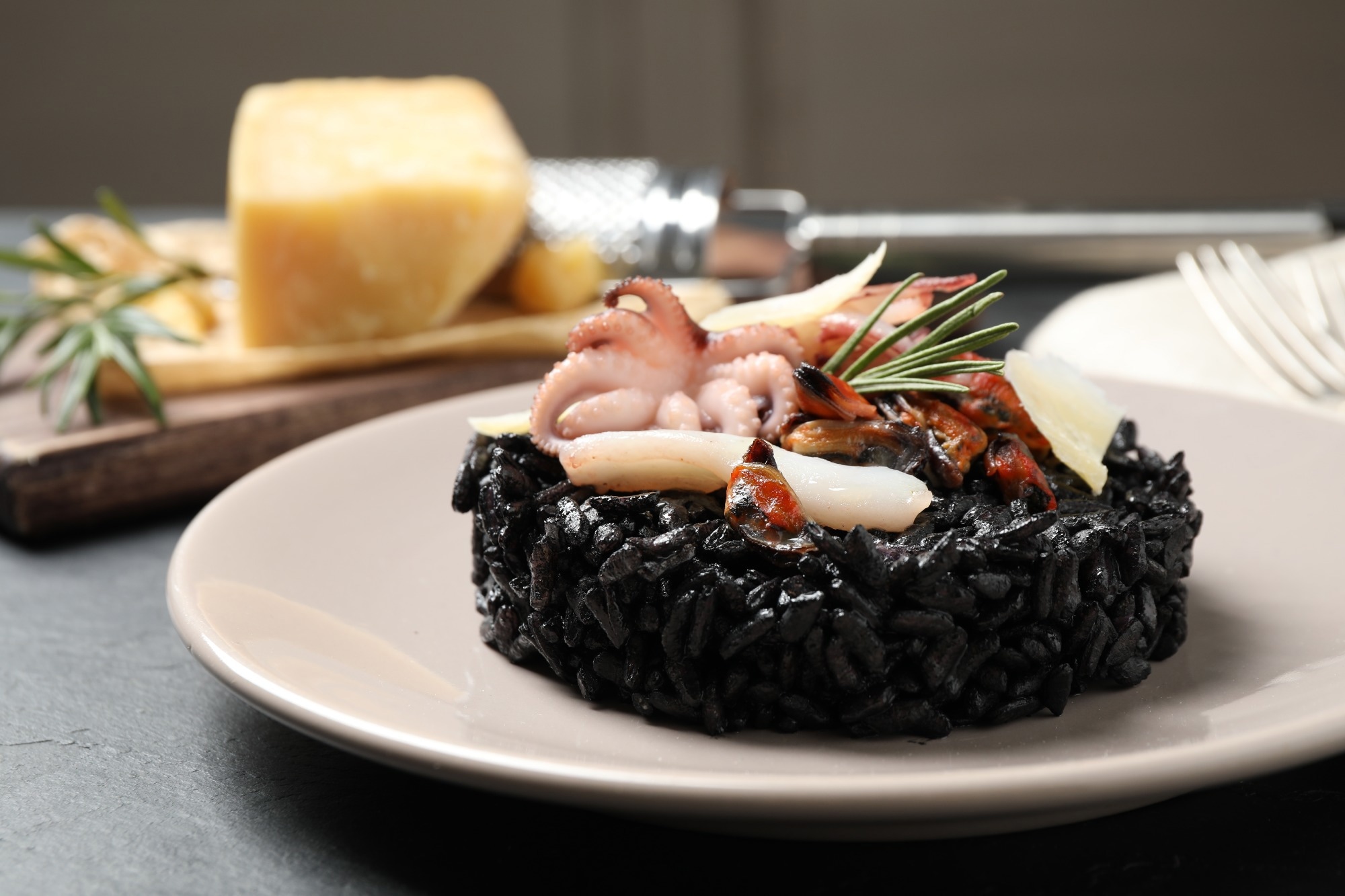 Image Credit: New Africa / Shutterstock.com
Limitations of current research
Most research on the functional properties of squid ink has been conducted using in vitro and in vivo models, with limited human data.2,3 Effective dosages and safety data need to be established, in addition to standardizing species selection and extraction methods.
Another major limitation is that the bioavailability of squid ink compounds in humans remains poorly understood; even when strong antioxidant or antimicrobial effects are observed in laboratory assays, it is not yet clear how much of these compounds are absorbed, metabolized, or remain active after digestion.2,4,6
Future research is also needed to confirm potential health benefits, identify active compounds in squid ink, understand their mechanisms, and assess their safety and effectiveness in humans.2,3,7
Conclusions
Squid ink is a marine-derived substance rich in bioactive compounds with reported antioxidant, antimicrobial, anti-inflammatory, and anticancer properties. These findings come primarily from laboratory and preclinical studies rather than human trials.1,2,4 However, research is still in its early stages, and its direct health benefits for humans remain unclear. As interest in marine bioactives continues to expand, squid ink represents a promising example of how traditional food ingredients may find new applications at the interface of nutrition, biotechnology, and medicine.
References
- Hossain, M.P., Rabeta, M.S., & Husnul Azan, T. (2018). Medicinal and therapeutic properties of cephalopod ink: a short review. Food Research 3(3); 188-198, DOI: 10.26656/fr.2017.3(3).201. https://www.researchgate.net/publication/328790300
- Derby, C. D. (2014). Cephalopod Ink: Production, Chemistry, Functions and Applications. Marine Drugs 12(5); 2700-2730. DOI: 10.3390/md12052700. https://www.mdpi.com/1660-3397/12/5/2700
- Nadarajah, S. K., Vijayaraj, R., & Mani, J. (2017). Therapeutic Significance of Loligo vulgaris (Lamarck, 1798) ink Extract: A Biomedical Approach. Pharmacognosy Research 9(Suppl 1); S105-S109. DOI: 10.4103/pr.pr_81_17. https://www.phcogres.com/article/9/5s/s105
- Liu, S., Liu, X., Zhang, X., et al. (2023). Exploring the Potential of Water-Soluble Squid Ink Melanin: Stability, Free Radical Scavenging, and Cd2+ Adsorption Abilities. Foods 12(21). DOI: 10.3390/foods12213963. https://www.mdpi.com/2304-8158/12/21/3963
- Jeyasanta, I. & Patterson, J. (2020). Bioactive Properties of Ink Gland Extract from Squid Loligo duvauceli. Ecologia 10 (1); 9-19, DOI: 10.3923/ecologia.2020.9.19. https://scialert.net/abstract/?doi=ecologia.2020.9.19
- Song, W., Xing, R., Yang, H., et al. (2023). Eumelanin: A natural antioxidant isolated from squid ink by new enzymatic technique and prediction of its structural tetramer. LWT 188. DOI: 10.1016/j.lwt.2023.115464. https://www.sciencedirect.com/science/article/pii/S0023643823010435
- Khandelwal, S., Devi, N.R., Subramaniyan, M., et al. (2023). Physicochemical characterization and therapeutic potential of ink from squid, Sepioteuthis lessoniana. 3 Biotech 13; 418. DOI: 10.1007/s13205-023-03830-6. https://link.springer.com/article/10.1007/s13205-023-03830-6
Further Reading
Last Updated: Mar 29, 2026
 Research suggests bamboo-based foods could support metabolic health