Introduction
What is mycelium?
Physical characteristics
Nutritional composition of mycelium
Health benefits and mechanisms
Comparison with plant proteins
Sustainability considerations
References
Further reading
From fermentation tanks to cardiometabolic health, whole-food mycelium is redefining how we produce protein, uniting nutrition science, food technology, and sustainability in a single scalable solution.
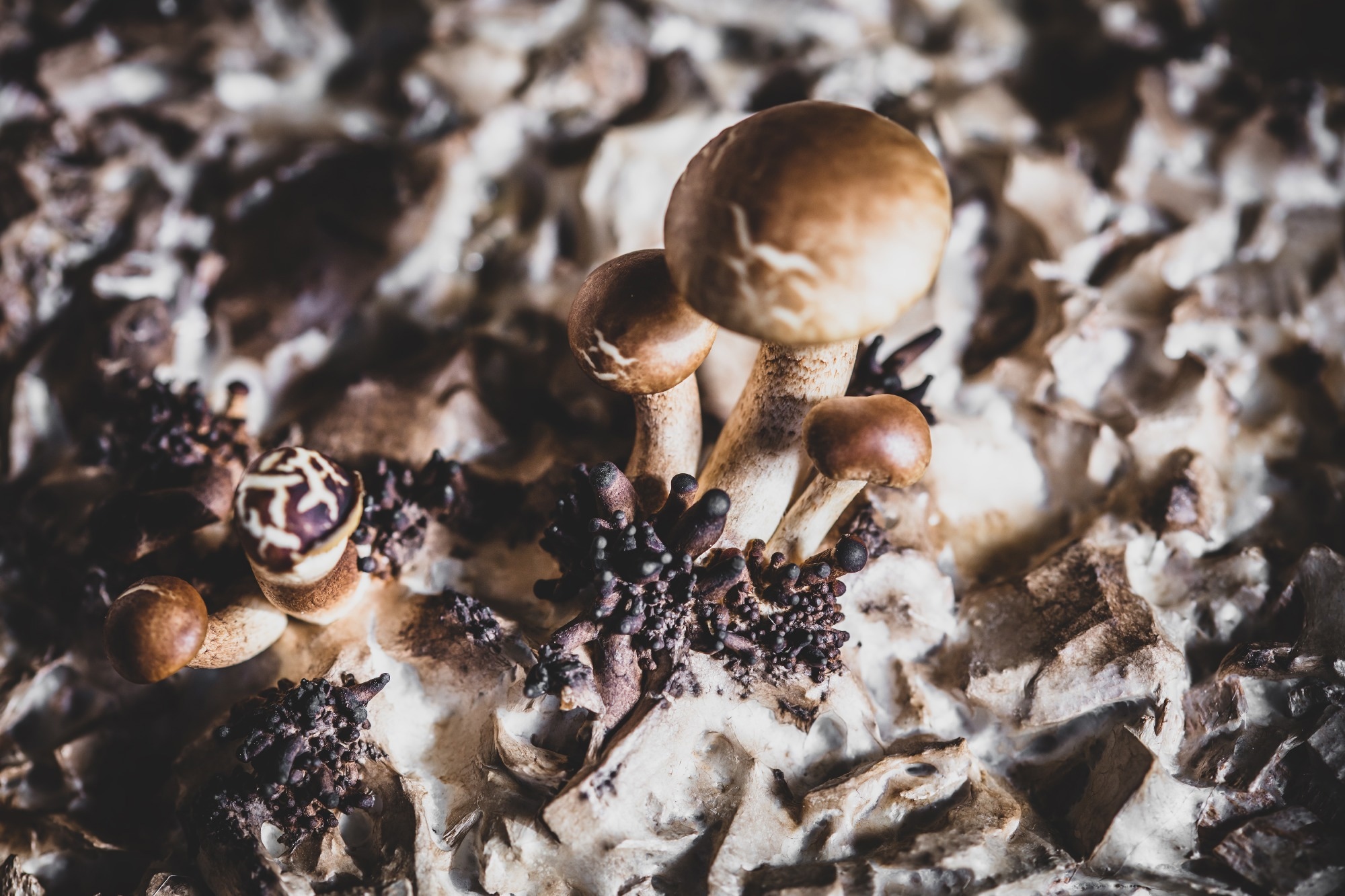 Image Credit: Miriam Doerr Martin Frommherz / Shutterstock.com
Introduction
Whole-food mycelium, which originates from filamentous fungi such as Fusarium venenatum and Pleurotus species, is currently being evaluated for its potential as an alternative protein source to conventional meat- or plant-based foods. Unlike soy or pea protein, which undergo extensive fractionation and isolation of specific bioactive components, mycelium maintains a complex whole-food matrix that mimics the fibrous structure of animal tissue while delivering a bioavailable amino acid profile.1,4
What is mycelium?
Fungi constitute a distinct biological kingdom characterized by vegetative growth in elongated, filamentous cells called hyphae. A network of these hyphal cells is collectively termed mycelium, which functions in nutrient absorption and environmental interaction.1
Conventional plant protein sources are limited by seasonal growing cycles that typically require several months from planting to harvest. In contrast, industrial production of mycoprotein from Fusarium venenatum occurs via continuous fermentation in air-lift fermenters, enabling controlled, year-round biomass production independent of climate conditions.2,4 Following fermentation, the broth undergoes a heat-shock step (typically above 68°C) to reduce ribonucleic acid (RNA) content to safe consumption levels, followed by pasteurization and centrifugation to recover the fungal biomass.4,5
The functional utility of mycelium in food technology stems from its filamentous morphology, in which hyphae naturally interweave into a three-dimensional network. During downstream processing, freezing aligns hyphae into bundles that contribute to a fibrous texture resembling muscle tissue. Beyond texture formation, mycoprotein streams have demonstrated gelling, foaming, and emulsifying properties, attributable to hyphal structure, cell wall polysaccharides, and surface-active proteins such as cerato-platanins.4,5
Physical characteristics
The biochemical architecture of the fungal cell wall differs from plant cell walls that rely primarily on cellulose. Mycelial cell walls are composed of a chitin–β-glucan matrix, in which chitin (β-1,4-linked N-acetylglucosamine) provides structural rigidity.3
Chitin microfibrils are covalently associated with β-glucans containing β-1,3 and β-1,6 glycosidic linkages. These β-glucans are recognized by immune receptors such as dectin-1 and complement receptor 3 (CR3), contributing to immunomodulatory signaling.3 However, most mechanistic immunological data derive from studies using isolated or purified β-glucans rather than whole-food mycoprotein, and direct clinical immunomodulatory effects following dietary intake remain an area of ongoing research.
Nutritional composition of mycelium
Whole-food mycelium typically contains approximately ~45% protein on a dry weight basis in commercial Fusarium venenatum mycoprotein, with a complete essential amino acid profile.1,2,4 Reported PDCAAS values for mycoprotein approach 0.99–1.0, comparable to high-quality animal proteins.4
The dietary fiber fraction of mycoprotein consists primarily of β-glucan and chitin, forming a largely insoluble matrix that resists digestion in the small intestine.1,3 This fiber fraction typically represents approximately 25% of dry weight and is composed of roughly two-thirds β-glucan and one-third chitin.4 This structure contributes to delayed nutrient absorption and metabolic modulation.
Mycoprotein provides B vitamins, including riboflavin and niacin, and mineral bioavailability can be influenced by fermentation conditions.4 Biofortification strategies during fermentation have also been explored to enhance micronutrient density.1
Health benefits and mechanisms
Controlled trials and reviews report reductions in total cholesterol following mycoprotein intake, with pooled estimates of approximately −0.5 mmol/L, particularly among individuals with elevated baseline cholesterol. Mechanistically, effects are attributed to the chitin–β-glucan fiber matrix influencing bile acid metabolism and lipid absorption.4
In individuals with type 2 diabetes, acute ingestion of mycoprotein has been shown to reduce postprandial glucose incremental area under the curve compared with chicken controls. These effects were observed in both white European and South Asian participants, independent of ethnicity. Proposed mechanisms include delayed gastric emptying and altered carbohydrate digestion kinetics, although enzyme sequestration effects have primarily been demonstrated in vitro.6
Mycoprotein has also been shown to support muscle protein synthesis to a degree comparable to animal-derived proteins, and longer-term consumption may contribute to favorable cardiometabolic risk profiles.4,7
Comparison with plant proteins
Pea protein contains lower methionine concentrations (<1.6% of total protein), whereas mycoprotein provides a more balanced essential amino acid profile.7
In resistance-trained individuals consuming 25 g protein boluses, mycoprotein, pea protein, and their blend supported comparable postexercise myofibrillar protein synthesis rates over 4 hours, despite differences in amino acid kinetics.7
Blending mycelium with plant or animal proteins has also been proposed in hybrid meat and cell-cultured meat systems to improve texture, structural integrity, and nutritional balance while reducing reliance on conventional livestock inputs.9
Sustainability considerations
Modeling scenarios project that substituting 20% of global ruminant meat consumption with microbial protein could substantially reduce pasture expansion, deforestation, and associated CO2 emissions by 2050. However, the modeled benefits exhibit nonlinear saturation effects at higher substitution levels, indicating that marginal environmental gains diminish beyond moderate replacement levels.8
Fermentation-derived mycoprotein production has been associated with substantially lower greenhouse gas emissions, land use, and water requirements compared with beef production.4,8
Research also explores the use of agro-industrial substrates to enhance circular bioeconomy approaches in fungal biomass production.2
References
- Holt, R. R., Munafo, J. P., Salmen, J., et al. (2023). Mycelium: A Nutrient-Dense Food To Help Address World Hunger, Promote Health, and Support a Regenerative Food System. Journal of Agricultural and Food Chemistry 72(5); 2697-2707. DOI: 10.1021/acs.jafc.3c03307. https://pubs.acs.org/doi/10.1021/acs.jafc.3c03307
- Majumder, R., Miatur, S., Saha, A., & Hossain, S. (2024). Mycoprotein: production and nutritional aspects: a review. Sustainable Food Technology 2(1); 81-91. DOI: 10.1039/d3fb00169e. https://pubs.rsc.org/en/content/articlehtml/2024/fb/d3fb00169e
- Amirinia, F., Jabrodini, A., Morovati, H., et al. (2025). Fungal β-Glucans: Biological Properties, Immunomodulatory Effects, Diagnostic and Therapeutic Applications. Infectious Diseases and Clinical Microbiology 7(1); 1-16. DOI: 10.36519/idcm.2025.448. https://www.idcmjournal.org/fungal-%ce%b2-glucans-a-molecule-or-supermolecule
- Derbyshire, E. J., Theobald, H., Wall, B. T., & Stephens, F. (2023). Food for our future: the nutritional science behind the sustainable fungal protein – mycoprotein. A symposium review. Journal of Nutritional Science 12. DOI: 10.1017/jns.2023.29. https://www.cambridge.org/core/journals/journal-of-nutritional-science/article/food-for-our-future-the-nutritional-science-behind-the-sustainable-fungal-protein-mycoprotein-a-symposium-review/3E23BD9BF6DC721B015D6CD30904A057
- Lonchamp, J., Stewart, K., Munialo, C. D., et al. (2022). Mycoprotein as novel functional ingredient: Mapping of functionality, composition and structure throughout the Quorn fermentation process. Food Chemistry, 396, 133736. DOI: 10.1016/j.foodchem.2022.133736. https://www.sciencedirect.com/science/article/pii/S0308814622016983
- Cherta-Murillo, A., Zhou, K., Tashkova, M., et al. (2025). Investigating the effects of mycoprotein and guar gum on postprandial glucose in type 2 diabetes: a double-blind randomised controlled trial. Nutrition & Diabetes 15(1). DOI: 10.1038/s41387-025-00375-w. https://www.nature.com/articles/s41387-025-00375-w
- West, S., Monteyne, A. J., Whelehan, G., et al. (2023). Ingestion of mycoprotein, pea protein, and their blend support comparable postexercise myofibrillar protein synthesis rates in resistance-trained individuals. American Journal of Physiology-Endocrinology and Metabolism 325(3); E267-E279. DOI: 10.1152/ajpendo.00166.2023. https://journals.physiology.org/doi/full/10.1152/ajpendo.00166.2023
- Humpenöder, F., Bodirsky, B. L., Weindl, I., et al. (2022). Projected environmental benefits of replacing beef with microbial protein. Nature 605(7908); 90-96. DOI: 10.1038/s41586-022-04629-w. https://www.nature.com/articles/s41586-022-04629-w
- Maseko, K. H., Regnier, T., Bartels, P., & Meiring, B. (2025). Mushroom mycelia as sustainable alternative proteins for the production of hybrid cell‐cultured meat: A review. Journal of Food Science 90(2). DOI: 10.1111/1750-3841.70060. https://ift.onlinelibrary.wiley.com/doi/10.1111/1750-3841.70060
Further Reading
Last Updated: Feb 25, 2026
 Five diet patterns shaping health in older Americans