Introduction
Nutritional composition
Effects on metabolic health
Comparative analysis
Culinary applications and acceptability
Sustainability
Research gaps and future directions
Conclusions
References
Further reading
Fonio is an ancient West African grain with low glycemic properties, nutrient density, and climate resilience that positions it as a promising candidate for metabolic health support and sustainable food systems diversification.
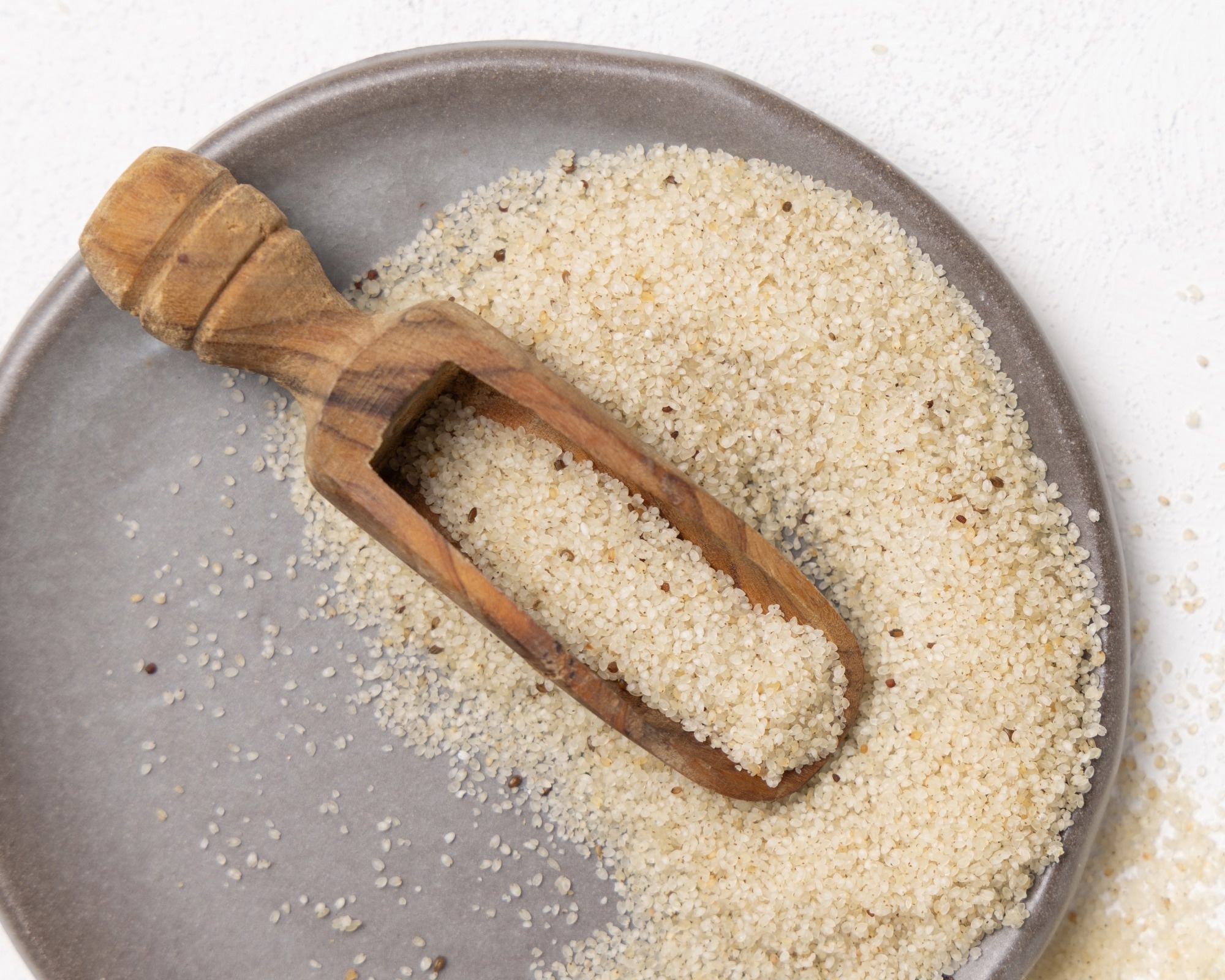 Image Credit: Katrinshine / Shutterstock.com
Introduction
Fonio has been cultivated throughout savannah regions of West Africa for over 5,000 years. This small-seeded crop can be further characterized as white (Digitaria exilis) or black fonio (Digitaria iburua), both of which have historically supported regional food security.1,2
Fonio, which thrives in arid and marginal environments, can mature within 70–90 days, which makes it one of the world’s fastest-growing cereals. As a tetraploid C4 cereal adapted to hot, drought-prone climates and nutrient-poor sandy soils, fonio is increasingly recognized as an “orphan crop” with significant climate-resilience potential.2 Global interest in fonio has risen due to its gluten-free whole-grain profile, micronutrient content, and potential relevance for metabolic health.1,2
Nutritional composition
White fonio primarily consists of complex carbohydrates comprising about 72–79%1,9 of its nutrient composition, as well as 8–12% protein1,3 and dietary fiber. Carbohydrates are present as starch, with amylose representing approximately 20–25% of total starch content.1
White fonio protein consists of sulfur-containing amino acids, such as methionine and cysteine, which are often limited in commonly consumed cereals.1 Fonio is naturally low in fat (approximately 2–4%1,9) and gluten-free. Dietary fiber content varies depending on processing status, with whole-grain fonio generally providing higher total dietary fiber compared to milled forms.1,3
Fonio is also a source of iron, magnesium, phosphorus, zinc, and B-group vitamins. Reported mineral composition includes appreciable levels of potassium, calcium, magnesium, iron, manganese, copper, and zinc, although concentrations vary by variety and growing conditions.1,9
Fonio also contains bioactive phytochemicals including polyphenols, tannins, saponins, and alkaloids. Germination significantly increases total phenolic content, antioxidant activity, protein digestibility, resistant starch, and mineral bioavailability, while reducing antinutritional factors such as phytates, tannins, and saponins.1,3
Fonio is classified as a low-GI cereal. According to a comprehensive meta-analysis of millets, mean GI across millets is approximately 52.7 ± 10.3, with fonio categorized among the low-GI millets (<55), significantly lower than milled rice (mean GI ~71.7) and refined wheat (mean GI ~74.2).6
It is important to note that the following clinical outcomes derive from pooled millet data rather than fonio-specific RCTs. Long-term millet consumption has been associated with significant reductions in fasting blood glucose (~12%), post-prandial glucose (~15%), and HbA1c levels in pre-diabetic individuals.6
Animal studies report improvements in fasting blood glucose levels when fonio is incorporated into the diet.5 Experimental evidence in streptozotocin-induced diabetic models suggests fonio consumption may attenuate hyperglycemia and oxidative stress markers.5
In vitro investigations summarized in the literature also report inhibition of carbohydrate-digesting enzymes such as α-amylase and α-glucosidase; however, these findings are mechanistic and not yet confirmed in human intervention trials.1
About 75% of fonio grain lipids are unsaturated.1 While direct human lipid-lowering trials with fonio are lacking, the presence of dietary fiber, resistant starch, and unsaturated fatty acids supports a biologically plausible, mechanistic rationale for potential lipid-modulating effects through bile acid binding, fermentation-derived short-chain fatty acid production, and improved lipid metabolism.1,7
Together with its low glycemic response and fiber-rich composition, these properties support the potential role of fonio in enhancing satiety, moderating energy intake, and supporting weight management.1,6
The Most Nutritious Grain You've Never Heard Of | National Geographic
Comparative analysis
Unlike wheat, fonio is naturally gluten-free.1 Compared with major staples such as white rice and refined wheat, fonio demonstrates significantly lower glycemic responses.6 Pearl millet, finger millet, kodo millet, and sorghum typically exhibit intermediate GI values (55–69), whereas fonio is classified among low-GI millets.6
Compared with other cereals such as wheat, rice, and maize, fonio contains relatively higher levels of sulfur-containing amino acids (methionine and cysteine), which are often limiting in those grains.1
Germination and processing methods further enhance mineral bioavailability, protein digestibility, antioxidant activity, and techno-functional properties.3,10
Culinary applications and acceptability
Fonio has historically been consumed throughout West Africa, where it is traditionally prepared as porridges, couscous-like dishes, puddings, breads, and fermented or non-fermented beverages.4
Beyond traditional contexts, fonio is increasingly adapted for modern dietary patterns. Fonio flour is used in baked goods such as bread, biscuits, crackers, breakfast cereals, pasta, and gluten-free products.1,4 Systematic review evidence further documents its incorporation into specialty products including sourdough formulations, granulated dough products, cookies, crisps, and both alcoholic and non-alcoholic beverages, reflecting expanding global culinary applications.4
Blending fonio with legumes such as pigeon pea significantly increases protein, essential amino acids, and micronutrient content while maintaining acceptable sensory properties.8
Fonio flour also exhibits strong water absorption, swelling power, gel stability, and rheological properties, supporting its suitability in gluten-free formulations and gel-based food systems.10
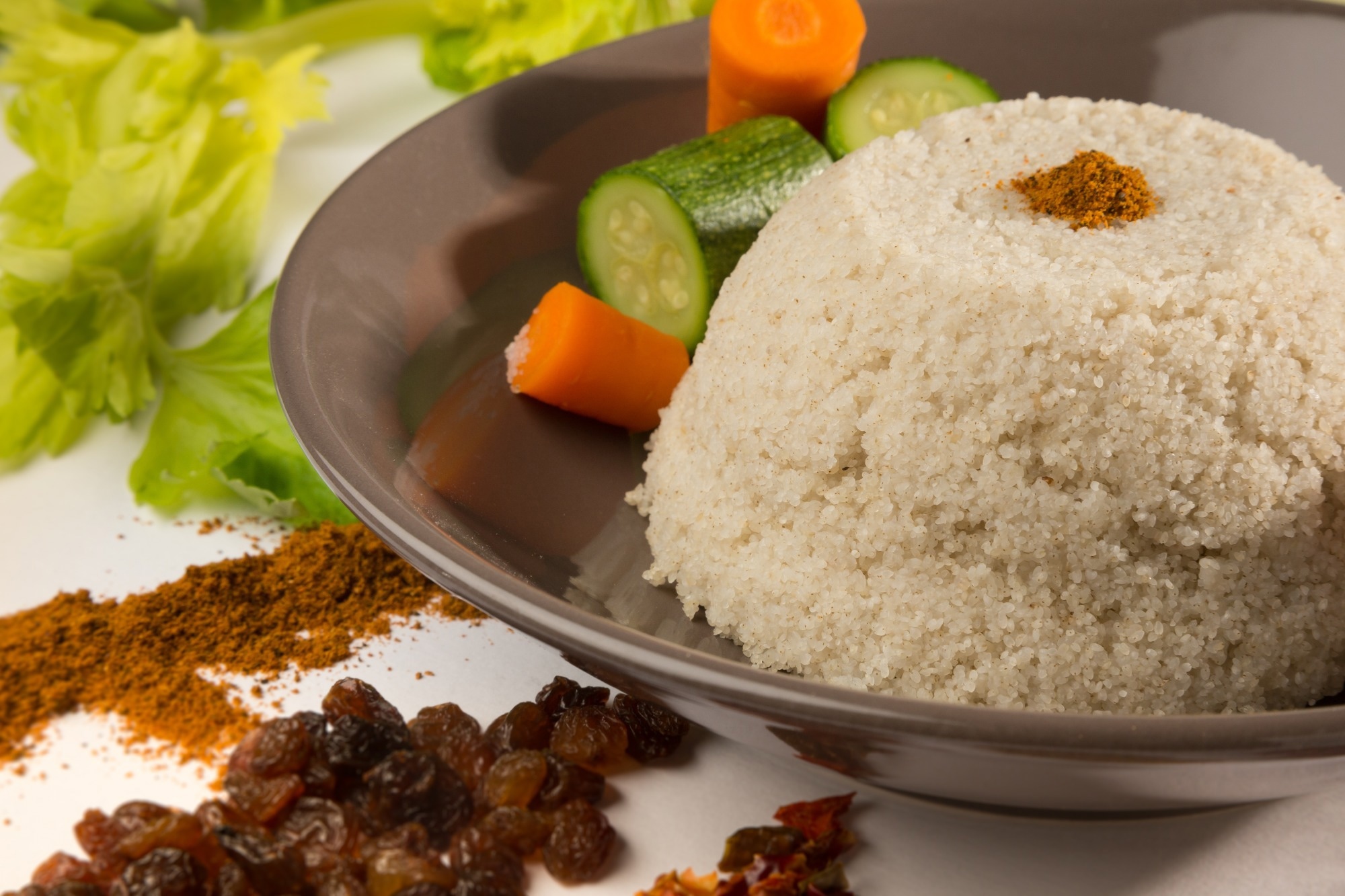 Image Credit: FOTOVALE / Shutterstock.com
Sustainability
Fonio exhibits drought tolerance and low-input cultivation requirements that facilitate its proliferation in marginal, nutrient-poor soils. Extra-early maturing varieties can produce harvestable grains within 70–90 days.2
Often referred to as ‘hungry rice,’ fonio remains a critical food source during periods of scarcity. Genomic advancements, including a chromosome-scale reference assembly and diversity analysis of cultivated and wild accessions, provide opportunities for targeted breeding to improve yield, reduce seed shattering, and enhance agronomic traits.2
Research gaps and future directions
Current data supporting glycemic and lipid-modulating effects are largely derived from in vitro studies, animal models, or broader millet analyses.5,6 Well-designed RCTs specifically evaluating fonio are needed to confirm long-term metabolic outcomes.6
Further research is also required to optimize post-harvest processing, dehulling efficiency, and mechanization, as the small grain size remains a major technological constraint to scaling production.1,2
Conclusions
Fonio emerges as an underutilized yet promising grain with potential implications for metabolic health and sustainable diets.
As climate change intensifies pressure on global food systems, diversification beyond wheat, maize, and rice is essential. In this context, orphan crops like fonio, fast-maturing, drought-tolerant, and adapted to marginal soils, offer distinct advantages for climate-resilient agriculture.2 When combined with advances in breeding, processing technology, and clinical research, fonio has the potential to contribute meaningfully to diversified, metabolically supportive, and environmentally resilient food systems.1,2,6
References
- Zhu, F. (2020). Fonio grains: Physicochemical properties, nutritional potential, and food applications. Comprehensive Reviews in Food Science and Food Safety 19(6); 3365-3389. DOI: 10.1111/1541-4337.12608. https://ift.onlinelibrary.wiley.com/doi/abs/10.1111/1541-4337.12608
- Abrouk, M., Ahmed, H. I., Cubry, P., et al. (2020). Fonio millet genome unlocks African orphan crop diversity for agriculture in a changing climate. Nature Communications 11; 4488. DOI: 10.1038/s41467-020-18329-4. https://www.nature.com/articles/s41467-020-18329-4
- Bassey, S. O., Chinma, C. E., Ezeocha, V. C., et al. (2023). Nutritional and physicochemical changes in two varieties of fonio (Digitaria exilis and Digitaria iburua) during germination. Heliyon 9(6); e17452. DOI: 10.1016/j.heliyon.2023.e17452. https://www.cell.com/heliyon/fulltext/S2405-8440(23)04660-1
- Antwi-Boasiako, S., & Jamgade, S. (2025). Fonio culinology: A systematic review of Fonio’s culinary applications. Multidisciplinary Reviews 9(5); 2026218. DOI: 10.31893/multirev.2026218. https://malque.pub/ojs/index.php/mr/article/view/9231
- Osibemhe, M., et al. (2020). Potency of Fonio Millet to Attenuate Diabetes and Diabetes Related Cardiovascular Diseases. Trop J Nat Prod Res, 4(9):601-605. DOI:10.26538/tjnpr/v4i9.18. https://www.cabidigitallibrary.org/doi/full/10.5555/20219805019
- Anitha, S., Kane-Potaka, J., Tsusaka, T. W., et al. (2021). A Systematic Review and Meta-Analysis of the Potential of Millets for Managing and Reducing the Risk of Developing Diabetes Mellitus. Frontiers in Nutrition 8. DOI: 10.3389/fnut.2021.687428. https://www.frontiersin.org/journals/nutrition/articles/10.3389/fnut.2021.687428/full
- Cicero, A. F., Colletti, A., Bajrakatri, G., et al. (2017). Lipid lowering nutraceuticals in clinical practice: Position paper from an International Lipid Expert Panel. Archives of Medical Science : AMS, 13(5), 965. DOI: 10.5114/aoms.2017.69326. https://www.archivesofmedicalscience.com/Lipid-lowering-nutraceuticals-in-clinical-practice-position-paper-from-an-International,130942,0,2.html
- Babarinde, G. O., Adeyanju, J. A., Ogunleye, K. Y., et al. (2020). Nutritional composition of gluten-free flour from blend of fonio (Digitaria iburua) and pigeon pea (Cajanus cajan) and its suitability for breakfast food. Journal of Food Science and Technology 57(10); 3611. DOI: 10.1007/s13197-020-04393-7. https://link.springer.com/article/10.1007/s13197-020-04393-7
- Sanusi, S. N., Sulaiman, S. A., & Bako, H. K. (2019). Comparative of Proximate and Mineral Composition of Commercially-Available Millet Types in Katsina Metropolis, Nigeria. World Journal of Food Science and Technology 3(1); 14-19. DOI: 10.11648/j.wjfst.20190301.13. https://www.sciencepublishinggroup.com/article/10.11648/j.wjfst.20190301.13
- Deriu, A. G., Vela, A. J., & Ronda, F. (2022). Techno-Functional and Gelling Properties of Acha (Fonio) (Digitaria exilis stapf) Flour: A Study of Its Potential as a New Gluten-Free Starch Source in Industrial Applications. Foods 11(2); 183. DOI: 10.3390/foods11020183. https://www.mdpi.com/2304-8158/11/2/183
Further Reading
Last Updated: Feb 25, 2026
 Scientists reviewed 20 edible and medicinal fungi for clues to better prebiotics