Introduction
What is immune memory?
What causes immune amnesia?
Population-level impacts
Vaccination vs. natural infection
Future directions and research
Practical takeaways
References
Further reading
Measles can cause immune amnesia by preferentially infecting and depleting memory immune cells, weakening protection against previously encountered pathogens for months to years. This article explains how that process works, why vaccination prevents it, and how immune amnesia may amplify the impact of other infectious diseases.
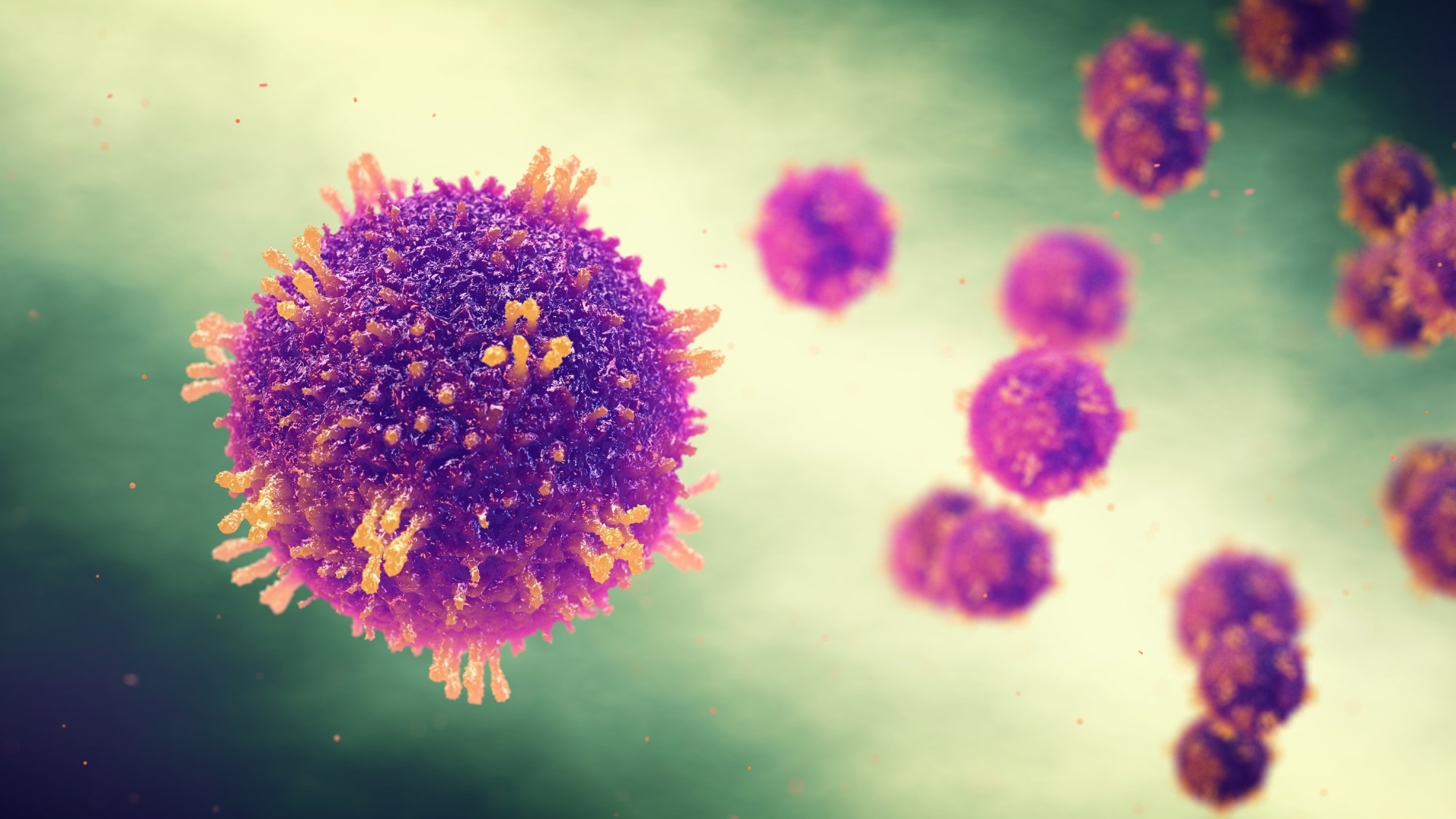 Image Credit: nobeastsofierce / Shutterstock.com
Introduction
This article explains how infections like measles induce immune amnesia and explores the long-term consequences of this phenomenon for immune protection. Measles virus (MeV) is among the most contagious human pathogens and uniquely targets immune cells, contributing to both acute immunosuppression and longer-term disruption of immune memory.5
What is immune memory?
The immune system can be further classified into the innate and adaptive immune systems. Although innate myeloid cells, such as macrophages, generate a ‘trained’ immune response following antigen exposure, the adaptive immune response is primarily characterized by the activity of B- and T-cells, which subsequently evolve into memory T- and B-cells, or MTCs and MBCs, respectively.1
Immune memory is mediated by long-lived memory B cells, memory T cells, and plasma cells, which enable faster, more robust responses upon re-exposure to pathogens.1
During a primary immune response, which occurs following the initial exposure to an antigen, innate immune reactions are characterized by increased activity of macrophages, cytokines, and dendritic cells (DCs). Within lymph nodes, antigen presentation by DCs leads to T-cell activation and the subsequent release of pro-inflammatory mediators targeting the pathogen. Once the infection has been eliminated, the effector T cells involved in this response are maintained as CD4+ and CD8+ memory T cells.
These memory populations can persist for years to decades and form the immunological basis for vaccination.1
Early and cumulative exposures to infections (and vaccines) are formative for the development of the memory repertoire that provides protection for our lifespan.1”
Plasma cells also contribute to immune memory through their role in antibody production. Antibodies can persist in both plasma and extracellular fluids for decades, wherein they recognize and neutralize extracellular pathogens or flag pathogens for destruction by macrophages and serum proteins1.
What causes immune amnesia?
Despite global efforts to expand access to vaccination, the measles virus remains one of the most contagious pathogens capable of causing severe symptoms and death, particularly among infants and children. In addition to its direct effects on tissues during acute infection, measles can also induce immune amnesia, a phenomenon that eliminates part of acquired immunity to other infectious diseases.
The measles virus exhibits tropism for immune cells expressing the CD150 (SLAMF1) receptor, particularly memory B and T lymphocytes, leading to their preferential infection and depletion.5
Immune amnesia affects both innate and adaptive immune memory due to the infection of macrophages and DCs after viral binding to CD1503. However, current evidence indicates that the most important effect is the depletion and remodeling of memory lymphocyte populations rather than the destruction of all immune memory compartments.5 Naïve B-cells, as well as both MBCs and MTCs, express high levels of CD150, which allows the measles virus to bind with high affinity and destroy these immune cells, regardless of whether this immunity was acquired through vaccination or infection2.
This process can reduce antibody repertoire diversity and, in some studies, has been shown to eliminate up to 70% of pre-existing antibodies, although the extent varies across individuals.2
Although measles infection causes broad immunosuppression, it simultaneously induces a strong adaptive immune response that confers durable protection against future measles exposure, which is otherwise known as the ‘measles paradox.2
All subsets of activated lymphocytes, from innate invariant T-cells to memory lymphocyte populations, decrease in number following their direct [measles] infection.5
After infection, the immune system is repopulated with naïve lymphocytes and measles-specific memory cells, but protection against previously encountered pathogens may be substantially reduced until immune memory is rebuilt.3
The impact of measles infection on existing immunity is unique, as it causes broad immune amnesia by directly infecting and destroying MBCs and MTCs. Nevertheless, other viruses, such as the human immunodeficiency virus (HIV), influenza, severe acute respiratory syndrome coronavirus 2 (SARS-CoV-2), and cytomegalovirus, can also temporarily suppress or dysregulate immunity.
Population-level impacts
The immunosuppression directly caused by measles infection of immune cells has been directly implicated in a greater risk of infections, anti-infection prescriptions, and hospitalizations4. Population-based data show increased susceptibility to non-measles infections persisting for up to 5 years following infection.4
The duration of measles-induced immune amnesia and its associated effects remains unclear, with patient reports ranging from several months to five years. This prolonged vulnerability is consistent with epidemiological observations of sustained increases in infectious disease incidence after measles infection, although the exact duration likely varies between individuals and settings.4
Scientists have known for decades that even after they recover, children who have been infected with measles are significantly more likely to fall ill and die from other causes.3
Immune amnesia effectively removes prior immunity, thereby reducing the proportion of protected individuals in a population. Modeling studies suggest that this could weaken effective herd protection against co-circulating pathogens and increase the risk of secondary outbreaks, but the magnitude of this effect depends on model assumptions and real-world conditions.2
By erasing pre-existing immune memory, immune amnesia can facilitate the re-emergence and spread of co-circulating infections, thereby contributing to larger or more persistent outbreaks, even in populations with significant vaccination coverage. Overall, immune amnesia introduces an additional layer of complexity in predicting and controlling infectious disease dynamics.1
Vaccination vs. natural infection
The measles vaccine provides effective immunity without causing the immune amnesia associated with wild-type measles infection. Available evidence indicates that vaccine strains do not cause the widespread depletion of memory lymphocytes observed in natural infection.5 In contrast, natural infection can damage pre-existing immune memory by depleting MBCs and MTCs, weakening protection against other pathogens.
Vaccine hesitation and misinformation have led to reduced uptake and, as a result, ideal conditions for measles outbreaks that can subsequently trigger immune amnesia in affected individuals. Thus, high vaccination coverage prevents measles infection while preserving the integrity of immune memory within individuals and across populations.1,3
Future directions and research
Current evidence indicates loss of pre-existing antibodies and memory lymphocytes, with ongoing studies investigating how immune memory is rebuilt after measles infection and how long individuals remain vulnerable to secondary infections.1,3 Emerging modeling research is also examining how measles-induced immune amnesia might interact with other epidemics and alter the vaccination coverage needed to maintain herd protection under specific assumptions.2
Researchers are also exploring whether similar mechanisms of immune memory disruption occur with different pathogens, including those that affect immune cells or signaling pathways. These insights could expand the concept of immune amnesia and refine approaches to infectious disease prevention and control.1,3
Practical takeaways
By preventing measles, vaccination indirectly protects against the broader loss of immune defenses caused by infection while sustaining population-level immunity to other contagious pathogens. High immunization rates also reduce outbreaks by mitigating the risk of immune amnesia within communities, as well as lowering overall morbidity and mortality associated with secondary infections.2,3
Immune amnesia should be considered in the clinical management of patients recovering from measles to ensure close monitoring for secondary or recurrent infections. The inclusion of this knowledge will enhance public health approaches and clinical practices, resulting in better outcomes and strengthening the impact of vaccines on the protection of both individuals and populations.2,3
References
- Lam, N., Lee, Y., & Farber, D. L. (2024). A guide to adaptive immune memory. Nature Reviews Immunology 24(11); 810-829. DOI: 10.1038/s41577-024-01040-6. https://www.nature.com/articles/s41577-024-01040-6
- Morales, G. B., & Muñoz, M. A. (2021). Immune amnesia induced by measles and its effects on concurrent epidemics. Journal of the Royal Society, Interface 18 (179). DOI: 10.1098/rsif.2021.0153. https://royalsocietypublishing.org/rsif/article/18/179/20210153/90028
- “Measles: The race to understand immune amnesia’” [Online]. Available from: https://www.bbc.com/future/article/20211112-the-people-with-immune-amnesia
- Gadroen, K., Dodd, C. N., Masclee, G. M. C., et al. (2018). Impact and longevity of measles-associated immune suppression: a matched cohort study using data from the THIN general practice database in the UK. BMJ Open 8(11). DOI: 10.1136/bmjopen-2017-021465. https://bmjopen.bmj.com/lookup/doi/10.1136/bmjopen-2017-021465
- Amurri, L., Reynard, O., Gerlier, D., et al. (2022). Measles Virus-Induced Host Immunity and Mechanisms of Viral Evasion. Viruses 14(12); 2641. DOI: 10.3390/v14122641. https://www.mdpi.com/1999-4915/14/12/2641.
Further Reading
Last Updated: Apr 9, 2026