A nationwide Swedish study reveals that when HPV vaccination reaches high coverage through schools, it protects even those who remain unvaccinated, dramatically lowering rates of the most serious cervical lesions and reinforcing the case for early, universal immunization programs.
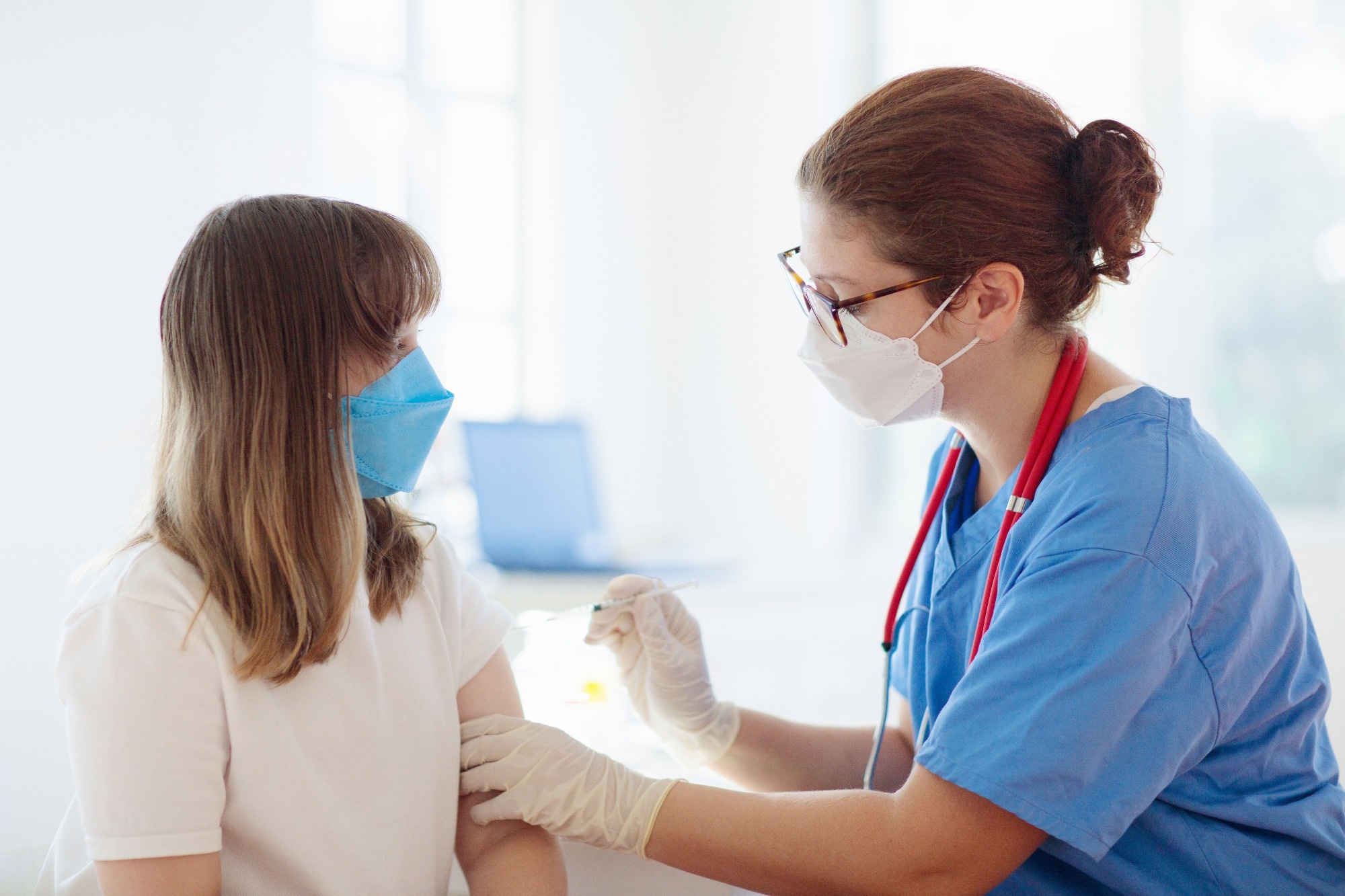 Study: Herd effect of human papillomavirus vaccination on incidence of high-grade cervical lesions: a population-based cohort study in Sweden. Image credit: FamVeld/Shutterstock.com
In a recent study published in The Lancet Public Health, researchers investigated the herd effects of human papillomavirus (HPV) vaccination on the incidence of HSIL+ (histopathologically confirmed high-grade cervical lesions, including adenocarcinoma in situ and invasive cervical cancer) in non-vaccinated individuals in Sweden.
Understanding population-level HPV protection beyond individual immunity
HPV is a common sexually transmitted infection (STI) and a necessary cause of cervical cancer. HPV vaccination has been highly effective in decreasing cervical lesions; however, understanding the extent of indirect effects, especially in non-vaccinated individuals, is pivotal to maximizing public health benefits and refining vaccination strategies.
The herd effects of HPV vaccination have been documented, particularly in reducing population-level genital warts and HPV prevalence. Nevertheless, the extent to which these effects decrease the risk of HSIL+ in non-vaccinated populations remains less clear. As such, a better understanding of these effects is crucial for assessing population-level protection.
Nationwide Swedish registers track disease in unvaccinated women
In the present study, researchers evaluated the incidence of HSIL+ in non-vaccinated females in Sweden. Females born between 1985 and 2000 who did not receive HPV vaccination and were not diagnosed with HSIL+ were included. They were followed up from age 10 or January 2006 until the first HPV vaccination, histopathologically confirmed HSIL+ diagnosis, death, emigration, attainment of 35 years of age, or December 31, 2022. The Total Population Register was used to identify at-risk populations and obtain information on emigration, immigration, and death.
The Swedish HPV Vaccination, Prescribed Drug, and National Vaccination Registers were accessed for vaccination data. The National Cervical Screening Registry was used to identify the occurrence and diagnosis date of HSIL+. Participants were grouped into birth cohorts exposed to distinct HPV vaccination programs, 1985–88, 1989–92, 1993–98, and 1999–2000 cohorts.
The 1985–88 birth cohort, used as the reference group, was mainly opportunistically vaccinated and mostly at older ages; the vaccination program reached a coverage of about 6 %. The 1989–92, 1993–98, and 1999–2000 birth cohorts participated in subsidized, catch-up, and school-based vaccination programs, which had coverages of about 25 %, 55 %, and greater than 80 %, respectively.
The cumulative incidence of HSIL+ was estimated using Kaplan–Meier survival curves; analyses were restricted to non-vaccinated person-time, with individuals contributing follow-up until receipt of a first HPV vaccine dose. The age-varying and age-constant incidence rate ratios (IRRs), which describe how relative risk changes as individuals age, were estimated among non-vaccinated individuals using Poisson regression, adjusted for attained age, highest parental income and education level, and maternal birth country and maternal HSIL+ history.
High-coverage school programs show markedly lower HSIL+ rates
The study population included 857,168 females, who cumulatively contributed 9.47 million person-years of at-risk time. Overall, 42,274 HSIL+ cases were identified during the study period, yielding an incidence rate of 4.46 cases per 1,000 person-years. The opportunistic, subsidized, and catch-up vaccination cohorts showed comparable patterns of increasing HSIL+ incidence with age, with the highest observed in the subsidized cohort.
The school-based vaccination cohort had a lower incidence of HSIL+ compared to others. There was substantial variation in age-constant IRRs across cohorts. The age-constant IRR was 1.18 in the subsidized vaccination cohort, indicating a higher rate than in the reference cohort. It was significantly lower in the school-based vaccination cohort (0.53).
Further, the age-varying IRR was 1.26 at age 23, 1.42 at age 25, and 0.89 at age 33 in the subsidized vaccination cohort. The catch-up vaccination cohort had an IRR of 1.26 at age 23, which increased to 1.33 at age 24 and decreased to 0.92 at age 27 before increasing to 1.0 by age 29. The age-varying IRR was 0.53 at age 23, the oldest age reached during follow-up, in the school-based vaccination cohort.
Strong herd effects emerge only with high vaccine coverage
The study found strong herd effects in females born in 1999–2000, with consistently lower IRRs of HSIL+ in this cohort compared to those born in 1985–88. In the 1993–1998 birth cohort, the IRRs initially declined, then increased at ages 24 and 29, and subsequently declined. In individuals born between 1985 and 1992, the IRRs initially increased, peaking in their mid-20s, followed by a decrease.
Overall, these results indicate a significant reduction in HSIL+ among non-vaccinated individuals in the school-based vaccination cohort. Nevertheless, there was little evidence of such protective effects in cohorts that participated in catch-up or subsidized vaccination programs, where IRRs were often elevated at younger ages before declining later in adulthood.
The authors note that changes in cervical screening practices, including the transition to HPV-based screening, as well as limited follow-up in the youngest cohort, may have influenced observed incidence patterns. They also caution that cohort differences in health-care use or sexual behaviour could contribute to observed trends. These findings underscore the importance of high-coverage, school-based HPV vaccination programs to decrease cervical disease incidence.
Download your PDF copy now!
 Garvan research reveals hidden inflammation behind high colon cancer risk