From rising stress the night before kick-off to heart-rate spikes that defy the odds, wearable data reveals how a historic cup final pushed devoted fans’ bodies into overdrive.
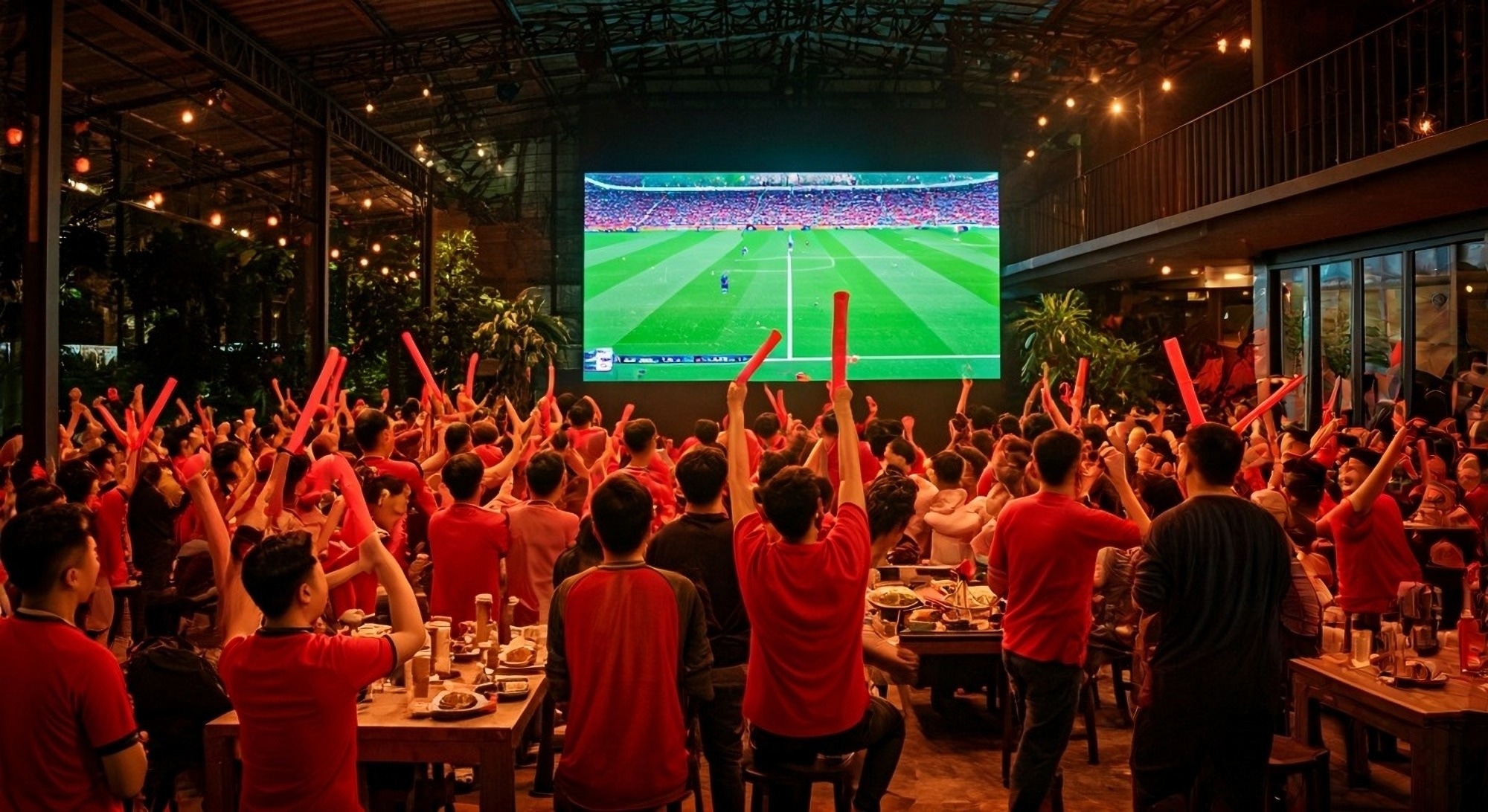 Study: Measuring football fever through wearable technology. Image credit: Shutterstock AI/Shutterstock.com
A unique study published in the journal Scientific Reports examined some of the extreme physiological changes associated with the phenomenon of football fever.
Football fandom triggers measurable physiological stress responses
Football fans are emotionally engaged with the game, often amplified by their identification with their chosen team. This leads to emotional arousal with each game. Such responses drive a booming football economy that thrives on ticket sales, football merchandise, and media and sponsorship deals. Football is thus a social phenomenon as well as an exciting and enthralling game.
Fans undergo physiological changes during the run-up to and during the actual match. Blood pressure, heart rate, and stress hormone levels rise, especially during important matches involving their teams, as shown in previous studies. In fact, the highest levels of stress hormones are released by avid fans during important matches.
Previous studies have reported that cardiovascular events are more frequent among football spectators during intense matches. Prior research shows that Brazilian fans’ heart rates were highest during pre-match rituals. The level of excitement was comparable to that when their team scored a goal.
Bonding with other fans can trigger synchronized physiological changes in the group, whether in a stadium or in a large group watching the game together in a public place. Crowd noise at football matches is often loud enough to cause post-match hearing damage. Finally, stadium attendance may entail greater stress, such as waiting in line, dealing with overcrowding, and feeling danger or frustration.
How smartwatches captured fan stress over 12 weeks
The 2025 DFB-Pokal cup final was chosen for the current study because of its pivotal importance to fans of one team, Arminia Bielefeld. This national tournament is played by 64 teams, all clubs from the first two national divisions, and regional cup winners. Each team advances by winning the current match.
The final is typically held at the end of the football season each year, in Berlin’s largest stadium, the Olympiastadion. Millions of fans watch it in person or on television.
In 2025, the third-division club Arminia Bielefeld entered the cup final, facing the previous year’s league runner-up and strong favorite, VfB Stuttgart. Since the start of the DFB cup tournament in 1935, only four third-division clubs have made it to the final, and none have ever scored in the final game. Being the first final for Arminia Bielefeld, it was momentous news, both nationally and regionally.
The researchers chose to study 229 Arminia Bielefeld fans over the 12 weeks leading up to the 2025 final, including match days and other days. They surveyed fans on their identification with the team, final match attendance, and key personal characteristics that might influence their reactions to the cup final.
They also used high-resolution smartwatch data, such as heart rate and stress levels, derived from wearable algorithms rather than clinical testing. The study compared physiological data with survey information across individuals and different match contexts.
A second survey covered the 37 participants who responded to questions about following the final match. Most were employed. Nearly half were Arminia Bielefeld members, and about 38% had season tickets. Twelve were both.
Almost all 37 watched the cup final, 20 in the stadium, 11 on television, and five as part of public gatherings. Nine arrived for the final on Friday, the rest on Saturday. Eighteen participated in the fan festival prior to the match.
Ardent fans, defined as those who attended 10 or more Arminia Bielefeld matches in person, were far more likely to attend the final, while fewer than half of less frequent attendees did. Alcohol consumption was also higher in the stadium, with 65% of in-person spectators drinking, compared with 50% overall.
Stress and heart rates surged before and during kick-off
Stress level measurements ranged from 0 to 100 on all days. However, all remaining descriptive statistics for stress levels were higher on the cup final day. The average stress level increased by 41% that Saturday compared to regular days. Mean heart rates were higher that day, with the exception of the maximum observed values, compared with regular days.
Notably, the analysis indicates that mean values of both parameters were significantly higher that day, outside the mean for regular days.
Weekday-specific analysis revealed differences in mean stress levels across days. On weekdays, stress levels began to rise around 6 am, whereas on weekends they began to rise after 8 am. Despite this, the average stress on ordinary Saturday nights remained higher than on weeknights, making them the most stressful days. This is perhaps linked to greater activity.
Stress levels on the cup final Saturday were above the 90th percentile of ordinary days. They started to rise the previous night, peaking just before kick-off. They remained elevated after the match. During the match, at 8–10 pm, mean stress levels were 43% higher than on regular Saturdays.
VfB Stuttgart won the match as expected. During the first 15 minutes, Arminia Bielefeld fans had a high mean heart rate of up to 96 beats per minute (bpm). As the match continued, heart rates steadily decreased until the break. At that point, it rose briefly and then fell again to 86–90 bpm.
After the underdog scored two goals late in the match, heart rates surged by about 10 bpm, reaching almost their original levels. The analysis suggests that fans’ physiological responses reflected perceived excitement that diverged from objectively measured winning probabilities, despite the match's almost unchanged objective odds of winning.
In-stadium fans had 23% higher mean heart rates, at 94 bpm. Television viewers and public viewers had lower rates at 79 bpm and 74 bpm, respectively. The greatest difference occurred after the 84th-minute first goal by Arminia Bielefeld, at +36%. The maximum mean heart rate of fans in the stadium was 108 bpm at that point.
Drinking further increased the mean heart rate by about 5%. This difference increased to 7% in the second half, and 12% after Arminia Bielefeld’s first goal. For fans who arrived a day before, stress levels were higher on late Friday evening, and began to increase again from 8 am on Saturday morning, compared to 6 am for fans who arrived on Saturday.
Significant study limitations include the use of only indirect data on heart rate and smartwatch-derived stress indices, without direct stress markers such as cortisol levels. This prevents a clinical definition of stress. Emotional engagement with the team was self-reported and is similarly not validated.
The final subsample of stadium attendees was very small, and its results cannot be generalized. Residual confounding cannot be ruled out.
Shared stadium experiences intensify football fever
The study suggests that attending high-stakes football matches in a stadium increases physiological responses among fans more markedly, with substantial variation between individuals. The authors consider that this may be partly explained by bonding with other fans, alongside factors such as increased movement or reduced rest. Perceived uncertainty about the game's outcome further amplified heart rate responses, particularly during this exceptional, high-stakes event.
Future studies should address the current study limitations by using multimodal monitoring, such as wearable sensors for sweat, muscular activity, and biochemical changes that more directly reflect stress.
Download your PDF copy now!
 Exercise-based cardiac rehabilitation offers lasting heart health benefits