As climate-driven pollution worsens, new research reveals how air quality alerts will surge, and why simple actions like staying indoors could save lives, especially for the most vulnerable.
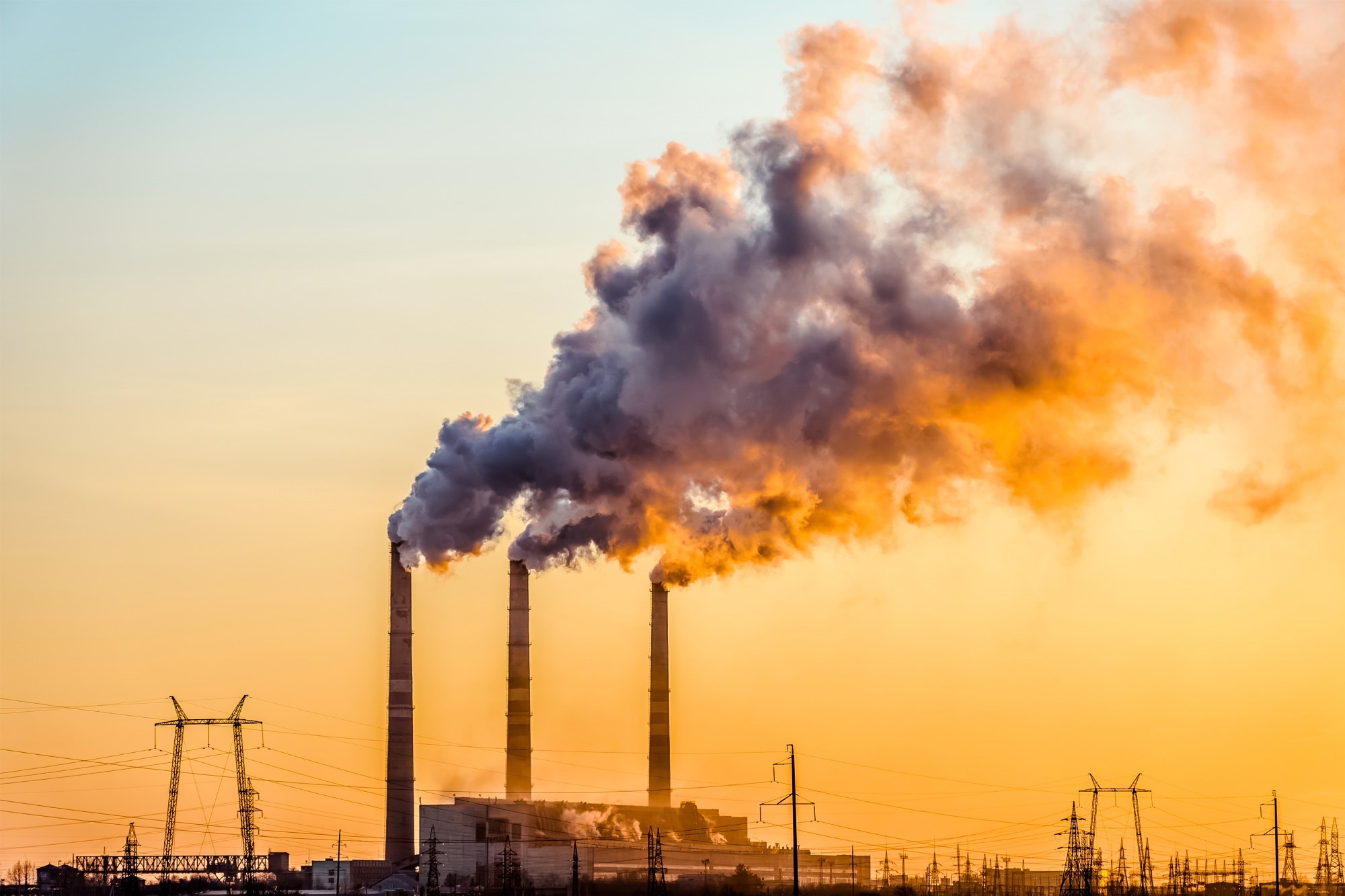 Study: Air Quality Alerts, Health Impacts, and Adaptation Implications Under Varying Climate Policy. Image credit: Sambulov Yevgeniy/Shutterstock.com
Without reducing emissions, climate change may increase ozone and fine particulate matter (FPM) in the USA. A study published in Environmental Science & Technology found that air quality alerts prompting people to stay indoors may roughly double by 2100 based on modeled projections, and that such behavior will benefit older people more than 45-fold compared to younger people.
Air quality index (AQI)
Outdoor air pollution is linked to increased illness and premature death. In the United States, it is measured using the Air Quality Index (AQI), which reflects pollutant-specific health risks. At any given time, the highest AQI value across pollutants is reported as the overall air quality level.
The AQI ranges from “Good” to “Hazardous.” When levels reach 100, an “Unhealthy for Sensitive Groups” alert may be issued, while a value of 150 triggers an “Unhealthy” alert for the general population. More than 99 % of these alerts are driven by ozone and PM2.5 (fine particulate matter with a diameter of less than 2.5 μm).
Climate change is expected to worsen air pollution through the “climate penalty,” driven by factors such as heat waves, droughts, and wildfires. However, its specific impact on AQI alerts remains unclear. Previous studies suggest that by 2050, an additional 8.5 million Americans could be living in areas with high ozone levels.
AQI alerts are designed to encourage individuals to adapt their behavior. Each year, around 20 % of Americans respond to poor air quality, most commonly by spending more time indoors, a strategy known as avoidance adaptation. Other potential measures, such as indoor air filtration or mask use, are not part of standard AQI guidance and remain less well quantified in terms of effectiveness.
Older adults are particularly vulnerable to the health effects of air pollution, even at levels below National Ambient Air Quality Standards (NAAQS). As populations age globally, both the health burden of pollution and the number of people considered “sensitive”, including children, older adults, and those with underlying conditions, are expected to grow.
This group may also require different communication strategies. Many older adults rely on traditional media such as television and newspapers for information, and nearly half already spend no time outdoors, highlighting both their vulnerability and the need for targeted public health messaging.
AQI alert changes in the 21st century
The authors used the Massachusetts Institute of Technology (MIT) Integrated Global System Model (IGSM) for their analysis. This reflects population and economic growth in terms of pollutant concentrations, although health burden estimates hold population and baseline risks constant to isolate climate effects.
They modeled hourly ozone and PM2.5 concentrations over the USA during the smog season (May 1 to September 30) at the beginning, midpoint, and end of the current century. The aim was to visualize changes in mean AQI values and in air quality alerts over this period.
Three scenarios were explored:
- a reference scenario without any climate policy (REF)
- a scenario where the global mean temperature increase is up to 2.5 °C above preindustrial (2.5C)
- a scenario where the increase is up to 2 °C (2C)
In all scenarios, anthropogenic pollutant emissions were kept at levels at the start of the century to isolate the effects of the climate penalty.
Changes in AQI alerts
The model predicts changes in AQI alerts over time. In the REF scenario, results indicated an increase in the mean AQI during the summer smog season. In 2000, 79 % of the US population experienced moderate AQI, 16 % had good air quality, and 5 % had “Unhealthy for Sensitive Groups” air quality. These values are mostly comparable with the reported AQI values during the same year.
By 2050, the AQI alerts would increase, driven mostly by ozone. About 15 % of the population would experience air “Unhealthy for Sensitive Groups”. By 2100, Moderate AQI would decline to 49 %. About 30 %, one hundred million people, would be exposed to “Unhealthy for Sensitive Groups” during smog season, a seven-fold rise by 2100.
AQI alerts for sensitive groups would begin early, though PM2.5 alerts were more likely later in the season. The mean chance of an “Unhealthy for Sensitive Groups” alert would be nearly 50 % for most of the smog season, reflecting modeled averages across scenarios that account for natural variability.
“Unhealthy” AQI alerts increased disproportionately among the general population, mirroring the severe worsening of air quality. They peaked at over 20 %, double that in 2000, with peak probabilities occurring during mid- to late-summer. Alerts could occur on almost 50 % of days.
The projected number of combined “Unhealthy for Sensitive Groups” days when both ozone and PM2.5 exceed thresholds rose from 2 in 2000 to 8, a 300 % increase. Climate change was projected to add around 28 additional alert days for sensitive groups during the smog season, doubling overall alert frequency compared to start-of-century levels.
Over this century, multiple regions in the eastern USA have shifted from Moderate to Unhealthy for Sensitive Groups. These areas could have alerts for over two more months per year. Peak alert season would begin earlier and last longer.
Emission reduction policy impact
With the 2.5C or 2C scenarios, alerts stopped rising by 2050, and fell by 30 % by 2100. The high-risk areas in the Eastern USA would likely benefit most from climate policy, avoiding up to 30 additional alert days under the strictest policy changes.
Economic and health burden
Avoidance adaptation reduces morbidity and mortality risk primarily by reducing exposure to outdoor-generated pollutants (about 30 % for ozone and 6 % for PM2.5 on average), irrespective of alert type, especially as ozone alerts are more common. Despite this, about 80 % of mortality risk reduction is due to reduced PM2.5 exposure following a PM2.5 alert. With ozone-alert-driven adaptation, the benefits are roughly split between reductions in ozone and in PM2.5 exposure.
The climate penalty-related health burden of around $600 billion could only be partially offset, with complete avoidance adaptation yielding about $15 billion annually at the start of the century, rising to about $20 billion by 2050, and up to $45 billion by 2100 under the reference scenario.
Climate policy reduces alerts and, therefore, is associated with a smaller risk reduction, while also lowering the underlying pollution burden. However, emission reductions and avoidance adaptation could also potentially reduce 40 % of the $100 billion health burden. The economic burden would decrease by up to 41 % (mid-century) and 83 % (end-of-century) under the 2C scenario.
Targeting senior citizens
Senior citizens comprise 12 % of the population but account for 65 % of air pollution-related mortality. With a mean of 43 minutes of daily outdoors time, they would benefit the most by staying inside when the AQI is “Unhealthy”. Seniors could benefit by up to 45 times more, on average (and up to ~60 times, depending on the pollutant), than younger adults due to their higher risk.
Limitations and future directions
The aging of the global population, demographic shifts, migration, and economic changes may significantly alter the projections. The restriction to smog-season pollutant levels underestimates the number of annual alerts by about 20 %. The model also slightly overestimates ozone levels, which may influence the relative contribution of ozone-driven alerts.
The model did not explicitly include wildfires, nor did it consider indoor sources of PM2.5 (such as cooking or smoking). Age-specific risks, pollution-related effects, and costs should be factored in for future studies.
Despite these limitations, the study demonstrates the importance of multipollutant exposure for more useful AQI alerts and emphasizes the need for personalized adaptation guidance, while noting that results are based on modeled projections and assume full compliance with alerts (an upper-bound estimate of benefits).
Download your PDF copy by clicking here.
Journal reference:
-
Sparks, M. S., East, J. D., Garcia-Menendez, F., et al. (2026). Air Quality Alerts, Health Impacts, and Adaptation Implications Under Varying Climate Policy. Environmental Science & Technology. DOI: https://pubs.acs.org/doi/10.1021/acs.est.5c12522. https://pubs.acs.org/doi/10.1021/acs.est.5c12522
 Rising wildfire smoke in the US offsets improvements in prenatal health