More than a decade after adenoma removal, women still carried gut microbial and metabolic signatures that partly mirrored colorectal cancer, pointing to a possible hidden biological link between past polyps and future cancer risk.
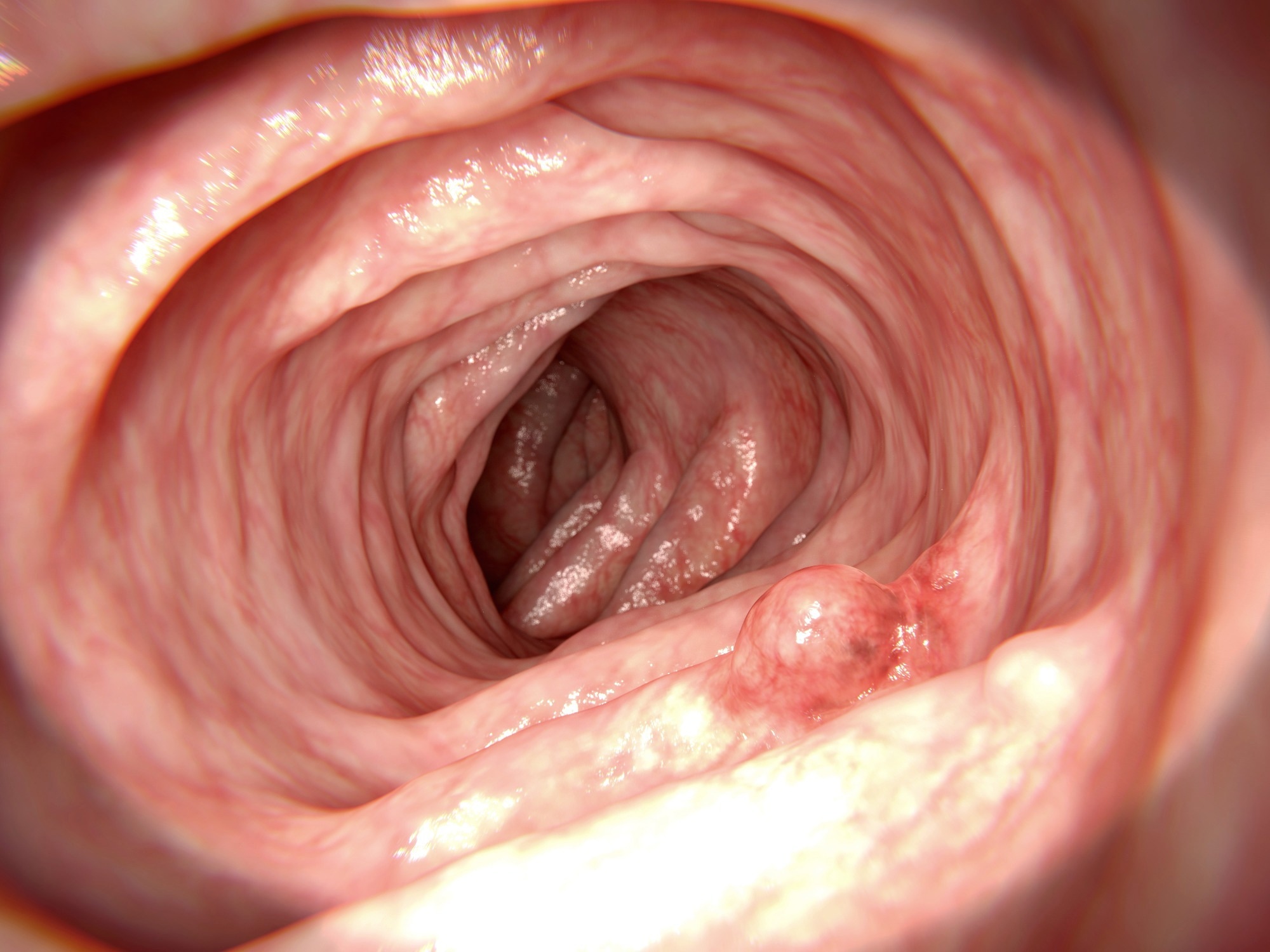
Report: Long-lasting gut microbiome and fecal metabolome alterations after colorectal adenoma removal and their relationship to colorectal cancer. Image Credit: Juan Gaertner / Shutterstock
In a recent study published in the journal Cell Host & Microbe, researchers tracked long-lasting gut microbiome and fecal metabolome shifts, detecting them on average about 12 years after colorectal adenoma resection in women.
The study found that these individuals’ gut microbial and fecal metabolic profiles still partially mirror the biological patterns observed in active colorectal cancer patients. This persistent dysbiosis indicates a sustained host-microbiome axis along the cancer continuum, suggesting that adenoma removal alone may not fully resolve microbiome- and metabolome-linked features associated with longer-term colorectal cancer risk.
Background
Colorectal cancer (CRC) is a malignancy (cancer) that afflicts the tissues of the colon (large intestine) or rectum, and is reported as being the second leading cause of cancer-related deaths worldwide. The most common form of CRC is the adenoma-carcinoma sequence, a slow process in which benign polyps accumulate cellular mutations over roughly 17 years before turning malignant.
Previous oncological research has shown that screening colonoscopies and polyp removals successfully prevent the immediate progression of benign polyps to cancerous forms. However, more recent studies indicate that patients with a history of adenomas face a persistently higher risk of developing CRC later in life compared to those who have always been polyp-free, thereby suggesting a hidden persistence that escapes current mitigation interventions.
Unfortunately, reviews in the field highlight that the biological drivers of this sustained risk have long been poorly understood, a limitation attributed to previous research that relied almost entirely on brief snapshots captured immediately around the time of colonoscopy or adenoma removal, with long-term follow-ups largely absent from the literature.
About the study
The present study aimed to partially address this knowledge gap by investigating whether the dynamic and complex ecosystem of the human gut microbiome recovers to a “healthy” baseline (non-polyp levels) following adenoma-associated clinical interventions.
The study used long-term (12.1 ± 4.8 years) follow-up data from 354 women enrolled in the Nurses' Health Study II (NHSII), specifically the Microbiome Among Nurses (Micro-N) cohort. Participants were women with a history of colorectal adenoma resection who had undergone adenoma removal 4 to 29 years prior to stool collection (for metabolome and microbiome assays).
Included participants (adenoma-resected cohort) were matched with 354 entirely polyp-free control participants based on age, endoscopy history, and other sociodemographic factors. In addition to stool samples, all participants were subjected to long-term dietary trend assessments using food frequency questionnaires (FFQs).
Stool-derived DNA was amplified and sequenced using next-generation shotgun metagenomic methodologies, thereby providing a catalog of participants’ microbial communities. Ultrahigh-performance liquid chromatography-tandem mass spectrometry (UPLC-MS/MS) was subsequently conducted on a subset of 184 matched adenoma-control pairs to further elucidate the functional biochemistry underlying observed outcomes.
These findings were subsequently integrated with 14 external, public datasets containing 2,112 metagenomic profiles (1,045 colorectal cancer patients and 1,067 healthy controls).
Study findings
Study findings revealed that, even an average of more than a decade after adenoma removal, participants’ gut microbial profiles significantly correlated with active colorectal cancer alterations (Pearson’s correlation coefficient [ρ] = 0.26, p < 0.0001).
Shotgun metagenomic sequencing identified 31 shared microbial species altered in both conditions (false discovery rate [FDR] < 0.25). Of these, 10 species, including Ruminococcus gnavus and Flavonifractor plautii, were consistently enriched in participants with adenomas. Simultaneously, 21 health-associated microbes, including Faecalibacterium prausnitzii, were significantly depleted in the adenoma-resected cohort.
In contrast to the ongoing CRC patients, participants in the adenoma-resected cohort rarely harbored oral-derived pathogens, which typically co-occur with CRC, e.g., Fusobacterium nucleatum, suggesting that these microbes may become more prominent later during cancer progression or may remain below stool-detection thresholds at the adenoma stage.
Fecal metabolome analyses identified 30 altered metabolites and 7 disrupted functional subpathways in participants who underwent adenoma resection. Inflammation-associated lipids, including sphingolipids and secondary bile acids like ursodeoxycholate, were found to be significantly enriched. Furthermore, the analyses identified 15 highly dysregulated metabolites, for which microbial community structures accounted for over 20% of their variance.
Finally, the data revealed that unique microbe-metabolite connections emerged independently of overall bacterial abundances. The most significant of these was a distinct link between Bilophila wadsworthia and alanine-containing dipeptides. These enduring changes correlated strongly with CRC-associated lifestyle factors, including higher BMI and less favorable dietary or physical activity patterns.
Conclusions
The present study is the first to empirically establish microbial and metabolic alterations detectable years after adenoma removal, even around a decade following these polyps’ resection. This lingering imbalance indicates a sustained host-microbiome axis that may contribute to ongoing colorectal cancer risk.
Although the all-female cohort limits the study’s immediate generalizability across all populations, these findings suggest that effective prevention may need to go beyond structural adenoma removal. Future clinical strategies could integrate targeted lifestyle modifications and microbiome therapies to help reset the intestinal ecosystem and protect patients from future malignancies. However, because this was an observational study with a single post-resection stool collection, it cannot establish whether the microbiome and metabolome changes caused adenoma formation, resulted from it, or persisted because of other host, dietary, or environmental factors. The authors also noted that stool profiling may miss mucosa-adherent microbes and localized metabolic interactions.
Download your PDF copy by clicking here.
 Cancer-related DNA changes may appear in blood years before diagnosis