In Suba, Bogotá, tougher mobility restrictions delivered the clearest gains in reducing particle pollution, but the mixed ozone response shows that cleaner city air requires more than simply reducing traffic.
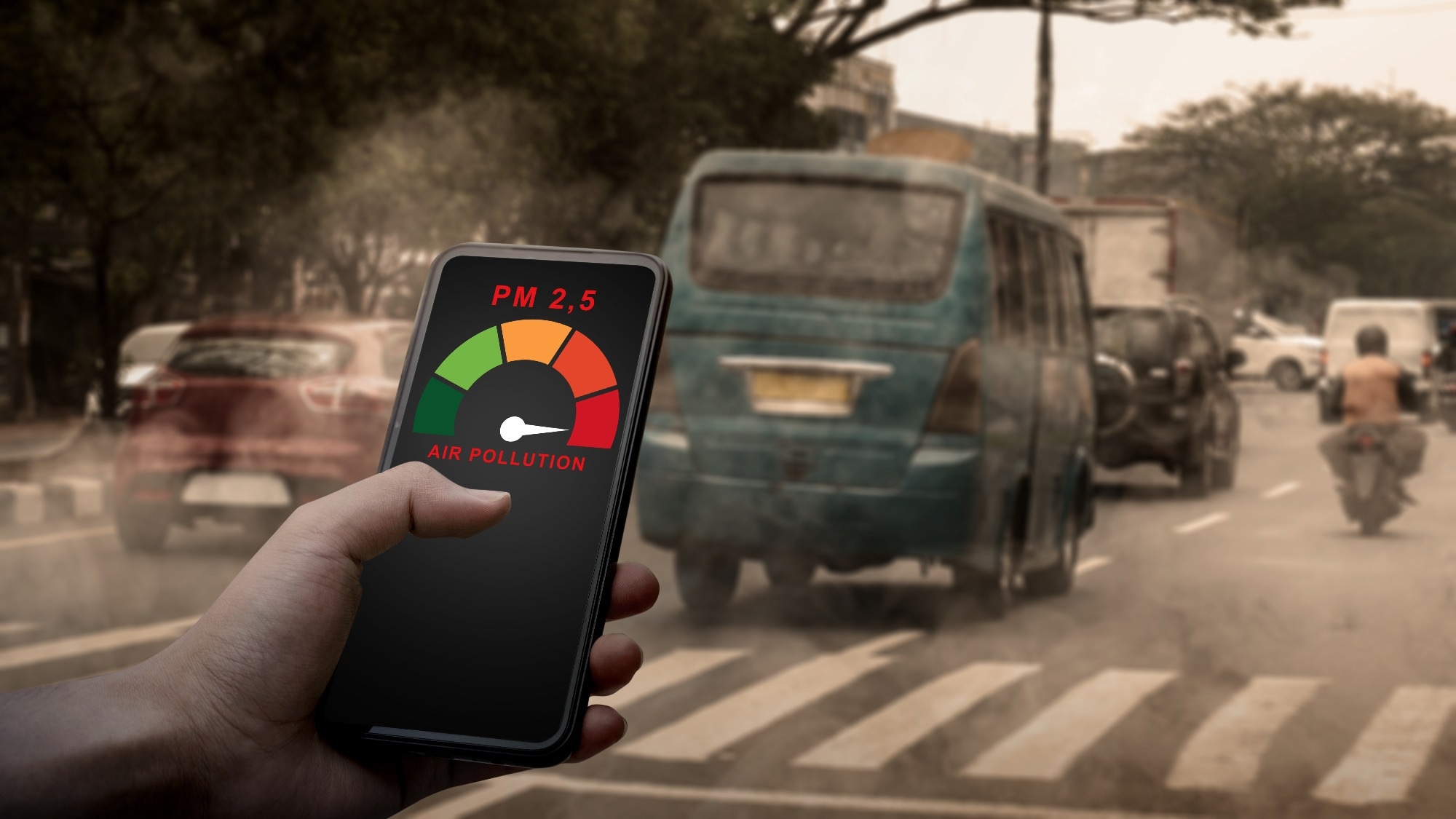
Study: Effect size of COVID-19 mobility restrictions intensity on air pollution: a natural experiment. Image Credit: leolintang / Shutterstock
A recent Scientific Reports study quantified the impact of varying levels of COVID-19 quarantine restrictions on air pollution in Bogotá by examining changes in multiple pollutants, including particulate matter (PM10 and PM2.5), SO2, and O3, with the clearest effects observed for particulate matter.
Challenges in Evaluating Urban Air Quality During COVID-19
COVID-19-related restrictions on social interaction and vehicle mobility led to significant reductions in nitrogen dioxide (NO2), sulfur dioxide (SO2), and carbon monoxide (CO). However, outcomes for particulate matter (PM) and ozone (O3) were inconsistent globally due to variations in restriction intensity, enforcement, and local behavioral patterns.
The pandemic served as a unique natural experiment for evaluating how anthropogenic activity affects air pollution. Despite this opportunity, prior research has faced methodological challenges in isolating causal relationships, largely due to confounding socioeconomic impacts and the lack of controlled interventions.
In Bogotá, the persistent issuance of orange alerts for high pollutant concentrations, alongside their association with increased respiratory morbidity, underscores the urgency of effective mitigation strategies.
During the COVID-19 quarantine (COVID-Q), Bogotá exhibited pronounced improvements in air quality, particularly compared to other major cities, as a result of intensified non-pharmacological interventions.
The present study focused on the Suba district, an area with substantial vehicular flow and distinct urban characteristics. Three distinct quarantine modalities, including national (NQ), smart (SQ), and focalized (FQ), were deployed, each enforcing progressively stricter mobility restrictions. While these interventions demonstrated the utility of large-scale mobility controls, evidence remains limited regarding their differential impacts across pollutant types, temporal patterns, and urban settings.
Furthermore, the mechanisms driving observed improvements and the sustainability of such interventions beyond emergency contexts are not well characterized.
Analyses of pandemic-related air quality shifts have utilized statistical, geospatial, and machine learning approaches, capitalizing on the abrupt and heterogeneous nature of COVID-Q interventions. However, existing studies often lack granularity regarding the timing and intensity of interventions and frequently overlook context-specific factors such as urban morphology, population density, and socioeconomic disparities.
Assessing how COVID-19 Mobility Restrictions Influenced Urban Air Quality
A quasi-experimental design was employed using data from the Bogotá Air Quality Monitoring Network (RMCAB) in the Suba district. Hourly records of air pollutants and meteorological variables were collected for 2019 and 2020, focusing on three quarantine periods and equivalent 2019 intervals.
Researchers included concentrations of PM2.5, PM10, SO2, O3, temperature, wind speed, wind direction, and day/night status as key variables. Statistical tools were used to compare pollutant levels across periods, times of day, and follow-up intervals.
A sample-size calculation indicated that at least 595 records were needed to achieve sufficient statistical power, whereas the final analysis included 2,880 pollutant records across the quarantine and control periods. Environmental significance was assessed by comparing mean pollutant concentrations to maximum environmental thresholds using one-tailed t-tests.
More Restrictive Quarantine Periods Were Linked to Larger PM10 and PM2.5 Reductions
A total of 2,880 records were analyzed to assess changes in air pollutant concentrations during various quarantine periods in 2020 compared to corresponding control periods in 2019. During the least restrictive quarantine (NQ), PM2.5 and O3 concentrations increased, while PM10 and SO2 showed little change relative to controls. In contrast, stricter quarantines (SQ and FQ) resulted in notable decreases in PM2.5 and PM10, with O3 and SO2 showing slight daytime reductions in FQ and SQ, respectively.
Temperature exhibited a strong positive correlation with O3 levels, whereas wind speed was most negatively correlated with PM2.5. Statistically significant annual reductions in PM10 were observed, with the strictest quarantine (FQ) yielding the largest effect sizes for PM10 and PM2.5. Notably, attenuation of these effects over time was only observed for PM10 and PM2.5 during NQ.
Both daytime and nighttime PM10 dropped significantly in SQ and FQ, while PM2.5 declined in FQ. SO2 decreased only during the daytime in SQ. Generalized Linear Models, using Gamma::Inverse, confirmed these trends and best captured the interaction between quarantine intensity and time of day, with the clearest favorable interaction observed for PM10 during SQ and FQ.
Overall, the more restrictive quarantine periods (SQ and FQ) in 2020 resulted in lower average daytime concentrations of PM10 and PM2.5 compared to controls, while SO2 showed a more limited reduction, mainly during the daytime in SQ. Conversely, the least restrictive quarantine (NQ) was associated with higher levels of PM10, PM2.5, and O3. Most pollutant averages remained within permissible thresholds, except for PM2.5 in NQ. The greatest reductions for particulate matter and effect sizes were achieved during the higher-intensity quarantines, underscoring the impact of these interventions.
The study also noted that O3 responses were more complex than those observed for particulate matter. Increases in O3 during some restriction periods may have reflected reduced nitric oxide titration and enhanced photochemical production, although the study did not include NOx or volatile organic compound measurements needed to confirm this mechanism.
Conclusions
The more restrictive COVID-19 quarantine periods were associated with the largest reductions in urban air pollution, particularly for PM10 and PM2.5, highlighting the potential effectiveness of stringent mobility restrictions in improving air quality in a high-traffic urban setting.
However, the findings were limited to Suba and Bogotá and may not be directly generalizable to other districts or cities. The authors also noted that interannual meteorological variability, the lack of NOx and VOC modeling, and possible socioeconomic pressures affecting compliance may have influenced the estimated effects.
Future research should examine the long-term sustainability of these improvements and assess how targeted interventions can replicate these benefits without necessitating widespread lockdowns. Furthermore, it should quantify the effect sizes of environmental benefits across areas with varying levels of industrial, commercial, and urban development to enhance the generalizability of the results beyond the study area of Suba, Bogotá.
Additional work should also test whether similar effects are seen for other pollutants, including NOx and CO, and under policy measures such as car-free days, license plate-based mobility restrictions, and heavy-duty vehicle controls.
Journal reference:
- Teherán, A. A., Pombo, L. M., Camero-Ramos, G., Robayo, J. A., Rodríguez, W. J., Correa, J. C., & Ayala, K. P. (2026). Effect size of COVID-19 mobility restrictions intensity on air pollution: A natural experiment. Scientific Reports. DOI: 10.1038/s41598-026-54722-7, https://www.nature.com/articles/s41598-026-54722-7
 Survey provides a comprehensive snapshot of youth mental health and drug use in Ontario