Researchers developed a fully bioresorbable sensor that continuously tracked deep-tissue lactate for more than 10 days in animal models.
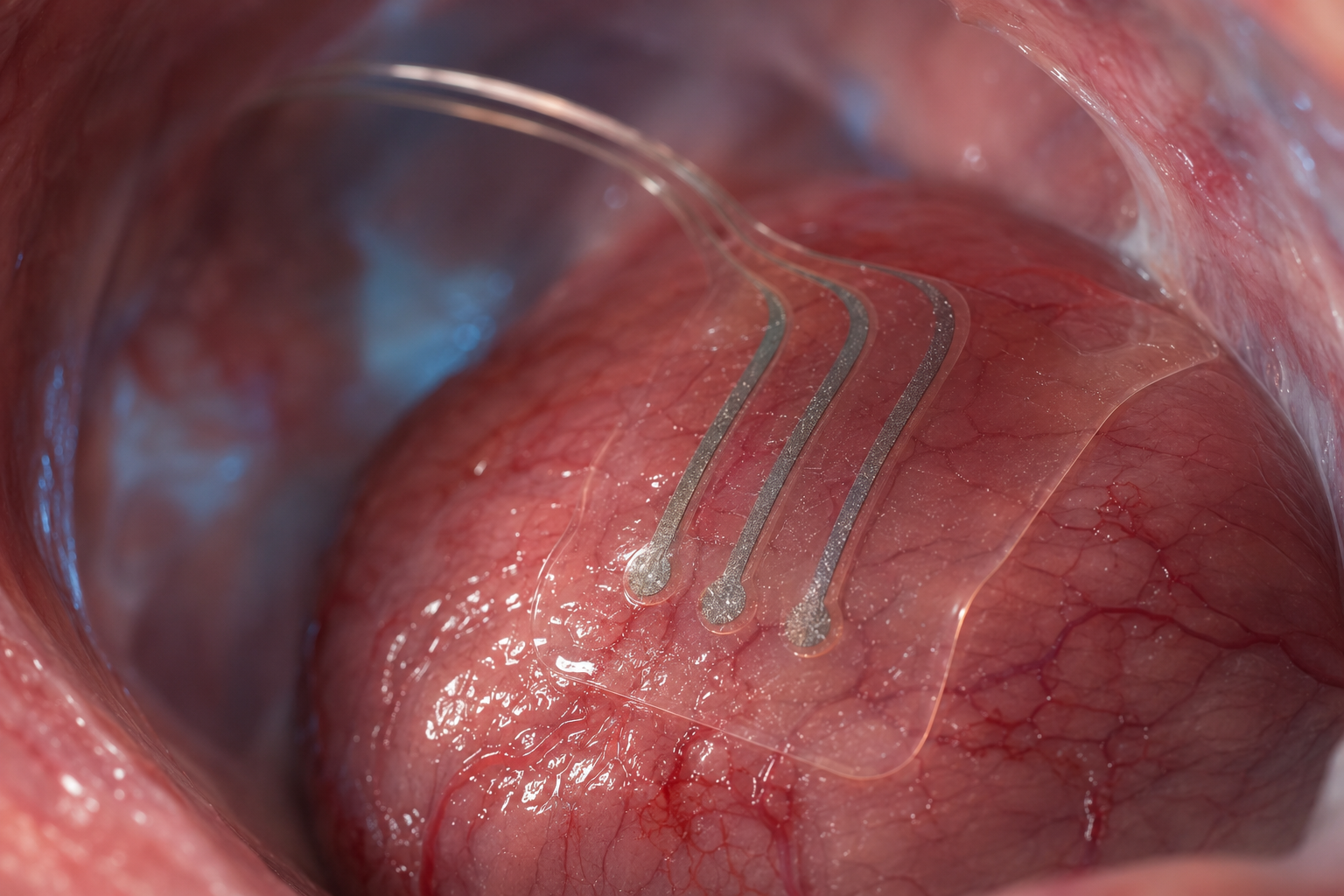
Study: Bioresorbable electrochemical sensors for continuous deep-tissue lactate monitoring in critical care. Image credit: AI-generated image created using ChatGPT/OpenAI
In a recent study published in the journal Nature Communications, researchers developed and evaluated a fully bioresorbable electrochemical sensor that continuously monitors deep-tissue lactate levels in animal models, with potential applications for early detection and management of critical illnesses.
Background
Every year, sepsis affects millions of people worldwide, while rapidly progressing conditions such as ischemia can leave narrow windows for effective intervention. In these conditions, lactate levels can change rapidly in response to impaired oxygen delivery, altered cellular demand, and mitochondrial dysfunction. Lactate can therefore serve as a biomarker to assess disease severity and guide treatment decisions. However, traditional clinical monitoring relies on intermittent blood sampling, which can miss rapid local changes in metabolism within individual organs.
Previous implantable lactate sensors have had limited operational lifetimes or relied on nondegradable materials, necessitating surgical removal after use. Further research is needed to develop safer, long-lasting, fully bioresorbable tools for continuous deep-tissue metabolic monitoring.
About the study
The researchers designed a fully bioresorbable electrochemical lactate sensor using biodegradable materials to enable continuous monitoring of lactate in deep tissues. The device consisted of a flexible adhesive substrate made from poly(ethylene glycol) diacrylate (PEGDA) and peptide double-network hydrogel, which provided strong adhesion to wet tissues while maintaining mechanical flexibility. Chitosan and genipin were used to strengthen tissue adhesion and improve the long-term stability of the enzyme-containing sensing layer.
The detection system used molybdenum/molybdenum oxide (Mo/MoOx) working, counter, and reference electrodes. A lactate dehydrogenase (LDH)- and nicotinamide adenine dinucleotide (NAD+)-loaded polyvinyl alcohol (PVA)/chitosan hydrogel was immobilized on the working electrode to selectively detect lactate through an enzyme-assisted proton-intercalation mechanism. The sensors were evaluated for sensitivity, selectivity, mechanical stability, biodegradability, biocompatibility, and resistance to interference under laboratory conditions and in animals.
The performance of the device was tested in vivo in rabbits, pigs, and rats under various scenarios that included systemic hypoxia, localized hypoxia, epilepsy, myocardial and cerebral ischemia, and septic shock. Rabbits were used for systemic hypoxia, hindlimb and myocardial ischemia, epilepsy, and septic shock; pigs for cerebral ischemia; and rats for long-term hindlimb monitoring, bioresorption, and biocompatibility testing.
A percutaneously connected, Bluetooth-enabled external module transmitted continuous, real-time lactate readings. Measurements were validated using commercial lactate sensors applied to sampled tissue fluids and, in selected experiments, arterial blood lactate measurements from a blood gas analyzer. The external electronics were separate from the bioresorbable implant.
Study results
The bioresorbable lactate sensor demonstrated excellent mechanical strength, flexibility, tissue adhesion, and electrochemical performance, enabling stable operation in wet biological environments. The PEGDA/peptide hydrogel formed a durable interface with tissues, while the Mo/MoOx electrode system achieved sensitive lactate detection through an enzyme-assisted proton-intercalation mechanism.
The sensor showed a linear response at physiologically relevant lactate concentrations up to 30 mM, with a detection limit of 0.1 mM, and had high selectivity against biological interferents such as glucose, urea, uric acid, and ascorbic acid.
The sensor retained its sensitivity after 300 bending cycles, and its response remained essentially unchanged after 10,000 vibration cycles. It retained more than 90% of its initial response after nine days in vitro and remained functional for more than 10 days in vivo.
During systemic hypoxia experiments in rabbits, the sensor rapidly detected rising pericardial lactate concentrations as oxygen availability declined. In contrast, conventional physiological indicators, including pulse rate (PR) and peripheral oxygen saturation (SpO2), remained unchanged over the same short observation period. Continuous lactate measurements closely matched values obtained using commercial lactate sensors while providing uninterrupted real-time monitoring.
During controlled changes in respiration rate, the sensor tracked pericardial lactate continuously, while arterial blood lactate measured with a conventional blood gas analyzer showed a negligible increase. PR and SpO2 declined over this longer observation period.
The sensor, connected to the external wireless module, continuously tracked lactate dynamics during localized hypoxia in the brain, skeletal muscle, and heart. In pig models of cerebral ischemia, lactate levels increased as ischemia progressed despite stable physiological indices.
In rabbits with hindlimb ischemia, muscle lactate levels increased during ischemia and declined following reperfusion, while PR and SpO2 remained largely unchanged. Myocardial ischemia similarly produced a pronounced rise in pericardial lactate relative to these systemic indicators.
In a rat hindlimb model, the sensor produced consistent responses on days 0, 4, 7, and 10 and retained a linear calibration response after 11 days. However, its sensitivity declined by approximately 30%, likely due to the gradual degradation of the enzyme-containing components. The researchers noted that absolute in vivo quantification would benefit from periodic recalibration.
Separate rat implantation experiments showed that the hydrogel substrate fully degraded by 16 weeks, while the Mo/MoOx electrodes progressively dissolved over 32 weeks. Tissue examination revealed no obvious inflammation, blood tests showed minimal differences from controls, and molybdenum did not appreciably accumulate in the major organs examined.
The sensor was also useful in monitoring metabolic alterations during both epilepsy and septic shock. After the onset of epileptic seizures caused by penicillin G, cerebrospinal fluid lactate increased significantly approximately six seconds after the onset of intensified local field potential (LFP) oscillations.
During lipopolysaccharide-induced septic shock, pericardial lactate rose more rapidly and markedly than lactate in muscle, subcutaneous tissue, and blood. The pericardial lactate increase reached the prespecified threshold of a greater than 25% increase before mean arterial pressure (MAP) declined by more than 25% from baseline.
Initiating fluid resuscitation (FR) at this pericardial lactate threshold improved hemodynamic stability and prevented the prespecified onset of septic shock within the experimental monitoring period.
Conclusion
The study demonstrated that a fully bioresorbable electrochemical lactate sensor can continuously monitor deep-tissue lactate with high sensitivity, stability, and biocompatibility over clinically relevant timeframes in animal models.
This biodegradable technology was capable of detecting metabolic alterations during hypoxia, ischemia, epilepsy, and septic shock before or more sensitively than selected conventional systemic measurements in the tested models.
The implanted sensor operated for more than 10 days and gradually bioresorbed, potentially allowing monitoring without subsequent retrieval surgery. However, it remained connected to external electronics during data collection.
The study did not evaluate the technology in humans, and many of the animal experiments involved only three independent experiments, so clinical safety, accuracy, and effectiveness require further investigation.
Journal reference:
- Hu, C., Liang, R., Li, P., Ma, Y., Xie, Y., Liu, S., Wang, L., Peng, M., Shen, B., Ren, X., Wang, Z., Wu, L., Li, S., Mi, Z., Peng, X., Wang, S., Dong, Y., Jia, Z., Xu, W., . . . Yin, L. (2026). Bioresorbable electrochemical sensors for continuous deep-tissue lactate monitoring in critical care. Nature Communications, 17(1), 7366. DOI: 10.1038/s41467-026-74248-w, https://www.nature.com/articles/s41467-026-74248-w
 AI helps neurologists distinguish epilepsy from functional seizures