Researchers tested stevia alone and alongside glucose across three metabolic groups to see whether sweetness with little or no energy triggers hidden hormonal, appetite, or eating responses.
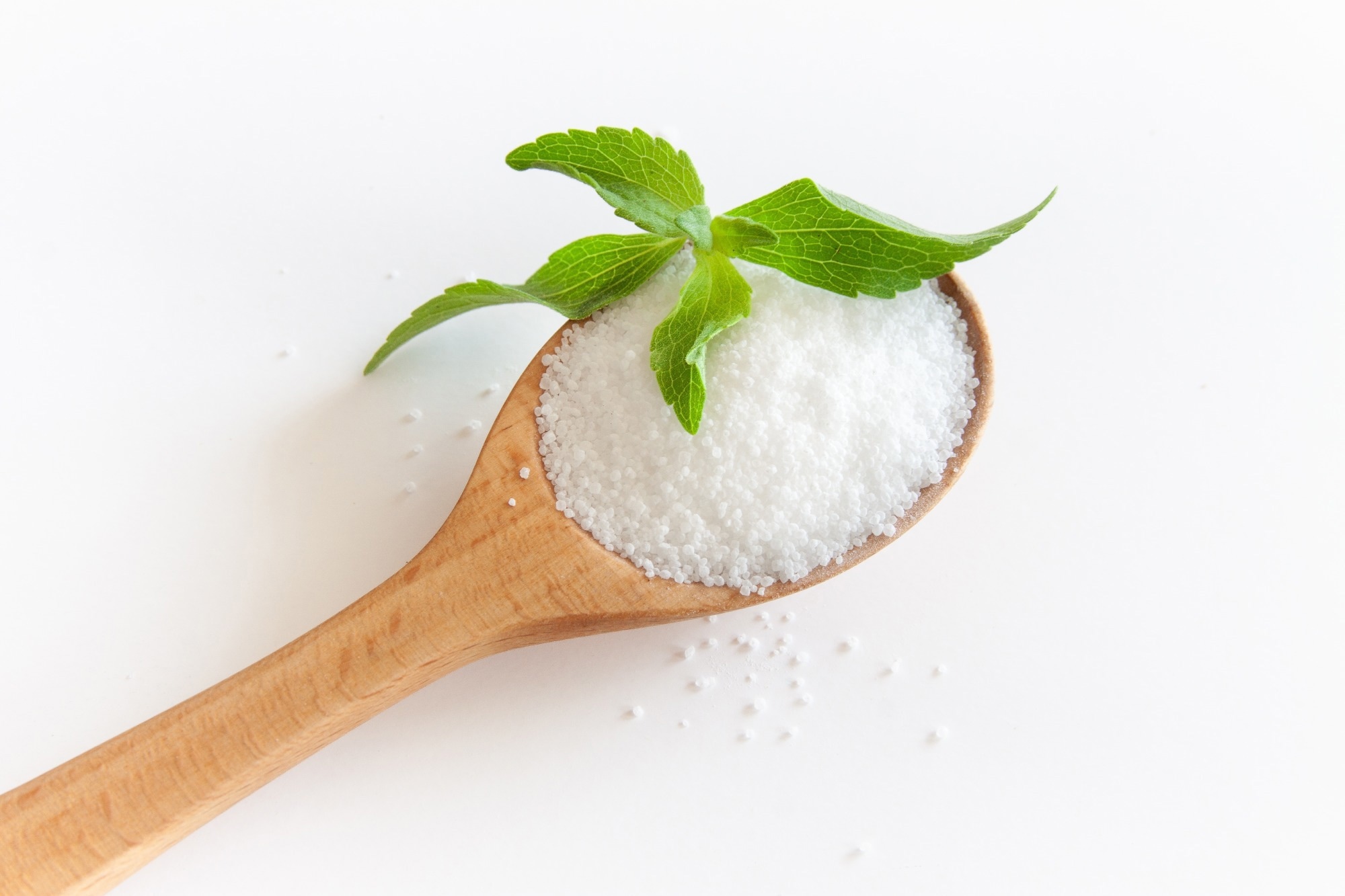
Study: Acute Stevia Consumption does not Alter Endocrine Responses in Individuals with Normal Weight, Overweight, and Type 2 Diabetes Mellitus. Image Credit: Jung Mi Hwa / Shutterstock
In a recent study accepted for publication in The Journal of Nutrition, a group of researchers evaluated whether acute stevia consumption alone or combined with glucose alters glycemic, endocrine, appetite, or subsequent energy-intake responses in adults with normal weight (NW), overweight (OW), or type 2 diabetes mellitus (T2DM).
Background
What does a sweet taste mean for the body when it comes without sugar’s calories? It is estimated that 2.5 billion people are affected by overweight, 890 million people are obese, and 830 million people have T2DM.
In the United States (US) alone, over 70% of adults are overweight or obese, making weight management and glycemic control major public health concerns. Non-nutritive sweeteners (NNS) provide a sweet taste with few or no calories, but questions remain about their influence on the hormones that regulate glucose and appetite.
Stevia is a plant-based NNS, but human evidence on its acute endocrine effects remains limited, while findings across the broader NNS literature have been inconsistent.
About the study
The investigation used a randomized, double-blind, crossover design in which beverages were administered in random order 3–14 days apart. The study included adults aged 18 to 50 years across three cohorts: NW, OW, or T2DM, with participants without T2DM classified as NW or OW based on BMI.
The NW and OW groups had body mass index (BMI) values of 18.5–24.9 and 25.0–29.9 kg/m², respectively. Participants with T2DM had a prior diagnosis, glycated hemoglobin (HbA1c) below 8%, a BMI of 25.0–34.9 kg/m², and no use of injectable hypoglycemic medication or oral glucagon-like peptide-1 (GLP-1) mimetic.
Each beverage contained 473 mL of water and either no additional ingredients, 30 g glucose, 75.6 mg steviol equivalents, or 75.6 mg steviol equivalents plus 30 g glucose. The stevia product was EverSweet, a yeast-fermented mixture of rebaudiosides D and M, and the dose represented 25% of the acceptable daily intake of steviol glycosides.
Blood was collected before and up to 180 minutes after consumption to measure glucose, insulin, glucose-dependent insulinotropic polypeptide (GIP), GLP-1, glucagon, and peptide YY (PYY). Researchers assessed changes in these biomarkers over the three-hour test period, including their overall response and peak increase from baseline.
Visual analog scale (VAS) scores assessing hunger, fullness, desire for food, and expected consumption were recorded, followed by an ad libitum meal served at the 195-minute mark. Researchers statistically compared responses between the beverage conditions.
Glucose and hormone responses were prespecified endpoints of primary interest, while appetite ratings and energy intake were exploratory outcomes. Participants followed an overnight fast, avoided vigorous activity for 24 hours and alcohol for 48 hours, and replicated their diet for 24 hours. Participants were also required to be relatively infrequent users of NNS before and during the study.
Study results
A total of 98 individuals were assessed for eligibility, and 29 were excluded: 25 did not meet the eligibility criteria, 1 was lost to follow-up, and 3 withdrew consent, while 23 participants were randomized to the cohorts. One participant in the NW group was excluded from the evaluable and per-protocol populations after completing only the first test visit. The per-protocol groups therefore included 22 NW, 23 OW, and 23 T2DM participants.
Across all three cohorts, researchers found no significant differences in glucose, insulin, GIP, GLP-1, PYY, or glucagon between water and stevia or between glucose and glucose plus stevia. This pattern held for both overall changes across the three-hour test period and peak increases from baseline. Therefore, adding stevia to glucose did not significantly alter the measured acute responses.
Appetite ratings were similarly consistent across treatments. Hunger, fullness, desire to eat, and prospective consumption did not differ significantly between water and stevia, or between glucose and glucose plus stevia, in the NW and T2DM groups.
In the OW group, there was a borderline statistical finding of greater fullness after glucose plus stevia than after glucose alone. No other appetite comparison was statistically significant. Sensitivity analyses excluding tests with missing appetite ratings produced no material differences.
Energy intake at lunch did not differ significantly between beverage conditions in any cohort. Participants consumed broadly similar amounts after water and stevia and after glucose and glucose plus stevia, with mean intake differing by only 3 to 25 kcal within the matched comparisons across the three cohorts.
One mild adverse event (AE), lightheadedness during intravenous catheter insertion before the glucose-only beverage, occurred in the NW group. It was unrelated to the beverage, and the participant recovered completely. The absence of significant differences in energy intake was consistent across all three participant cohorts and both beverage comparisons.
Conclusions
Acute consumption of stevia in beverage form did not materially alter insulin, glucagon, GIP, GLP-1, or PYY responses in participants with NW, OW, or T2DM. Adding stevia to glucose likewise did not significantly change hormonal responses compared with glucose alone.
Appetite ratings and energy intake at the meal were also generally unchanged, with only a borderline difference in fullness in the overweight group. The findings indicate that acute stevia exposure generally produced no statistically detectable changes in the evaluated glucose- and appetite-related responses under the study conditions.
Because the study assessed only acute responses and was not powered to directly compare responses among the NW, OW, and T2DM groups, longer-term studies in more diverse populations, including frequent stevia users, remain warranted.
Further research is needed to clarify acute endocrine responses, particularly when stevia is consumed with caloric carbohydrates.
It is important to note that the study was funded by Cargill, Inc., whose R&D center manufactured and labeled the EverSweet-containing beverages used in the trial, and three authors were paid Cargill employees during the study.
Journal reference:
- Scott, C. E., Adams, C. G., Williamson, P., Hutton, T. K., Wilcox, M. L., Guarneiri, L. L., & Maki, K. C. (2026). Acute stevia consumption does not alter endocrine responses in individuals with normal weight, overweight, and type 2 diabetes mellitus. The Journal of Nutrition. DOI: 10.1016/j.tjnut.2026.101814, https://www.sciencedirect.com/science/article/pii/S0022316626004633
 Women and men face different heart attack risks with diabetes