Researchers tracked beverage intake across more than 3.2 million person-years to examine whether sugar-sweetened and low-calorie drinks differ in their relationship with gastric cancer.
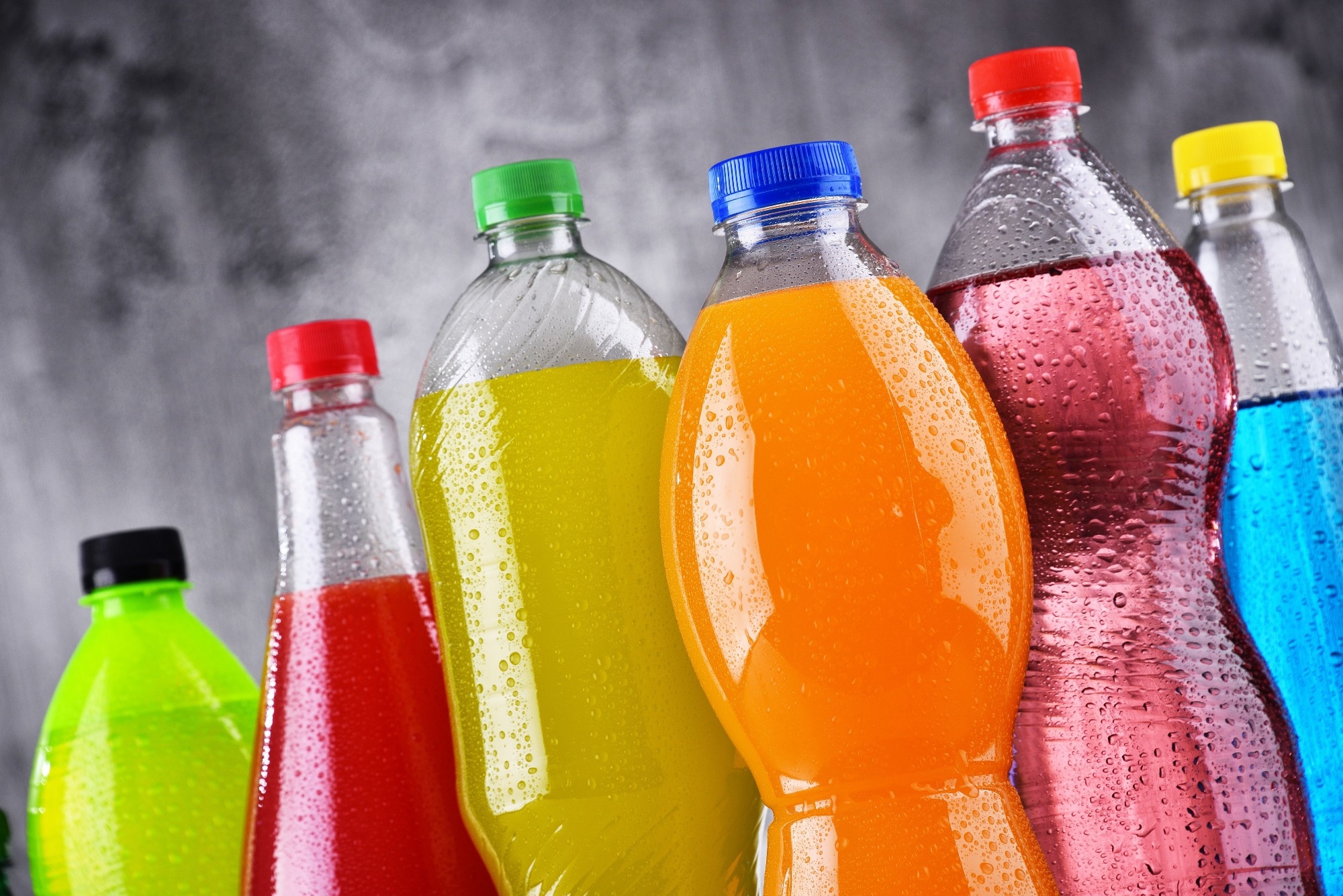
Study: Association Between Sugar-Sweetened and Artificially Sweetened Beverage Intake and Gastric Cancer Incidence. Image Credit: Monticello / Shutterstock
In a recent research letter published in the journal Gastro Hep Advances, researchers in the United States evaluated the associations of sugar-sweetened beverage (SSB) and artificially sweetened beverage (ASB) intake with gastric cancer incidence.
Background
Gastric cancer is the fourth leading cause of cancer death worldwide. Established risk factors include Helicobacter pylori infection, male sex, older age, alcohol intake, and tobacco use. Diets high in salted fish, pickled vegetables, and grilled or charcoaled meat, and low in fruits and vegetables, have been associated with increased incidence. SSBs, including regular soda, energy drinks, and juice with added sugars, have previously been associated with several cancers, but their relationship with gastric cancer has remained uncertain.
ASBs have raised questions because the International Agency for Research on Cancer classified aspartame as possibly carcinogenic to humans (Group 2B). Evidence linking SSB intake with gastric cancer remained limited.
About the study
The researchers conducted a prospective cohort study using two United States (US) cohorts: the Nurses’ Health Study (NHS) and the Health Professionals Follow-up Study (HPFS). The NHS enrolled 121,700 female registered nurses aged 30 to 55 years in 1976, whereas the HPFS enrolled 51,529 male health care professionals aged 40 to 75 years in 1986.
Participants returning the 1986 questionnaire formed the baseline because beverage intake was first collected then. Dietary intake was assessed using validated semiquantitative food-frequency questionnaires every 4 years, while questionnaires assessing lifestyle factors, medical history, and disease outcomes were administered every 2 years.
SSBs included carbonated beverages, punch, lemonade, and sports drinks; ASBs included low-calorie carbonated beverages. Intake was classified as less than 1 serving/month (the reference category), 1 to 3 servings/month, 1 to 3 servings/week, 4 to 7 servings/week, or more than 1 serving/day, with one serving defined as 8 ounces. Gastric adenocarcinoma cases were identified through self-report and the National Death Index and confirmed using medical records or cancer registries.
Statistical models examined the associations while accounting for potential confounders, including race, body mass index, calorie intake, smoking, alcohol intake, diabetes, physical activity, diet quality, reproductive factors, and medication use. Study protocols were approved by institutional review boards.
Study results
The final analysis was reported to include 112,284 participants. During 3,204,001 person-years of follow-up, 278 gastric cancer cases were documented, including 140 in the NHS and 138 in the HPFS. Compared with participants who consumed less than 1 serving of SSBs per month, those consuming more than 1 serving/day had a higher incidence of gastric cancer.
The difference was concentrated in the highest intake category, while estimates for the lower SSB categories were much closer to the reference group. Both cohorts showed higher gastric cancer incidence among participants in the highest SSB intake category.
By contrast, ASB intake was not associated with gastric cancer incidence. The estimates did not show a clear pattern across increasing ASB intake, either in the total cohort or within the two individual cohorts.
The researchers examined Helicobacter pylori infection using immunoglobulin G antibodies in a nested case-control sample from a colorectal cancer study comprising 616 NHS participants and 324 HPFS participants. Within this limited subgroup, neither SSB nor ASB intake was associated with Helicobacter pylori infection.
Total fructose intake was positively associated with gastric cancer incidence in the cohort and among women. The authors reported the detailed fructose results in a Supplementary Table.
Conclusions
Higher SSB intake was associated with greater gastric cancer incidence, while no corresponding association was identified for ASBs. The association was observed in both sex-specific cohorts. In the limited subgroup with serologic data, SSB intake was not associated with Helicobacter pylori infection.
The authors listed the limited information on Helicobacter pylori as a study limitation. They also cited limited information on the anatomical location of gastric cancer, family history of gastric cancer, and previous upper endoscopy. The cohorts were predominantly White and did not permit analyses within racial or ethnic subgroups or younger adults.
Proposed mechanisms include weight gain, insulin resistance, steroid hormone imbalance, inflammation, deoxyribonucleic acid (DNA) damage, and dysbiosis, but the carcinogenic mechanism remains uncertain. The authors called for future studies to confirm the findings and investigate the mechanisms involved.
Journal reference:
- Gweon, T.-G., Ha, J., Kim, H., Du, M., Song, M., & Chan, A. T. (2026). Association between sugar-sweetened and artificially sweetened beverage intake and gastric cancer incidence. Gastro Hep Advances. 5(11). DOI: 10.1016/j.gastha.2026.101097, https://www.ghadvances.org/article/S2772-5723(26)00218-9/fulltext
 Simple fecal test could help detect colorectal and pancreatic cancers