By mapping where severe trauma and transfusion needs overlap, researchers show how cities can more precisely deploy scarce blood supplies, bringing faster, potentially life-saving care to the patients who need it most.
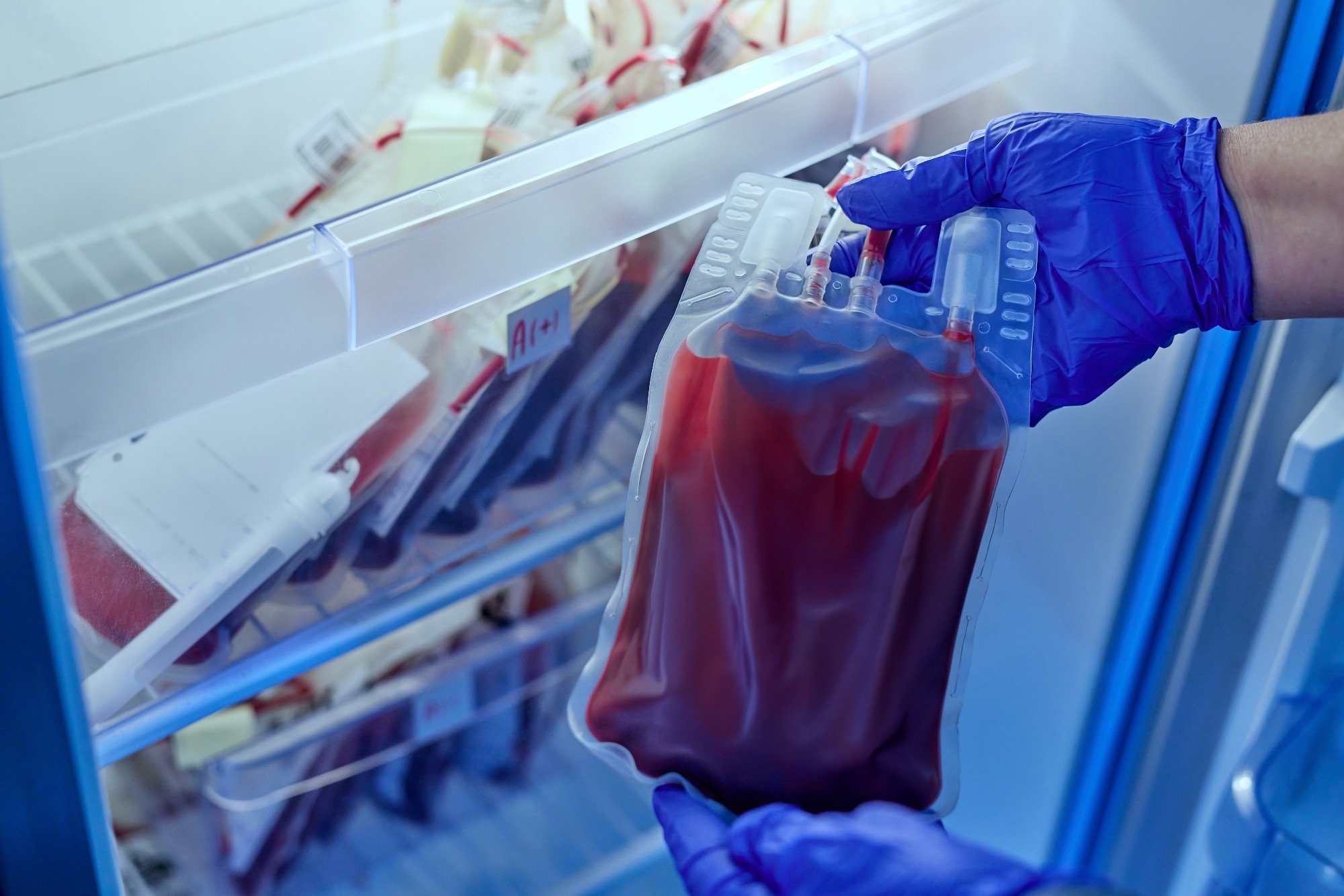 Study: Geo-Mapping Using In-Hospital Massive Transfusion Data as a Method for Prehospital Blood Management for Trauma Patients. Image credit: sergey kolesnikov/Shutterstock.com
According to a study in the Journal of the American College of Surgeons, geomapping could identify high-need zones for prehospital whole blood (PHWB) transfusion, potentially improving resource allocation and enabling more timely access to transfusion in hemorrhagic shock.
The problem
Whole-blood transfusion maintains the balance between red cells, plasma, and platelets. Such transfusions are routine in the military and in many civilian centers. Whole blood has a better logistical profile and produces better clinical outcomes through multiple mechanisms.
PHWB is required mainly for massive trauma, which is linked to more deprived areas, where trauma care is scarcer. However, blood banks involve costs, supply chain issues, and storage challenges.
Emergency medical services (EMS) vehicles must be fitted with blood in suitable storage conditions, further driving up investment. Moreover, a PHWB program relies on close collaboration with hospitals, blood donors, and city officials.
These factors may help explain why, in 2024, prehospital transfusions were used by less than 1 % of ground emergency services for patients with hemorrhagic shock. Newer technologies, such as geospatial mapping, should be explored to improve EMS care.
Geomapping to map trauma hotspots
Geomapping, the identification of patterns from spatial data, has been used for multiple tasks in EMS. For instance, it has cut ambulance deployment times by up to 20 %. It could be used to predict trauma hotspots and position PHWB and other resources at strategic sites. This aligns with the ongoing shift towards data-driven decision-making in emergency care.
Using mass transfusion protocol activation as a marker
In the current study, the authors evaluated the potential of mass transfusion protocol (MTP) activation as a marker of the need for PHWB. MTP refers to the transfusion of three or more units of blood within the first hour after arrival. They used trauma registry data in Omaha and Lincoln, Nebraska, to identify all occasions when mass transfusion protocols (MTP) were activated. This was evaluated as a proxy for PHWB transfusion need.
The researchers also obtained historical control data on assault events and motor vehicle crash fatalities from police and transportation databases. In both towns, penetrating trauma comprised approximately 84 % in Omaha and 78 % in Lincoln of all trauma, with victims being much younger, on average, than for blunt trauma. In over 50 % of cases of penetrating trauma, Black or Latino individuals were involved. Males were affected in over 90 % of cases in both towns.
The EMS total time from dispatch call to arrival in the trauma bay was longer for penetrating trauma than for blunt trauma. For instance, in Omaha, the median total EMS time was 34 minutes, and in Lincoln, 26 minutes, for penetrating trauma.
Geomapping revealed that trauma events were concentrated in downtown locations in both towns. This could be related to socioeconomic factors, poor environment, more crime, less equitable healthcare access, and higher trauma rates. EMS times were longer for penetrating trauma in both towns, indicating the potential value of targeted resource placement, and the authors suggest that locating trauma care resources closer to high-incidence areas in Omaha could benefit the community.
In Omaha, but not Lincoln, trauma rates were strongly correlated with MTP activation rates, although both cities showed statistically significant associations between trauma incidence and MTP activation. Fire stations are responsible for EMS in both towns. Geomapping identified the highest-need areas, providing data to reduce healthcare disparities in prehospital trauma care.
The authors show that MTP activation can serve as a proxy for PHWB need, potentially reducing reliance on external datasets, such as police or traffic data, which are not uniformly available across municipalities. This work requires only access to trauma center registries that meet National Trauma Data Bank (NTDB) criteria and submit data to the American College of Surgeons Trauma Quality Programs (TQP) Data Center. This ensures that geomapping can be used to identify high-need areas across different settings, although implementation may vary depending on local EMS structures and resources.
While prehospital time is increased by up to 5 minutes by PHWB administration and that of other medications, this is also accompanied by a decrease of 19 minutes in time to first blood transfusion, and a 22 % lower mortality in hospital, based on prior studies cited by the authors rather than this analysis. The survival benefit is especially marked when it takes more than 20 minutes to reach the hospital, as in these towns.
Limitations of the study
The study did not find strong linear correlations between Lincoln’s MTP activation rates and trauma, perhaps because the data were too limited. Further study may be needed for small towns, or a different documentation method may be needed. The findings may also not be fully generalizable to cities with different trauma patterns or multiple, non–fire-based EMS systems.
Geo-mapping MTP data strongly correlated with known traumas, supporting MTP activation as a surrogate marker for PHWB need. This offers a novel method for cities to plan PHWB programs by determining high need zones and ensuring equitable and cost-effective distribution of scarce resources.
The study also highlights the potential of geomapping as a useful tool for the equitable, future-strategic deployment of prehospital interventions in near–real-time settings.
Download your PDF copy by clicking here.
 Firmer potatoes lower post-meal blood sugar spikes