Could a simple squeeze reveal more about long COVID? Researchers find that weaker grip strength and faster muscle fatigue are linked to worse symptoms, offering clues to muscle dysfunction and the challenges of recovery.
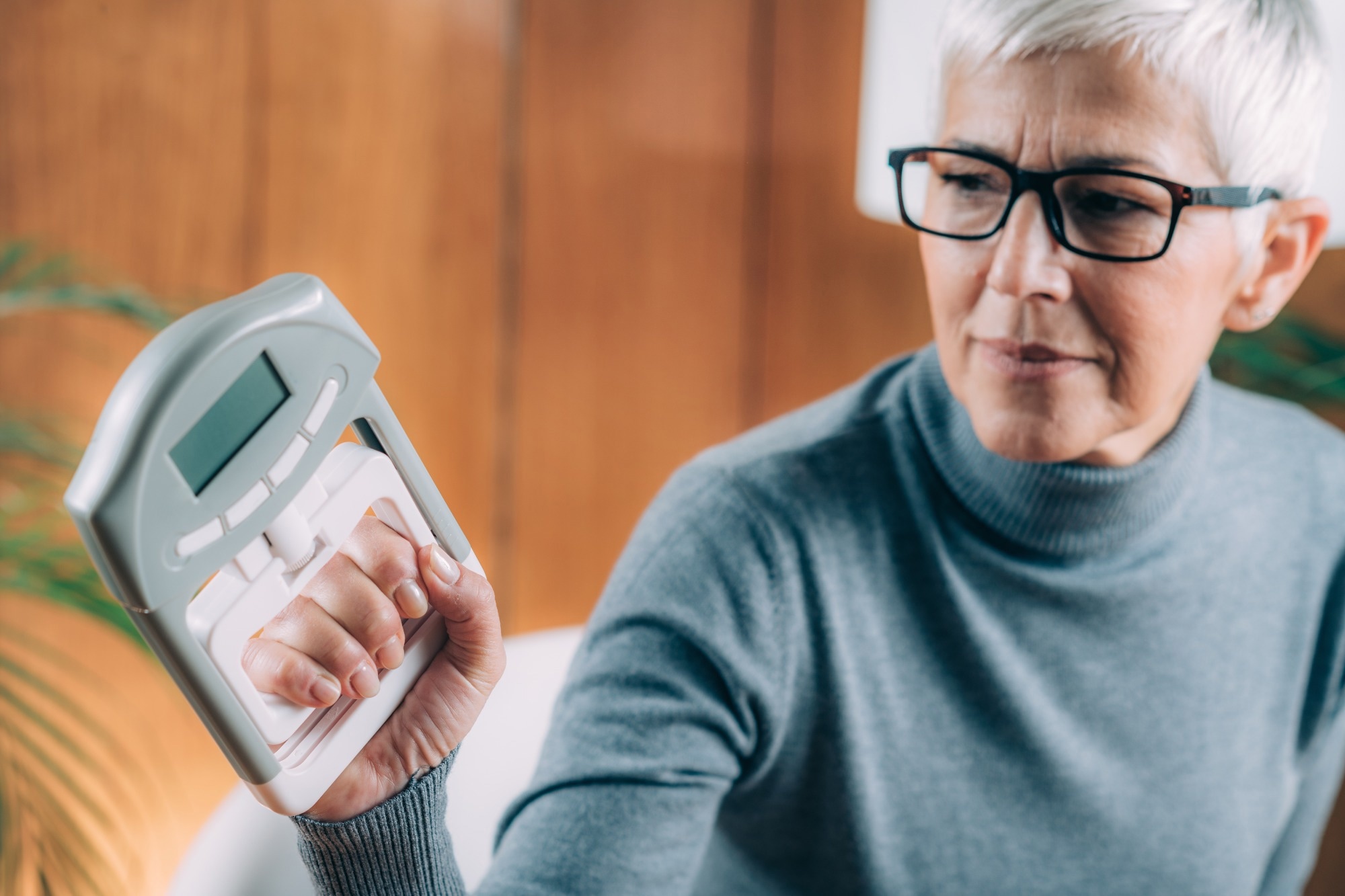 Study: Handgrip strength parameters as predictors of post-COVID syndrome severity and muscle weakness in an observational study. Image credit: Microgen/Shutterstock.com
Handgrip strength may serve as a potential measure of muscle function and provide limited insights into symptom severity in individuals with post-COVID syndrome, according to a new observational study published in Scientific Reports.
How long COVID affects muscles and physical function
Post-COVID syndrome, also known as long COVID, is a major health consequence of the coronavirus disease 2019 (COVID-19) pandemic, significantly affecting the overall quality of life of affected individuals.
Long COVID is defined as a group of symptoms that typically develop within three months of SARS-CoV-2 infection, persist for at least two months, affect daily functioning, and cannot be explained by another diagnosis. The most common symptoms include fatigue, myalgia, reduced physical ability, post-exertional malaise (PEM), cognitive dysfunction, and headache. A significant proportion of long-COVID patients also experience postinfectious myalgic encephalomyelitis/chronic fatigue syndrome (ME/CFS), which is a disabling, multisystem chronic condition characterized by severe fatigue, PEM, and cognitive dysfunction.
Endothelial dysfunction and persistent inflammation have been implicated in long COVID and ME/CFS, although their precise contributions to muscle weakness remain unclear. Impaired microvascular blood flow from endothelial dysfunction can reduce oxygen and nutrient delivery to muscles, causing fatigue and decreased strength. These factors suggest that endothelial dysfunction can potentially contribute to persistent symptoms such as muscle weakness and fatigue in long COVID.
Given the potential role of endothelial dysfunction in long-COVID-related functional impairment, researchers at the Technical University of Munich, Germany, investigated the usefulness of handgrip strength, an objective measure of muscle function, in long-COVID symptom assessment and explored its relationship with endothelial dysfunction and inflammatory markers.
Handgrip tests measure muscle fatigue and recovery
The study included 102 patients with long COVID. The present analysis formed part of the larger "All Eyes on PCS" observational study, which was designed to include recovered individuals without persistent symptoms.
The participants included 77 women and 25 men, with a median age of 41.5 years and a median symptom duration of 404 days.
Various handgrip strength parameters, including mean handgrip strength, fatigability, and recovery, were assessed in the dominant hand using a digital hand dynamometer across two separate sessions, separated by a resting period of 60 minutes. During each session, participants performed ten maximal handgrip contractions lasting three seconds each, with five-second rest intervals.
Long-COVID symptom severity, fatigue severity, mental health, and health-related quality of life were assessed as patient-reported outcome measures.
Weaker handgrip strength linked to more severe symptoms
The study analysis revealed that mean handgrip strength and fatigability are significantly associated with long-COVID severity and patient-reported outcome measures. Specifically, patients with lower handgrip strength experienced more severe symptoms. Patients with higher long-COVID severity exhibited higher fatigability, while the observed association with poorer handgrip strength recovery did not reach statistical significance.
The correlations between mean handgrip strength and long-COVID severity were modest, as were those between fatigability and symptom severity, suggesting limited predictive value for individual patients.
Of the 101 patients assessed for ME/CFS, 62 were identified as having the condition. These patients had significantly lower handgrip strength, greater fatigability, and poorer recovery than those without the condition. However, after adjusting for age and gender, the association with lower mean handgrip strength remained significant, while those involving fatigability and recovery weakened.
The researchers also found significantly higher levels of intercellular adhesion molecule-1 (ICAM-1), a marker of endothelial activation, in patients with impaired muscle recovery. Among patients with ME/CFS, lower vascular endothelial growth factor (VEGF) levels were associated with greater fatigability, although this association narrowly missed statistical significance after adjustment for potential confounding factors. Higher VEGF levels were also associated with better muscle recovery in an adjusted analysis.
Gender-specific correlation of handgrip strength parameters with markers of inflammation and endothelial dysfunction
The gender-specific analysis revealed a significant positive association between handgrip strength and ferritin (an iron-storage protein that can increase during inflammation) and a negative association between thrombocyte (platelet) counts and muscle recovery only in male patients with long COVID. This finding suggests a potential link between platelet counts and muscle recovery.
In female patients with long COVID, a negative association was observed between handgrip strength and antibodies against the SARS-CoV-2 spike S1 protein, indicating a potential role of viral persistence in muscle strength.
Muscle strength measurements could help guide long COVID rehabilitation
The study identifies handgrip strength as a potentially useful objective measure of muscle function and a supplementary indicator of patient-reported long-COVID outcomes. However, the observed association between reduced handgrip strength and more severe symptoms was relatively modest, indicating that its predictive value for symptom severity is limited and should be interpreted with caution.
The study found significantly lower handgrip strength, greater muscle fatigue, and poorer recovery of muscle strength in long-COVID patients with ME/CFS. These findings suggest that the observed changes in handgrip strength parameters may represent components of the ME/CFS phenotype.
The biomarker analysis revealed a significant positive association between handgrip strength and ferritin levels in male patients. The researchers hypothesized that this association may be related to iron metabolism and oxidative stress, potentially reflecting a protective mechanism in individuals with greater muscle strength.
The study also reported an inverse correlation between platelet counts and muscle recovery in male patients. The researchers suggested that increased platelet counts might reflect coagulation-related processes that could affect oxygen supply to muscles and impair recovery, although this explanation remains speculative.
Notably, the study found an inverse association between handgrip strength and antibodies against the SARS-CoV-2 spike S1 protein. Although the researchers considered viral persistence as a possible explanation, previous histological findings did not support persistence in muscle tissue. The source of this association therefore remains uncertain.
Together, the study findings highlight the potential clinical relevance of handgrip strength in understanding long-COVID symptom severity and muscle dysfunction. However, the relatively small, single-center observational study cannot establish causal relationships, and larger studies are required to validate these findings and determine appropriate thresholds for handgrip strength parameters.
The researchers suggest that long-COVID patients with abnormal handgrip strength measurements should receive special consideration in rehabilitation, as muscle training could pose risks for some individuals, particularly those experiencing post-exertional malaise. Rehabilitation strategies may therefore need to be adapted accordingly, although the study did not directly evaluate exercise interventions.
Journal reference:
- Wallraven T. (2026). Handgrip strength parameters as predictors of post-COVID syndrome severity and muscle weakness in an observational study. Scientific Reports. DOI: https://www.nature.com/articles/s41598-026-75170-3. https://www.nature.com/articles/s41598-026-75170-3
 Researchers find secret protein that drives cancer cell division