HPSC-derived neural organoids can help scientists better understand brain development, disorders, and diseases in the context of different genetic origins.
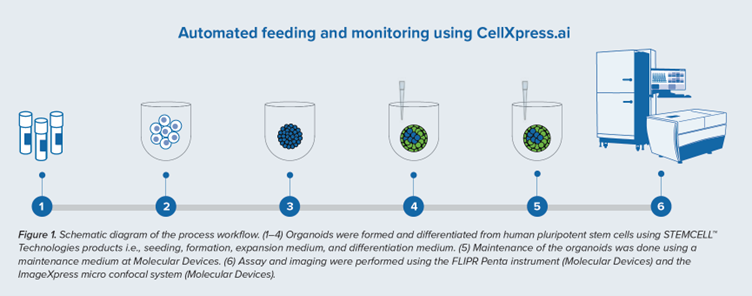
Image Credit: Molecular Devices
The study investigates using 3D neural organoids made from human pluripotent stem cells (hPSCs) to assess neurotoxicity and neural function.
Organoids were imaged to measure spontaneous calcium oscillations, which provided insights into brain function.
The study emphasizes the advantages of high-throughput screening, automated monitoring, and the ability to test several compounds to demonstrate the potential of this advanced model for drug testing and understanding brain function.
Download the App Note
About Molecular Devices UK Ltd
Molecular Devices is one of the world’s leading providers of high-performance bioanalytical measurement systems, software and consumables for life science research, pharmaceutical and biotherapeutic development. Included within a broad product portfolio are platforms for high-throughput screening, genomic and cellular analysis, colony selection and microplate detection. These leading-edge products enable scientists to improve productivity and effectiveness, ultimately accelerating research and the discovery of new therapeutics. Molecular Devices is committed to the continual development of innovative solutions for life science applications. The company is headquartered in Silicon Valley, California, with offices around the globe. For more information, please visit www.moleculardevices.com.
Sponsored Content Policy: News-Medical.net publishes articles and related content that may be derived from sources where we have existing commercial relationships, provided such content adds value to the core editorial ethos of News-Medical.net, which is to educate and inform site visitors interested in medical research, science, medical devices and treatments.