A new review reveals how chronic overconsumption of fructose, especially from soft drinks and ultra-processed foods, can quietly damage your liver. Diet and lifestyle change still remain the most powerful tools for prevention.
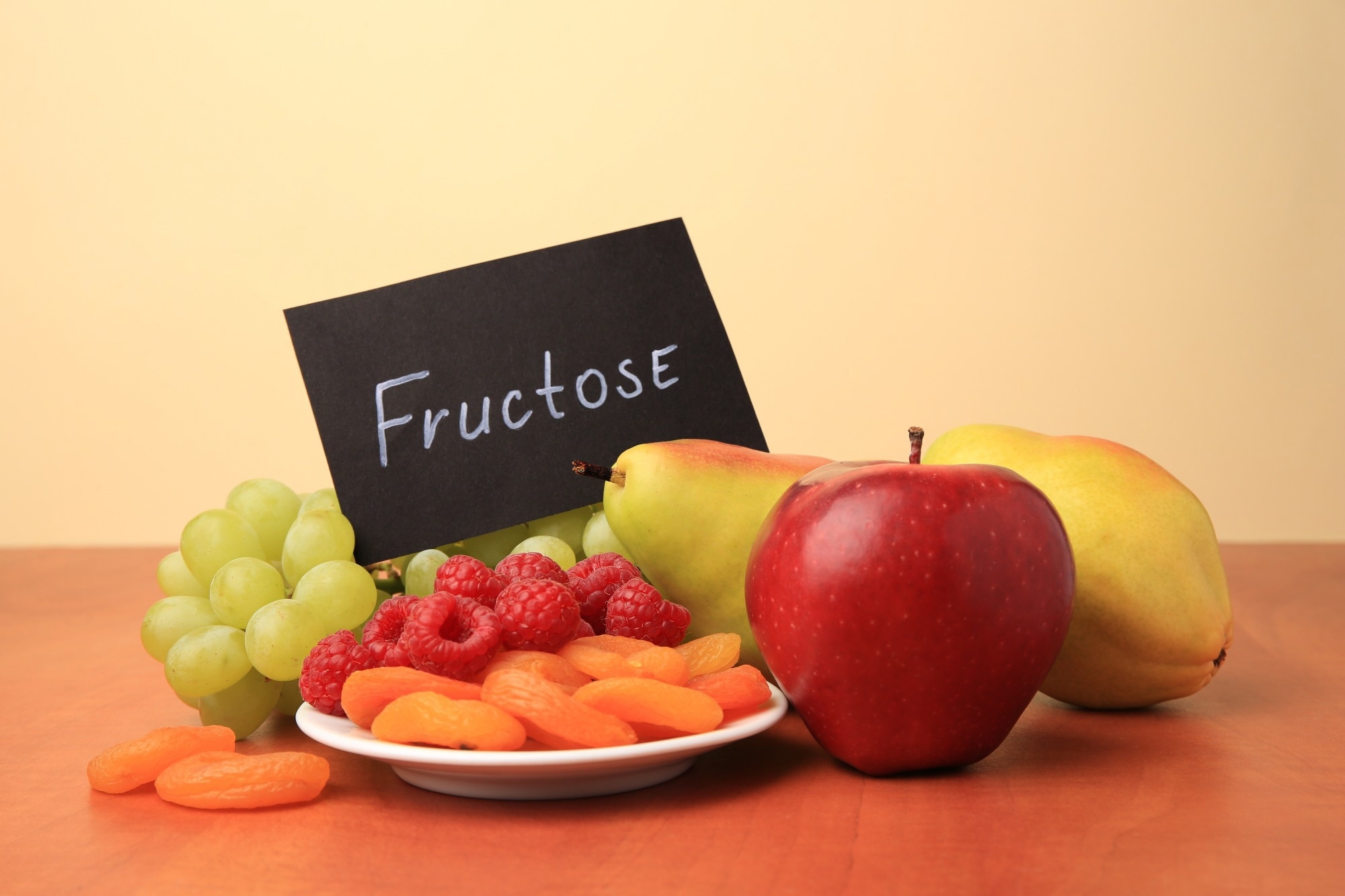 Study: Role of Excessive Fructose Consumption on Liver Health. Image credit: New Africa/Shutterstock.com
Fructose is a natural monosaccharide, or simple sugar, found in many fruits and vegetables, in honey, and especially as an added sugar in processed foods. The excessive intake of fructose is associated with non-alcoholic fatty liver disease (NAFLD). A recent review in Clinical Nutrition Open Science examines the association between this largely preventable disease and fructose.
Introduction
Fructose is a key ingredient of multiple commonly used calorie-dense foods. It is used as a sweetener, especially in the form of high-fructose corn syrup (HFCS), which is a highly palatable and low-cost sweetener widely used in the food industry.
HCFS contains 55 % fructose and 41 % glucose. It makes up a high proportion of many soft drinks, replacing sucrose or glucose as a sweetener. Chronic high intake of fructose-containing sweeteners has been reported to produce addictive-like effects in some experimental and clinical studies. HFSC has metaboplic effects that differ from glucose alone, in addition to the associated risk of fatty liver, insulin resistance, and obesity. Its increasing use coincides with the rising prevalence of NAFLD and metabolic syndrome.
The metabolic impact of fructose may vary with sex and body mass. Some metabolic alterations persist even after fructose intake is reduced. Mothers with high fructose consumption appear to pass on changes to their offspring, reprogramming their fructose metabolism and predisposing them to fatty liver changes, which can precede obesity or insulin resistance.
Unlike glucose, fructose is rapidly and directly metabolized in the liver. Fructose metabolism largely bypasses insulin regulation, and many os its metabolic intermediates are processed hepatally, although some can enter systemic circulation. Large amounts of fructose may be metabolized by the liver, presenting substrates for multiple metabolic pathways.
The presentation of both glucose and fructose in significant amounts, separately, to the liver triggers a different type of metabolism compared to that of sucrose (table sugar), even though the latter contains the same sugars chemically bonded.
Up to approximately 60 % of ingested fructose is oxidized. Most fructose is rapidly converted to glucose as an energy fuel or stored as glycogen. Excess fructose is converted to fat, which is deposited in the liver. This condition often leads to NAFLD and insulin resistance.
NAFLD and NASH
NAFLD is an umbrella term covering a group of conditions marked by excessive fat accumulation in the liver without a history of any or excessive alcohol consumption. Fatty liver is the simplest and most common form, characterized by the accumulation of large fat-filled vacuoles within the liver cells.
Added dietary fructose increases the risk of NAFLD as well as of visceral obesity, hypertension, hypertriglyceridemia, and other liver conditions. Interestingly, fructose induces de novo fatty acid synthesis more powerfully than glucose.
Rapid fructolysis also increases the release of fatty acids and very low-density lipoproteins (VLDL), leading to fat accumulation in skeletal muscle and the development of insulin resistance. Insulin resistance, which is part of the metabolic syndrome, triggers, perpetuates, and exacerbates fatty changes in the liver.
In a significant proportion of patients, NAFLD progresses to nonalcoholic steatohepatitis (NASH), driven mainly by oxidative stress and mitochondrial dysfunction occurring in response to the toxicity of free fatty acids: the so-called double-hit hypothesis.
In addition to fatty liver changes in the absence of alcohol exposure, NASH is characterized by periportal inflammatory infiltration and hepatocyte ballooning. The affected liver cells are overloaded with triglycerides. Contributing factors include the increased uptake of free fatty acids from blood, enhanced de novo triglyceride synthesis from fructose and other carbohydrates, and reduced fatty acid oxidation.
NASH is much more common in people with metabolic syndrome and is considered to be its hepatic manifestation. It may eventually cause severe liver damage.
Diet and NAFLD
Apart from a high-fructose diet, a high-fat diet activates the endocannabinoid axis, which alters fat metabolism towards obesity and insulin resistance. Type 1 cannabinoid receptors in the liver react to endocannabinoid activation by increasing insulin resistance and reducing beta-oxidation of fats.
A diet that is based on high fructose, high cholesterol and high saturated fat consumption aggravates inflammation and metabolic damage.
Conversely, NAFLD may be arrested or even reversed by switching to a low-fructose, low-fat diet and pursuing moderate physical activity. Such steps have been shown to reduce liver inflammation and improve metabolic markers and liver health within as little as one month in some studies.
NAFLD has no specific drug treatments currently, making prevention and non-pharmacological treatment urgent priorities. A healthy diet with a low fructose intake is among the key preventive strategies.
The Mediterranean diet is an excellent instance of such a diet. Following the Mediterranean diet not only promotes cardiovascular and metabolic health, and reduces cancer risk, but also lowers NAFLD risk. Thus, multiple professional associations recommend this diet for NAFLD/NASH patients.
The ketogenic (“keto”) diet reduces insulin secretion and inhibits fat synthesis, while encouraging fat oxidation. Moreover, it gives rise to ketone bodies that may dampen liver inflammation and fibrosis, suppress insulin resistance, and improve liver mitochondrial function.
The energy-restricted diet is another regimen that improves the energy balance, promotes weight loss, and effectively reverses NAFLD, compared to other diets. A dose-response relationship has been observed between the amount of energy restriction and the extent of weight loss and improvement in liver function. Weight loss by 5 % reduces liver fat, while a 7 % reduction counters liver inflammation. Liver fibrosis improves with >10 % weight loss.
Conclusions
Excessive fructose consumption is a key risk factor in the development and prognosis of NAFLD.
In general, a healthy eating pattern in combination with physical activity and lifestyle modification is the cornerstone of NAFLD prevention and treatment.
Download your PDF copy now!
 ASAC trial reveals aspirin fails to improve metastatic colorectal cancer survival