A large imaging-based study finds that people who drink more alcohol each week carry a disproportionately higher share of dangerous visceral fat, offering new insight into the biology behind the so-called “beer belly.”
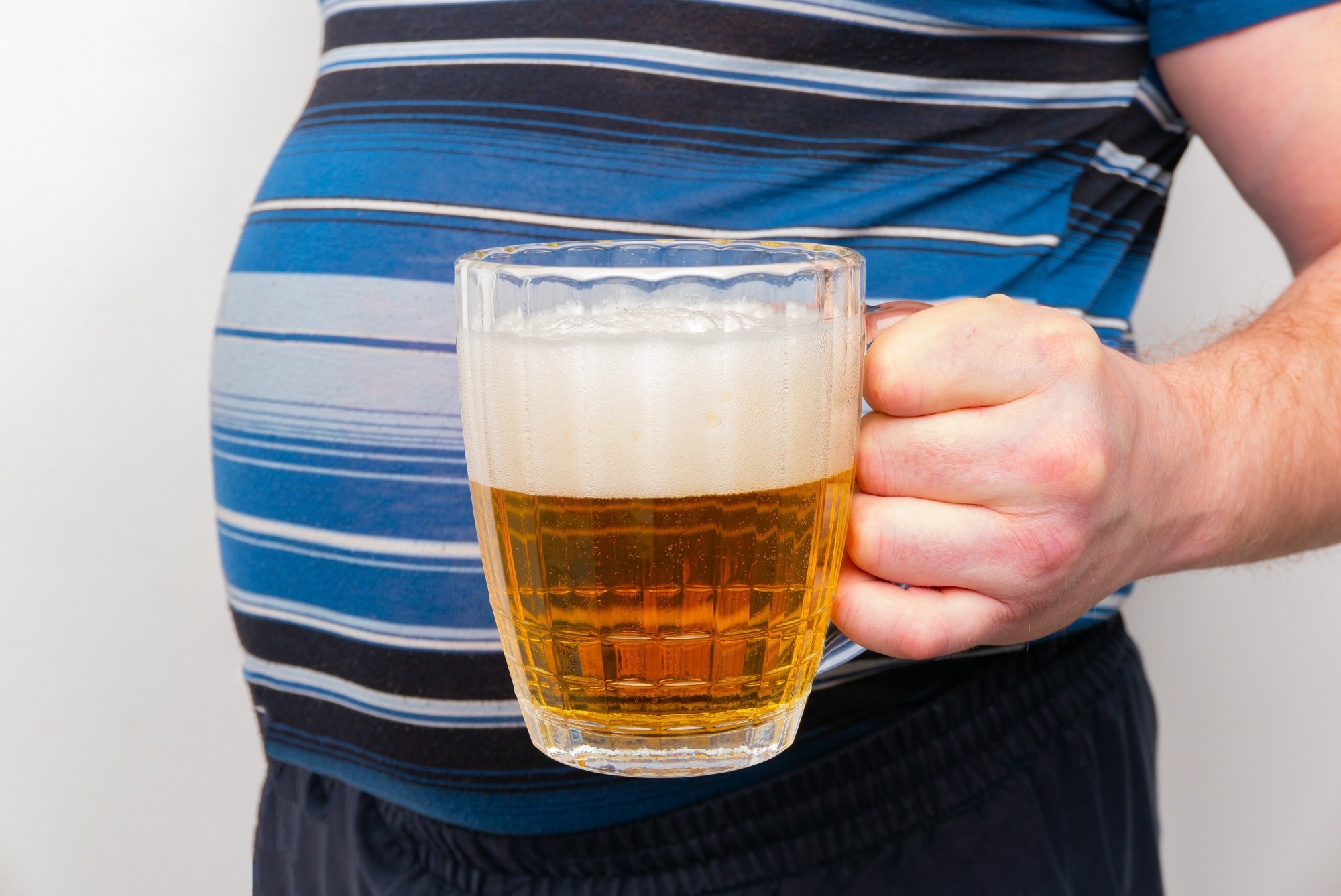
Study: Greater visceral fat mass accumulation with high alcohol consumption. Image Credit: Tattoboo / Shutterstock
In a recent study published in the International Journal of Obesity, a group of researchers examined whether weekly alcohol consumption is associated with increased visceral fat mass (VFM) measured using precise imaging techniques in a large population-based cohort.
Background: Alcohol and the “Beer Belly” Question
Does alcohol really cause a “beer belly,” or is that just a myth? Alcohol is energy-dense, and heavy drinking increases the daily calorie intake. While much of the research connecting alcohol and increased weight has been based on body mass index or waist measurements, large-scale observational studies relying on conventional anthropometrics cannot accurately distinguish between dangerous visceral fat and safer subcutaneous fat.
VFM has a close association with an increased risk of cardiovascular diseases, type 2 diabetes, and other manifestations of metabolic dysfunction. Precise imaging studies in large populations remain limited, and so further research is needed to clarify how alcohol influences regional fat distribution.
Study Design and Population
The study analyzed men and women aged 25-75 years from the Oxford Biobank, a population-based cohort designed to broadly reflect the United Kingdom population, including approximately 10% of participants with type 2 diabetes. A total of 5,761 participants were included in the final analysis after excluding those with incomplete alcohol or body composition data.
Alcohol intake was assessed using a structured questionnaire. Participants reported their weekly alcohol consumption in standardized units (1 unit = 8 grams of alcohol). Participants reporting zero intake were categorized as non-drinkers. Drinkers were divided into sex-specific quartiles based on weekly consumption.
Dual-energy X-ray absorptiometry (DXA) was used to quantify total fat mass and VFM, and it correlated with computed tomography measurements. %VFM was determined by dividing VFM by total fat mass and multiplying by 100. However, DXA quantifies visceral fat within the android region, which may underestimate total visceral fat mass.
The stratification of the statistical analyses was based on sex. To compare the groups, analysis of variance and analysis of covariance (ANCOVA) were conducted, controlling for age, smoking status, height, physical activity level, socioeconomic status, and total fat mass. Multivariable regression models assessed dose-dependent associations between alcohol intake and visceral fat.
Alcohol Consumption Patterns and Visceral Fat Distribution
The final sample included 42.8% men and 57.2% women. Among drinkers, alcohol intake ranged from 1-4 units per week in the lowest male quartile to 17-98 units per week in the highest. In women, the highest quartile ranged from 10 to 50 units weekly.
VFM increased significantly with higher alcohol consumption in both sexes. Analysis of variance indicated that people in the highest alcohol quartile had higher VFM compared to the lower quartiles (p < 0.001). Interestingly, non-drinkers had a higher average total fat mass and body mass index than light-to-moderate drinkers, likely reflecting the heterogeneous nature of non-drinkers, which may include former heavy drinkers.
To better understand fat distribution, researchers examined %VFM and observed that it was higher in the highest drinking quartile for both men and women, after adjusting for confounding factors. In men, %VFM was 10.7% higher in the highest quartile compared with the third quartile and 13.5% higher compared with the first quartile.
No significant differences were observed among the lower three quartiles. In women, %VFM was significantly higher in the highest quartile compared with the second and third quartiles, with the steepest rise occurring between the third and fourth quartiles, where %VFM increased by 17.1%.
An interaction analysis further demonstrated that the relationship between total fat mass and VFM was steeper among the highest alcohol consumers. This suggests that as overall fat increased, heavy drinkers accumulated disproportionately more visceral fat than other groups.
Dose-Dependent Associations and Comparison With Waist Circumference
Multivariable regression confirmed an association between alcohol consumption and VFM that is dependent upon the amount of alcohol consumed. After controlling for known confounding variables, alcohol consumption remained significantly associated with VFM in both men (β=1.104, p<0.001) and women (β=1.102, p=0.006). In contrast, when waist circumference was analyzed as an outcome, the association was weaker, particularly in women, where it was not statistically significant.
The findings suggest that excessive consumption of alcohol is associated with greater visceral fat accumulation, a pattern linked to increased cardiometabolic risk, regardless of overall body fat. This pattern may help explain the increased cardiometabolic risk observed among heavy drinkers.
Conclusions and Public Health Implications
This large population-based analysis demonstrates a clear dose-response relationship between alcohol consumption and VFM in both men and women. Individuals in the highest alcohol consumption quartile (17–98 units per week in men and 10–50 units per week in women) showed over 10% higher proportional visceral fat, independent of total fat mass.
These findings have important implications for the general population since visceral fat is an extremely important predictor of cardiovascular disease, metabolic syndrome, and type 2 diabetes.
Alcohol may not only increase body weight but also be associated with a greater proportion of fat stored in metabolically adverse depots. However, the study did not assess dietary intake, beverage type, or longitudinal outcomes.
Reducing heavy alcohol intake may be considered within broader strategies aimed at improving metabolic health, although prospective studies are needed to determine whether reducing intake directly lowers visceral fat accumulation. Because the study was cross-sectional and relied on self-reported alcohol intake, it cannot establish causality.
 Alcohol-linked cancer deaths doubled over three decades in America