Beyond its bright red seeds, pomegranate harbors fibre-bound “hidden” polyphenols that amplify its antioxidant capacity and help shield vulnerable brain cells from oxidative damage in laboratory models.
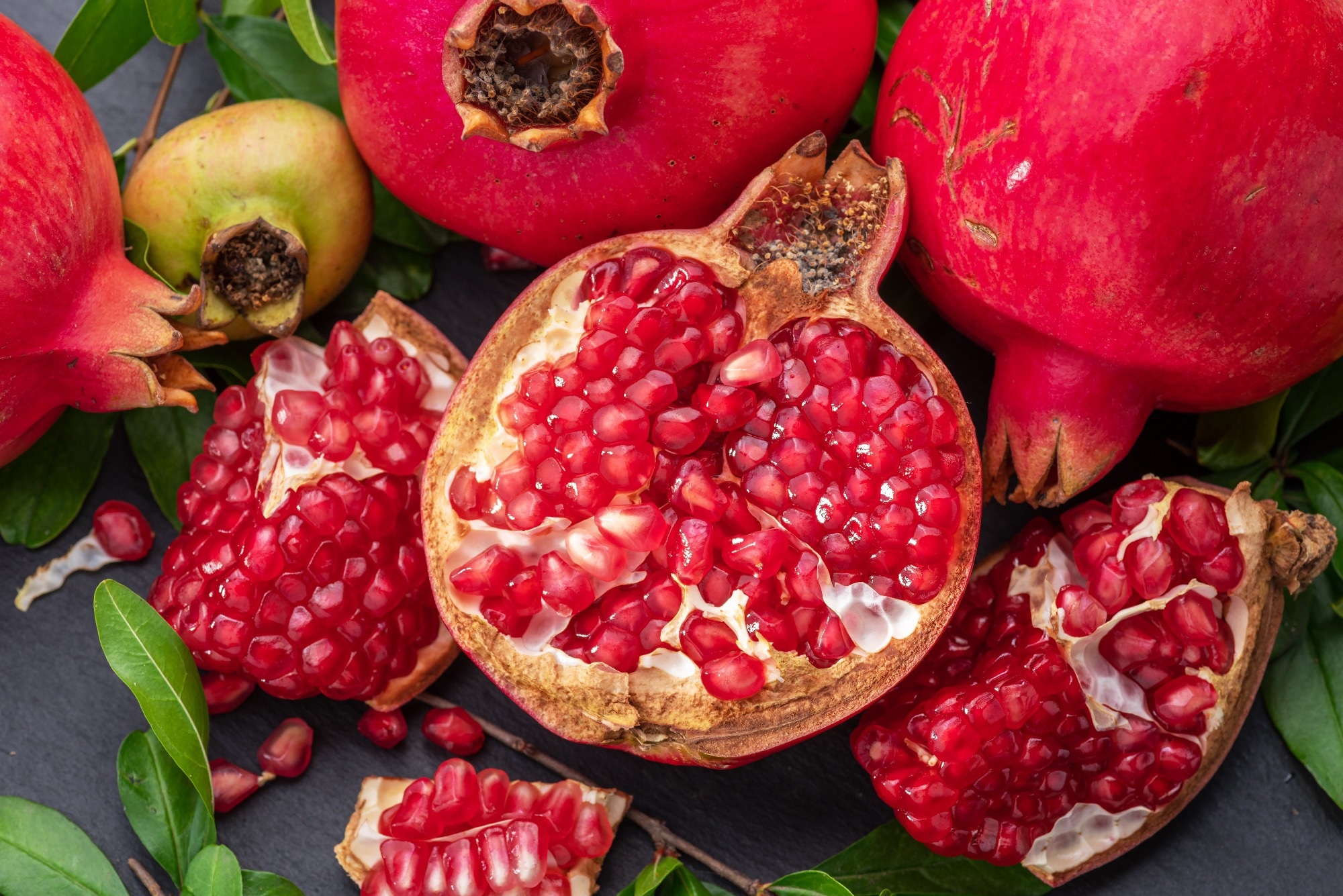
Study: The Significant Antioxidant Effect Exerted by Pomegranate (Punica granatum): The Hidden Polyphenols. Image Credit: Valentyn Volkov / Shutterstock
In a recent study published in the journal Antioxidants, researchers used eight analytical methods, including HPLC, DPPH, and ORAC, to assess the antioxidant properties of pomegranate (Punica granatum) fruit extract (PUN). The study focused on the fruit’s fibrous components and found a significant amount of non-extractable polyphenols closely associated with the fibre-rich matrix and polysaccharide complexes, making them difficult to extract.
Critically, when tested on human neuronal and astrocytic cell lines, the PUN extract demonstrated a robust ability to neutralize oxidative stress under hydrogen peroxide challenge in vitro, suggesting that pomegranates may exert antioxidant effects in neural cell models that are not fully reflected by measurements limited to easily extractable polyphenols.
Background: Fiber-Bound Antioxidants and Hidden Polyphenols
Dietary fibers are well-regarded for their prebiotic effects and their ability to regulate blood glucose. However, recent research suggests that these fibers may serve as a vehicle for antioxidants, particularly the non-extractable polyphenols (NEPPs) that traditional measures of foods’ antioxidant capacity (easily extractable polyphenols [EPPs]) entirely miss.
Punica granatum, the common pomegranate, has been extensively researched for its rich profile of flavonoids, vitamins, and hydrolysable tannins. The fruit notably contains high densities of dietary fiber, though these have historically been unstudied due to their being concentrated in the fruit’s normally inedible peel and internal structural partitions.
The authors of the present study hypothesized that the fibrous portions of the pomegranate might conceal a secondary, unmapped resource of NEPPs. If present, these hidden compounds could redefine scientific understanding of PUN’s total antioxidant capacity and lead to the discovery of novel NEPPs with the potential to mitigate oxidative stress.
Study Design and Analytical Approach
The present study aimed to verify this hypothesis and further test whether the potentially identified NEPPs could mitigate oxidative stress in human brain cells, given that oxidative stress is an established driver of neurodegenerative conditions.
The research team first prepared a pomegranate fruit extract (PUN) from whole, mechanically pressed pomegranate fruit. The extract’s fiber content was subsequently characterized using the National Renewable Energy Laboratory (NREL) protocol, which separated carbohydrates and lignin from PUN via a two-step acid hydrolysis process.
EPPs were quantified using standard colorimetric assays, following which HPLC was utilized to identify specific tannins and anthocyanins contained within the PUN. To release and measure NEPPs, the remaining cellular PUN pellet was incubated (20 hours at 85 °C) in an acidic environment.
The study measured PUN’s antioxidant activity by recording the reduction in absorbance of the stable radical DPPH, and its antioxidant capacity by the loss of spontaneous fluorescence in the ORAC test.
In Vitro Neural Cell Model of Oxidative Stress
To test the biological efficacy of the PUN extract on human brain cells, the study utilized an in vitro model featuring two distinct human nervous system cell lines: 1. SH-SY5Y (neuroblastoma cells modeling human neurons) and 2. U373-MG (astrocytoma cells modeling astrocytes).
These cell lines were pre-treated with 100 µg/mL of the PUN extract for 24 hours, followed by exposure to severe oxidative stress induced using 200 µM hydrogen peroxide (H2O2) for 20 minutes.
The study finally measured cellular damage in treated SH-SY5Y and U373-MG cells using:
- Fluorimetry and cyto-fluorimetry to estimate the accumulation of reactive oxygen species (ROS)
- Quantification of malondialdehyde (MDA) to evaluate lipid peroxidation
- MitoSOX™ Red fluorogenic dye to detect and quantify highly toxic mitochondrial superoxide
Fiber Composition and Polyphenol Quantification
The study’s fiber analyses revealed that the pomegranate extract is exceptionally rich in lignin (>47% of PUN’s identifiable fibrous profile). Colorimetric assays quantified PUN’s EPPs to measure ~71 mg/g of gallic acid equivalent (GAE). Crucially, the study found that acid hydrolysis-released NEPPs measured 55 mg/g GAE.
HPLC analyses revealed that the primary tannins in PUN included punicalagin A, punicalagin B, and ellagic acid, which were identified as major constituents of the extract.
Protective Effects Against Oxidative Stress in Astrocytes and Neurons
The incubation of human neuronal cell lines with H2O2 was observed to result in a dramatic increase in their ROS levels. Astrocytes were found to be substantially more vulnerable to the H2O2 treatment than neuroblastoma cells, accumulating ~65% more ROS and demonstrating a 41% higher rate of lipid peroxidation.
Encouragingly, however, pre-treatment with the PUN extract was shown to substantially neutralize this damage. For example, in the astrocyte populations, PUN significantly suppressed both total ROS and mitochondrial superoxide accumulation (p < 0.01 compared to the hydrogen peroxide control), effectively rescuing these cells from structural lipid degradation (p < 0.001 compared to controls).
Conclusions and Clinical Implications
The present study demonstrates the substantial antioxidant potential of the common pomegranate, further demonstrating that this antioxidant capacity reflects contributions from both extractable and non-extractable polyphenol fractions. Study findings suggest that EPPs provide an immediate chemical defense, while the fiber-bound NEPPs contribute to the total measured antioxidant capacity and may represent an additional, previously underappreciated fraction.
Furthermore, these results suggest that astrocytes, the established critical support cells of the brain, are acutely sensitive to oxidative damage but are highly responsive to pomegranate-derived antioxidants in this in vitro model.
However, the authors caution that while these in vitro results are promising, the bioavailability of these fiber-bound antioxidants during human digestion remains unknown, and no conclusions can yet be drawn regarding clinical neuroprotective effects in humans.
Journal reference:
- Caminiti, R., et al. (2026). The Significant Antioxidant Effect Exerted by Pomegranate (Punica granatum): The Hidden Polyphenols. Antioxidants, 15(3), 276. DOI – 10.3390/antiox15030276. https://www.mdpi.com/2076-3921/15/3/276
 What mothers eat in pregnancy may shape a child’s weight years later