A simple spoonful of peanut butter each day improved lower-body muscle power in older adults, but the study’s primary walking test did not budge, highlighting both the promise and the limits of diet-only strategies for healthy aging.
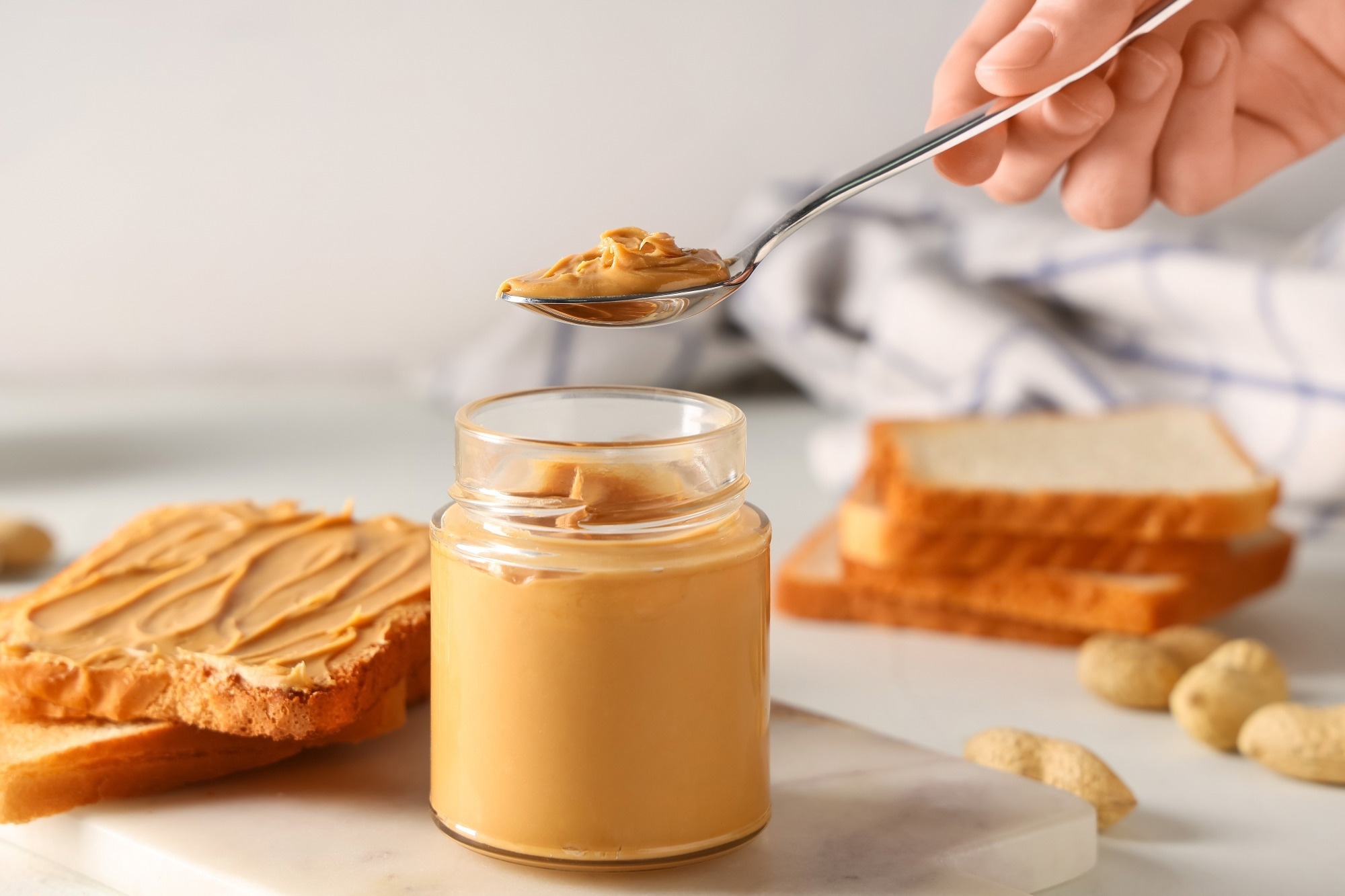 Study: Effects of Peanut Butter Supplementation on Older Adults' Physical Function: A 6-Month Randomised Controlled Trial. Image credit: Pixel-Shot/Shutterstock.com
Nut intake is associated with a lower decline in physical function, but experimental proof is lacking. A recent randomized controlled trial (RCT) published in the Journal of Cachexia, Sarcopenia and Muscle investigated the benefit of daily peanut butter supplementation for physical function in older adults.
Muscle mass and power decline with aging
Muscle mass and strength decrease with aging, with the decline accelerating after age 50. Over a lifetime, muscle mass and strength drop by 20 %-30 % and 40 %-50 %, respectively.
After age 65, physical function begins to wane rapidly, often to less than half its peak capacity. This increases the risk of falls and fractures, may lead to a loss of independence, increases the odds of hospitalization, and is associated with a lower quality of life.
Strategies to slow or prevent such age-related loss of muscle strength and function promote healthy aging. A nourishing diet coupled with resistance training is central to such approaches, as dietary protein stimulates muscle protein synthesis.
For instance, the Mediterranean diet is associated with better physical function in older adults. Notably, it includes protein-rich nuts, which yield free amino acids (especially peanuts), vitamins, minerals, antioxidants, and fiber. Regular nut consumption may be associated with reduced inflammation and oxidative stress, which are risk factors for low muscle mass and strength and lower physical function with aging.
Nut butters are convenient, soft, and inexpensive, making them readily incorporated into the diet of older people. The current trial aims to test whether peanut butter supplementation improves physical function, muscle strength, and muscle mass in older adults at risk of falls, with 4-m gait speed as the primary outcome measure.
Six-month peanut butter supplementation trial
Community-dwelling older adults (at least 65 years) were recruited for this study, including 120 individuals assessed to be at risk of falling. They were randomly assigned to receive 43 g of peanut butter per day or usual care for six months. Researchers, but not participants, were blinded to the intervention.
The amount of peanut butter used corresponds to about 1.5 servings of nuts, with 20 g fat, mostly unsaturated, 250 kcal, and 10 g protein. Dietary quality was assessed using the HEI-2020. Participants were classified as malnourished or at risk for malnutrition.
Sarcopenia risk was also assessed using five self-reported questions about strength, assistance with walking or rising from a chair or climbing stairs, and a history of falls.
Tests of physical function
- 4-m gait speed
- Standing balance
- FSST
- Five times sit-to-stand test (5STS) time and muscle power
- 30-second sit-to-stand (30-s STS)
- TUG
Tests of muscle strength
- Handgrip strength (HGS)
- Knee extensor strength (KES)
Anthropometry
- Weight
- Body mass index (BMI)
- Total lean and fat mass
- Appendicular lean mass
Linear regression was performed to identify intervention effects on these outcomes.
No improvement in primary walking test
In total, 108 participants completed the study, mostly female, with a mean age of 76 years. The average BMI was 27.5 kg/m2.
The supplementation group showed an increase in energy, protein, and fat intake, as expected, with 4 % less energy derived from carbohydrates. There was no significant change from baseline in the control group. Control participants were advised to maintain their usual diet and avoid nut consumption during the trial.
Importantly, there was no weight gain in the intervention group. The authors speculate that this may be related to the high unsaturated fat content of peanut butter, incomplete fat absorption, or other mechanisms affecting energy balance, though these were not directly measured.
After six months, gait speed, the study’s primary outcome, remained unchanged, as did most other measures of physical function. However, 5STS time and muscle power improved significantly in the peanut butter group compared with the control group. The mean time to complete the test was 1.2 seconds shorter. Absolute and relative muscle power increased by 22 W and 0.27 W/kg, respectively.
Clinical relevance of one-second improvement
Earlier research links a lower 5STS performance to disability for activities of daily living. This reflects muscle power, which shows the earliest and most marked alteration as physical function wanes. An increase in test time of about one second, corresponding to a 10% decline per year, is a suggested clinical threshold.
An increase in relative muscle power by 0.2-0.3 W/kg signals a switch from low to medium, and from medium to high. Low relative muscle power predicts limited mobility, while improved power predicts survival and independence in older people more accurately than peak muscle strength.
The changes observed in this study are thus potentially clinically meaningful. The 5STS was the only test to show such a change. Muscle power reflects force multiplied by contraction velocity, and perhaps the improvement was driven by higher movement velocity despite unchanged measured muscle strength.
A prior prospective cohort study of nut intake also found no clear association with gait speed, which the authors suggest may reflect a ceiling effect among relatively well-functioning participants.
Alternatively, more peanut butter may be needed to counteract age-related muscle resistance to anabolism. Again, exercise remains an essential component to increase muscle mass and strength, as recent studies show.
The high adherence to the intervention (86 %) and positive sensory feedback indicate its feasibility. Participants mostly reported that they would voluntarily eat peanut butter “now and then” because they liked it.
No major adverse events were reported, but one participant ended the trial six weeks early because of concerns related to a high cholesterol level. This was not attributed to the peanut butter.
The study had several limitations. Participants had a relatively high mean protein intake at baseline, exceeding current recommendations, which may have limited the potential for detecting additional benefits from supplementation. Baseline physical function was also comparatively high, raising the possibility of ceiling effects that could obscure improvements.
Adherence was not assessed using objective biomarkers, and participants were not blinded to group allocation, which may have introduced behavioral bias. The control group did not receive a placebo food, potentially affecting comparability between groups. In addition, inflammatory and oxidative stress markers were not measured, leaving proposed biological mechanisms unexplored.
Finally, no adjustment was made for multiple comparisons across outcomes, increasing the risk of type I error. Future studies should address these limitations, including formulating hypotheses to explain why peanut butter supplementation did not increase body weight.
Simple intervention warrants further research
The study showed that among older adults, daily supplementation with peanut butter improved 5STS time and muscle power but not other measures of physical function and body composition, including the primary outcome of 4-m gait speed.
The simplicity and acceptability of the intervention, coupled with the modest but potentially meaningful effects observed in one functional measure, warrant further research to validate these findings, especially among elderly people with low muscle mass or physical function who are at risk of malnutrition.
Download your PDF copy by clicking here.
Journal reference:
-
Feyesa, I., Hettiarachchi, J., Daly, R. M., et al. (2026). Effects of Peanut Butter Supplementation on Older Adults' Physical Function: A 6-Month Randomised Controlled Trial. Journal of Cachexia, Sarcopenia and Muscle. DOI: https://doi.org/10.1002/jcsm.70221. https://onlinelibrary.wiley.com/doi/10.1002/jcsm.70221
 Scientists studied diet and lung cancer in 95,612 adults. One eating pattern stood out