A decade-long analysis of over 40,000 women reveals that diets rich in flavonoid-packed foods like berries, apples, and citrus may be linked to sustained happiness and optimism, and people with higher well-being may also be more likely to maintain these healthier eating habits.
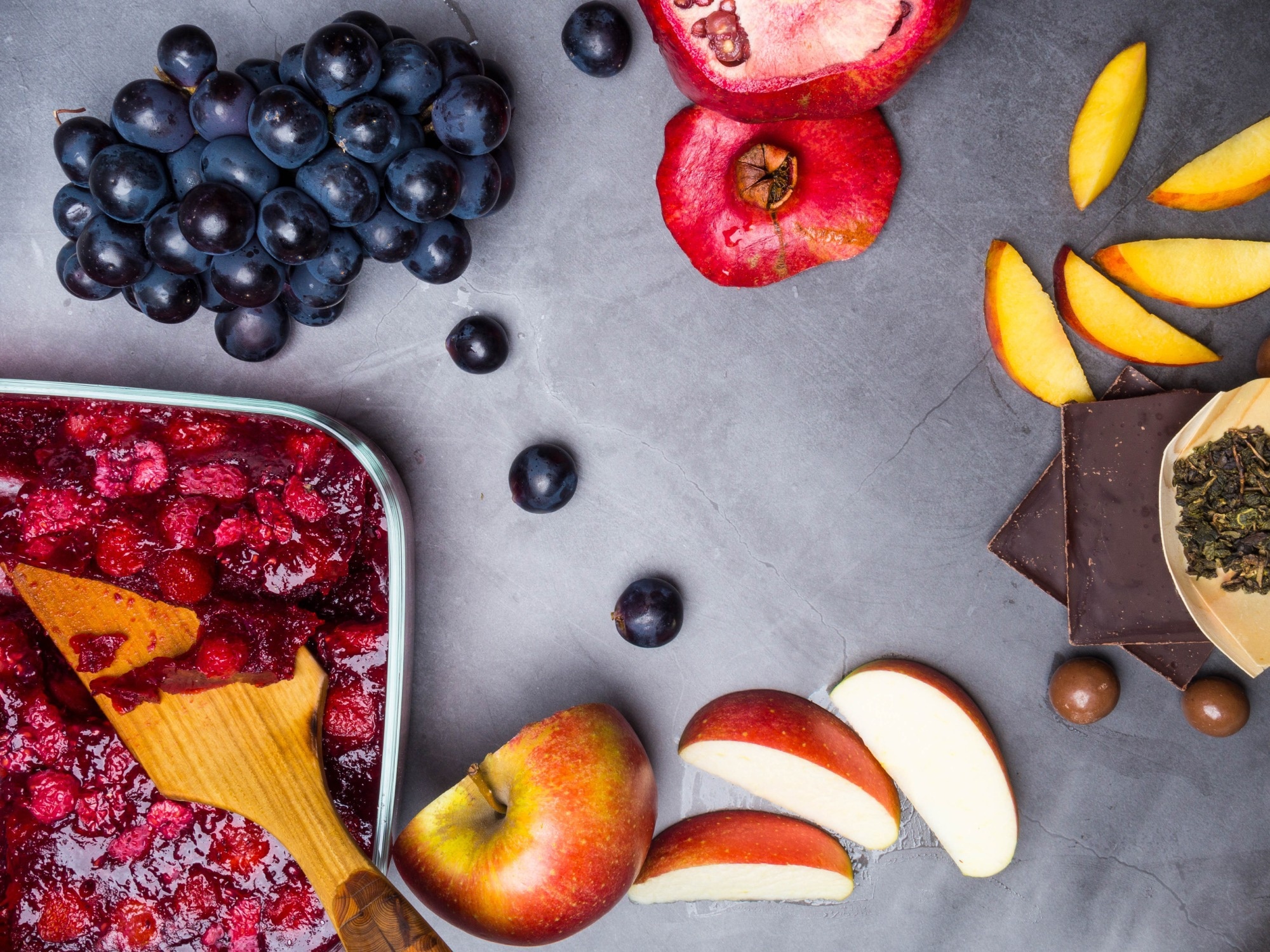 Study: Dietary flavonoid intake and psychological well-being – A bidirectional relationship. Image credit: DIVA.photo/Shutterstock.com
A recent study in Clinical Nutrition examined the bidirectional associations between dietary flavonoid intake and psychological well-being (PWB) and discusses supporting strategies that integrate dietary and mental health interventions to promote long-term health.
Psychological Well-Being and Diet
Psychological well-being (PWB) is a multidimensional construct encompassing happiness, optimism, and a sense of purpose, and has been increasingly recognised as a central determinant of overall health. High levels of PWB are associated not only with improved quality of life but also with a reduced risk of chronic diseases, such as cardiovascular disease and diabetes, as well as lower mortality and greater healthspan. These associations are believed to be partially mediated by healthier lifestyle behaviours, such as regular physical activity, balanced nutrition, and avoidance of harmful habits.
The relationship between PWB and health behaviours has been found to be bidirectional. While high PWB encourages individuals to adopt and maintain healthier behaviours, these behaviours in turn further promote psychological well-being. This dynamic interplay underscores the importance of integrated approaches to health promotion that address both mental and physical well-being.
Extensive research has demonstrated that dietary patterns abundant in fruits, vegetables, and whole grains are associated with a decreased risk of depression and other adverse mental health outcomes. These foods are especially rich in flavonoids, a diverse class of bioactive polyphenolic compounds found in high concentrations in berries, citrus fruits, onions, tea, and cocoa.
Flavonoids exert neuroprotective effects through several pathways, including the modulation of neuroinflammatory responses, regulation of neurotransmitter synthesis and activity, and enhancement of neurogenesis and synaptic plasticity. Additionally, flavonoids interact with the gut microbiome, leading to the production of bioactive microbial metabolites that may influence brain signalling pathways and mental health.
In the present study, psychological well-being was measured specifically as happiness and optimism, two measurable facets of the broader PWB construct.
Exploring the Bidirectional Links Between Flavonoids and Well-Being
This study investigated the link between dietary flavonoid intake and PWB, primarily happiness and optimism, in women from the Nurses’ Health Study (NHS) over ten years. Participants completed food-frequency questionnaires at baseline and every 4 years, reporting the frequency and portion sizes of specific foods and drinks over the past year.
Flavonoid intake was estimated by multiplying food consumption frequency by its flavonoid content, using USDA databases and an NHS-specific flavonoid database. Intake estimates were generated for total flavonoids and six subclasses. Researchers also calculated a “flavodiet score,” which summed intake of seven flavonoid-rich foods and beverages, including tea, apples, oranges, grapefruit, blueberries, strawberries, and red wine.
Happiness was measured in 1992, 1996, and 2000 using a single item from the Medical Outcomes Study Short Form 36 Health Survey (SF-36), with higher scores indicating greater happiness. Optimism was measured in 2004, 2008, and 2012 using the 6-item Life Orientation Test-Revised, with higher total scores indicating greater optimism.
Primary analyses used multivariable-adjusted generalized estimating equations with a modified Poisson approach to examine associations between flavonoid intake and the likelihood of sustained high levels of happiness or optimism. Sustained well-being was defined as being in the highest tertile of happiness or optimism across at least 2 of 3 repeated assessments. Secondary analyses used similar models to test if higher baseline happiness or optimism predicted sustained moderate-to-high flavonoid intake over time.
Flavonoid Consumption Linked to a Higher Likelihood of Sustained Happiness and Optimism
The study included over 44,000 women (mean age 56) for analyses of happiness and 36,700 women (mean age 67) for analyses of optimism. Women with higher flavonoid scores tended to have healthier lifestyles overall, including greater physical activity, healthier diets, and lower smoking rates.
Higher intake of flavonoid-rich foods was modestly associated with a greater likelihood of sustained happiness and optimism compared with the lowest intake group. This suggests that a flavonoid-rich diet may be linked to psychological well-being over time. Among individual foods, higher intake of strawberries, apples, oranges, and grapefruit was linked to a small increase in sustained happiness of around 3–8 %. For optimism, the effect was larger for strawberries, blueberries, apples, oranges, and grapefruit, with the likelihood of sustained optimism approximately 10–16 % higher, suggesting that certain fruits may be particularly beneficial.
Both total flavonoid intake and specific subclasses, including flavones, flavanones, anthocyanins, and flavonols, were associated with a higher likelihood of sustained happiness and optimism. The strongest effects were observed for optimism, with risk ratios indicating up to an 18 % higher likelihood, suggesting that certain flavonoid types may be particularly relevant to positive psychological well-being.
Women with moderate or high levels of happiness or optimism were more likely to maintain higher flavonoid intake over time. This suggests the relationship may be bidirectional, with well-being and healthy eating behaviours potentially reinforcing each other.
Not all flavonoid sources showed similar associations. Tea and red wine, despite contributing substantially to total flavonoid intake, were not significantly associated with sustained happiness or optimism after full adjustment. Notably, the associations between flavonoid intake and well-being were generally similar regardless of body mass index (BMI). However, the link with optimism was slightly stronger in women with higher BMI, suggesting potentially greater benefits in this group, although the interaction was not statistically significant.
Excluding women with depression at baseline did not alter the main findings, which supports the robustness of the results. In the study, baseline depression was defined as physician-diagnosed depression or regular antidepressant use. Using a stricter definition of sustained well-being slightly strengthened the association with happiness, while results for optimism remained unchanged. This indicates that the main findings are robust to different outcome definitions.
The authors also noted that participants in the Nurses’ Health Study are predominantly White female health professionals, which may limit the generalisability of the findings to other populations.
Conclusions
The findings highlight a potential role for flavonoid-rich foods in supporting long-term PWB, with dietary patterns rich in flavonoid-containing fruits and beverages reflected in higher flavodiet scores. They also highlight the complex, bidirectional relationship between PWB and dietary behaviours, offering valuable insights for the development of integrated dietary and mental health strategies.
However, because the study is observational, the results demonstrate associations rather than causal effects. Considering the bidirectional nature of associations, simultaneously promoting PWB and the consumption of diverse flavonoid-rich foods may provide a comprehensive approach to improving overall health and reducing the burden of chronic diseases.
Download your PDF copy by clicking here.
 Fruit and sugary drinks stood out in a three-year study of teenage mental health