A review of more than 850 historical newspaper reports reveals that the childhood dare of licking frozen metal can sometimes lead to serious injury, offering rare insights into who is at risk and how these incidents should be managed.
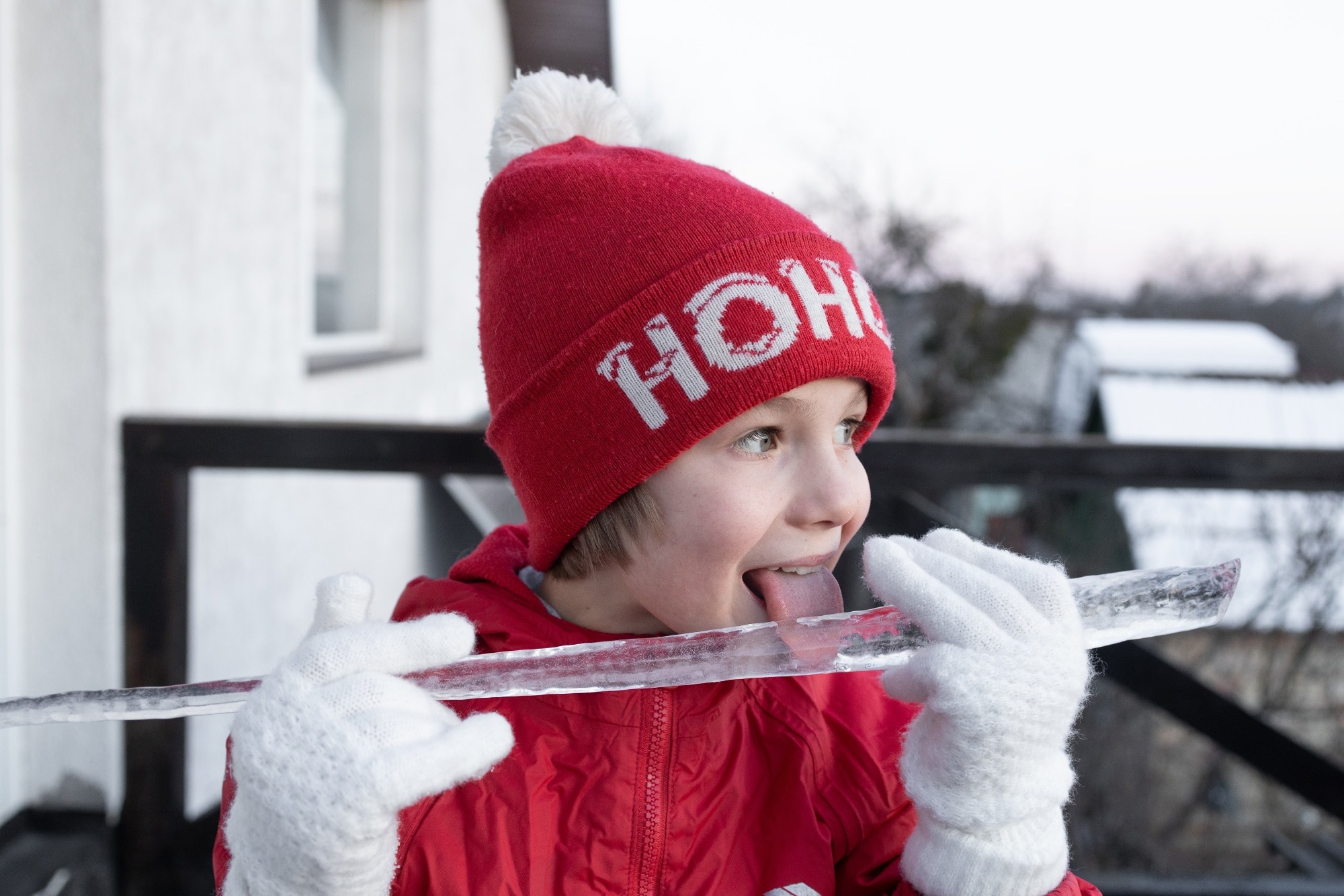 Study: Demography and outcomes of frozen tongue: a scoping review of Scandinavian tundra tongue cases. Image credit: Anna Pasichnyk/Shutterstock.com
For at least 250 years, newspapers have reported stories of children freezing their tongues to cold metal, a phenomenon called “tundra tongue”. Yet there is little evidence to determine whether this represents a significant health risk. A recent scoping review in the International Journal of Pediatric Otorhinolaryngology examines historical newspaper data to highlight the need for preventive health guidelines.
Frozen tongues on metal: a rarely studied winter injury
The scientific literature contains only a single case report of tundra tongue, involving the author’s son, who first used this name for the condition. All other records are from journalistic sources, retrieved from newspaper databases across Norway, Sweden, and Denmark.
In the 1990s, the Norwegian government introduced regulations requiring playground equipment to be insulated. This prompted public debate. Some agreed that such incidents did happen. Others considered the measure unnecessary, suggesting that such incidents could be treated as educational opportunities.
Interestingly, very little research exists on how the tongue responds to extreme cold. While oral and lip injuries after exposure to intense cold (propellant inhalation or prolonged contact with ice cream) have been reported, descriptions of tundra tongue are scarce.
Similarly, expert-based guidelines for the acute management of tundra tongue do not yet exist. First-aid strategies developed by Ignite Healthwise and published by the province of Alberta, Canada, and cited by the authors include using warm water or air to release the adhering site and applying pressure to control bleeding.
Historical newspaper reports reveal patterns in tundra tongue cases
The review examined 113 cases reported in newspapers from Scandinavian archives but describing incidents across 11 countries on two continents. In total, 856 reports of these cases were filed, most by multiple newspapers. Almost all (96 %) involved children, with a median age of 5.25 years; 63 % were boys.
The earliest report dates back to 1845 and involves a French schoolboy and a metal bridge. The boy pulled himself free, losing the skin off his tongue and lips. The highest number of cases was reported in the 1950s, after which the number decreased. This decline does not correlate with Norwegian regulations, as most metal objects involved are unrelated to playgrounds.
Most incidents were widely reported, with one appearing in 76 newspapers. Most reported cases were in Norway (46 %), followed by Sweden, and Denmark (24 %, and 16 % respectively). However, the authors comment that most cases are never reported in the newspapers.
Outdoor metal surfaces pose the greatest freezing risk
Most often, tongues were frozen to railings (40 %), followed by fences (13 %), and less commonly, lamp posts and other metal objects. Many involved copycat behavior, with one story mentioning six children who mimicked a newspaper report. One child was stuck to the railway, though fortunately discovered, and the oncoming train was diverted to another track.
Very few cases occurred indoors. However, one incident involved multiple children who suffered tongue lacerations after being given ice cream stored on dry ice.
The temperature at the time of the incident was reported in only 18 cases, with a median of -16.5 °C and a range of −10 °C to −23 °C. Tundra tongue was not observed at temperatures above −8 °C.
Warm water most common method to free stuck tongues
Methods used to release the tongue included using water (30 %); other liquids such as glycerol, coffee, or whiskey; heating with a car cigarette lighter or denatured alcohol; or even cutting the tongue free with a penknife. A single case was reported to have been stuck for 90 minutes.
The authors note that many of these techniques were dangerous or involved the use of force. The recommended method involves using warm water, above 0 °C, but not hot water (>45–50 °C) or harmful liquids. Cupping one’s hands around the site of adhesion and breathing through the mouth is an alternative if warm water is not available.
Severity and outcomes
While 18 % involved a doctor's attendance, 11 % required police or fire service assistance, and 9 cases resulted in a hospital visit.
Outcomes spanned a spectrum of severity. Most cases involved pain, mental distress, or mild bleeding. Others had to be hospitalized, some had part of the tongue cut away, or needed stitches put in. One child developed systemic infection.
The authors reported three main types of severe injury. The first results from freezing itself, with ice crystal formation causing immediate tissue damage that can range from temporary white patches to permanent scarring. The second occurred when the tongue was forcibly pulled away from the metal surface, leading to ulcers and bleeding of uncertain depth, with limited data on how exposure conditions influence these injuries. The third arose when individuals were unable to free themselves from the metal surface, leaving them immobilized and at risk of hypothermia.
Limitations
Only newspaper-published cases were reviewed, possibly introducing selection bias. In addition, no quality assessment was possible for this century-spanning review. Some reports might have been missed due to inaccurate transcription or the use of alternative terms. However, most incidents were reported in more than one newspaper, helping prevent published cases from being missed.
The authors also note that some historical newspaper archives remain incomplete or only partially digitized, which may have limited case identification.
Simple prevention could avoid painful cold metal accidents
Children, especially boys, are at risk for tundra tongue during the winter. Severe injuries are rare, but the documented risk is enough to alert parents and policymakers to the potential for harm and to take preventive action. This should include education about the harm of such actions and how to safely touch cold metal.
The recommendations on gentle manipulation and warm water should be widely known to ensure the safe management of such incidents.
Download your PDF copy by clicking here.
Journal reference:
-
Jarmund, A. H., Tollefsen, S. E., Sakshaug, B. C., et al. (2026). Demography and outcomes of frozen tongue: a scoping review of Scandinavian tundra tongue cases. International Journal of Pediatric Otorhinolaryngology. DOI: https://doi.org/10.1016/j.ijporl.2026.112740. https://www.sciencedirect.com/science/article/pii/S0165587626000352
 Some fertility treatments may raise Kawasaki disease risk in children