Children with long-COVID are falling behind in school and struggling socially, with new research revealing how the condition may quietly disrupt learning, attention, and friendships during critical developmental years.
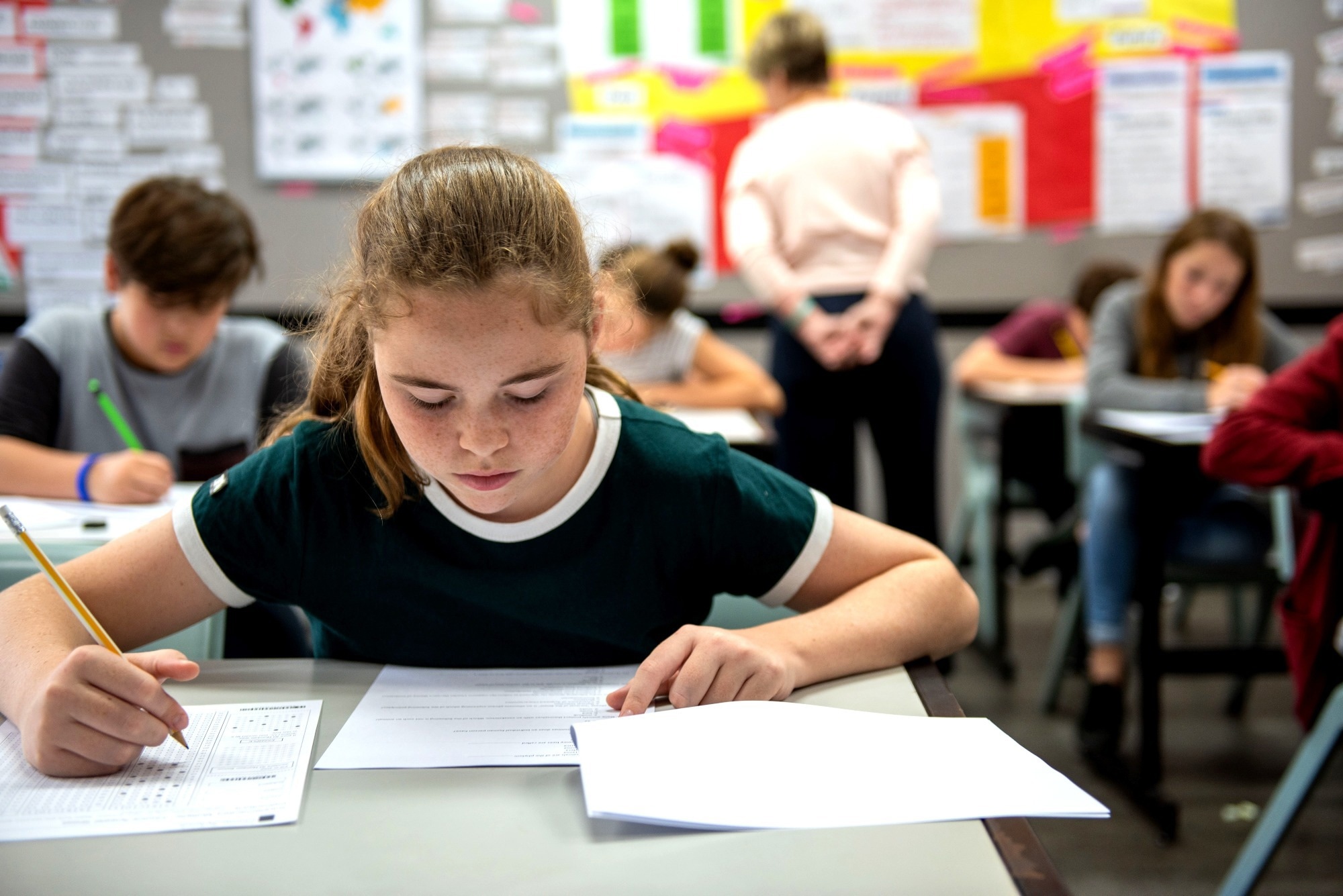 Study: School Difficulties and Long COVID in Children and Adolescents. Image credit: Rawpixel.com/Shutterstock.com
Children living with long-COVID may experience difficulty in performing academic and other school activities, as reported by a new study published in the journal Academic Pediatrics.
Long-COVID symptoms disrupt key stages of child development
Long-COVID is defined as a group of chronic conditions that lasts for months to years after an acute coronavirus disease 2019 (COVID-19) caused by severe acute respiratory syndrome coronavirus 2 (SARS-CoV-2).
A significant proportion of the global population is living with long-COVID, including children and adolescents, although precise prevalence estimates in children remain uncertain. Existing evidence indicates that pediatric long-COVID affects daily-life activities, with symptoms varying among elementary school-age children and adolescents.
Both school performance and social interactions significantly contribute to the mental and physical growth and development of children and adolescents. Pediatric long-COVID symptoms can potentially challenge these domains of child development, and can thereby negatively impact their wellbeing. Despite potential negative consequences, studies evaluating academic and social impacts of long-COVID in this vulnerable population are limited and still emerging.
In the current study, a team of researchers from the United States analyzed cross-sectional data from the National Institutes of Health-funded Researching COVID to Enhance Recovery (RECOVER) pediatric observational cohort to evaluate whether long-COVID affects school-related functional outcomes in children and adolescents by comparing participants with and without long-COVID. The analysis used matched comparisons and statistical adjustments to account for differences between groups.
Children with long-COVID show higher rates of academic decline
The study enrolled a total of 1,976 participants aged 6 to 17 years, including 406 school-age children and 1,570 adolescents. Caregiver-reported information on participants’ school-related functional outcomes was analyzed.
The analysis of caregiver-reported data revealed that about 18 % of school-age children and 29 % of adolescents with long-COVID experienced worsened academic grades after the COVID-19 pandemic, as compared to 7 % and 11 % of their peers without long-COVID.
In both school-age children group and adolescent group, a significantly higher proportion of participants with long-COVID experienced moderate or severe difficulty paying attention and lack of having fun with friends, as compared to their peers without long-COVID.
As compared to 22 % of school-age children and 15 % of adolescents without long-COVID, about 35 % of school-age children and 27 % of adolescents with long-COVID reported attending or in process of attending an Individualized Education Program (IEP), which provides special services or education for children with special needs, including developmental delays, disabilities, reading or math problems, or autism.
Schools may need targeted support strategies for affected students
The study highlights that both children and adolescents with long-COVID are more likely to experience declines in various school-related outcomes, including academic grades, attention level, and interactions with friends. These findings suggest functional impairments affecting children’s ability to engage in academic and social roles. Furthermore, the study identifies that having long-COVID is associated with an increased likelihood of attending special education programs designed for children with special needs.
Given that the development and wellbeing of children and adolescents are strongly associated with their educational performance and positive peer interactions, the study findings raise a concern about possible long-term functional and developmental consequences of long-COVID that can potentially be carried over into their adulthood.
One notable finding is the association between long-COVID and the need for IEP, which emphasizes greater educational and service needs of children with long-COVID. However, the researchers mentioned that this association could be bidirectional and that they were unable to establish the causality of the observed association because of the cross-sectional study design.
As mentioned by them, some children may require special education program due to existing chronic conditions that were also risk factors for developing long-COVID, while others may require these programs following new or worsened learning and functional difficulties caused by long-COVID. Further research is needed to establish a causal interpretation.
Importantly, the study finds that both children and adolescents experienced adverse educational and social outcomes, despite known variations in long-COVID symptoms in these two age groups. This finding highlights the need for developing appropriate support system for students with long-COVID in all grades, throughout elementary school, middle school, and high school.
In the United States, schools that receive federal funding are required to identify students who have learning difficulties or disabilities, and to provide them with extra services. The researchers believe that many students with long-COVID fit this requirement, and the provision of some common services might be helpful for these students, including extended time for tests and assignments, frequent breaks during classes, or exemption from inaccessible physical education requirements.
Future studies should include objective cognitive and academic assessments
The study relied on caregiver-reported data that may be subject to bias. Moreover, only a few school-related outcomes were analyzed. This highlights the need for future studies that utilize objective neurocognitive assessments related to academic, cognitive, and social performance and analyze a wide range of school-related outcomes, such as absences or missed school days related to long-COVID symptoms. Future studies should also explore factors that can mediate the association between long-COVID and school-related functional outcomes.
Among study participants, some may have existing health conditions that predisposed them to COVID-19 as well as long-COVID. Identifying and analyzing such health conditions that can potentially contribute to the adverse school-related outcomes associated with long-COVID could be another important area for future research.
Additionally, long-COVID status in the study was determined using a research index based on reported symptoms rather than a clinical diagnosis, which may introduce some degree of misclassification.
Download your PDF copy by clicking here.
 Nasal spray offers needle-free pain relief for children with injuries