A five-year randomized trial shows that regularly giving children free, high-interest books can meaningfully improve reading achievement, highlighting a simple, low-cost strategy to boost literacy in high-poverty schools.
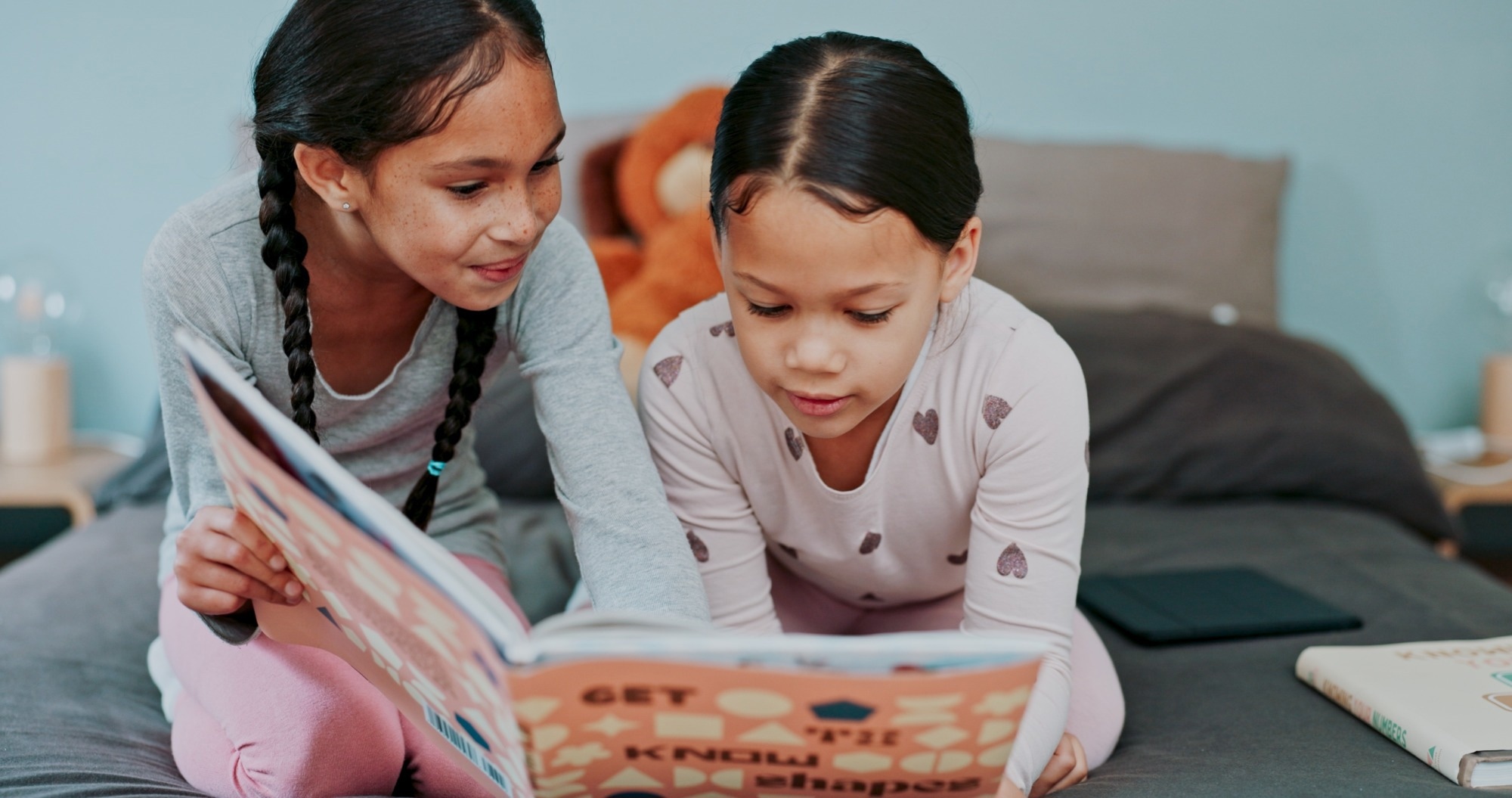 Study: Cumulative access to print books improves literacy achievement: Evidence from a five-year randomized trial in high-poverty schools. Image Credit: People Images / Shutterstock.com
A new study published in Proceedings of the National Academy of Sciences reports that cumulative access to reading materials significantly improves literacy rates in low-income communities.
Why book access matters
School performance has historically and consistently been related to the availability of reading materials in the home, with these academic benefits widely observed across contexts, even after accounting for parental education.
Specifically, children living in a home with over 100 books are 90 % more likely to complete ninth grade compared to only 30 % of students without access to books at home. Across 31 countries, greater exposure to books during childhood correlates with superior literacy, numeracy, and technological skills.
Culturally leaning theories propose that the presence of books and other intellectual artifacts facilitates academic success by creating a scholarly culture. The skill development theory suggests that access to books motivates students to read more, subsequently improving their reading proficiency and academic outcomes.
While socioeconomic status affords families both the means and orientation to cultivate literacy-rich home environments, increasing access to books may itself yield independent benefits.
Students received free books without incentives or monitoring
The current study began in 2018 when 60 high-poverty Milwaukee elementary schools were assigned as ‘treatment’ or ‘controls.’ The treatment condition involved sending an average of seven high-quality and high-interest children’s books to students every year. The number varied across years due to COVID-19 disruptions, with some years receiving fewer or no books, whereas controls were not provided any free books until the end of the study.
Importantly, no incentives were offered to students in return for reading the provided books, nor were they held accountable for reading.
Sustained book access significantly improves reading achievement
Five years after books were initially distributed, students attending treatment schools scored significantly higher on reading assessments than those in control schools.
Completing the full five-year intervention was associated with substantially larger gains, with effect sizes roughly double those of the overall sample and equivalent to about half to two-thirds of a year of additional learning, and corresponding to roughly 52–65 % of a typical year’s literacy growth compared to about 25–32 % for the full sample.
These gains are also estimated to be equivalent to roughly 15–30 % of the national reading achievement gap. Importantly, the extent of these effects was dependent on cumulative and sustained exposure to book distributions during the study period, thus emphasizing the importance of consistent access to reading materials.
The researchers’ theory of action hypothesizes that sustained access to books improves literacy achievement by normalizing reading at home and increasing reading volume. Consistent with skill development theory, this conceptual model reinforces the value of providing culturally relevant books.
Exposure to personally meaningful stories can enhance student motivation while reinforcing a sense of belonging and identity. These benefits can be particularly advantageous for school-aged children from low-income and historically underrepresented communities who often encounter greater restrictions in accessing books, particularly those featuring characters and narratives that reflect their own experiences.
Each book distributed during the study period cost about $2, with a total investment of about $68 for each student over five years. At significantly lower costs than reading interventions, widespread book distribution is a scalable strategy that effectively improves literacy outcomes in high-poverty settings.
Important considerations and future directions
Among students residing in the most severe book deserts, improvements were smaller and not statistically significant compared to those in less-constrained environments. Thus, expanded access to books, while beneficial, cannot fully offset the absence of foundational literacy support.
The study findings provide causal evidence of an association between increased access to books in the home and superior academic performance. Future studies expanding on these observations could go further by quantifying different metrics of how book access changes the home literacy environment, particularly given that factors such as reading volume, motivation, and home literacy practices were not directly measured in this study.
Gaining insights into the impact of books on greater reading volume, self-efficacy beliefs, and the overall value of reading could provide important insights into different mechanisms that can be leveraged to support literacy development among low-income students.
Download your PDF copy by clicking here.
Journal reference:
- Borman, G. D. & Yang, H. (2026). Cumulative access to print books improves literacy achievement: Evidence from a five-year randomized trial in high-poverty schools. PNAS. DOI: https://doi.org/10.1073/pnas.2521416123. https://www.pnas.org/doi/10.1073/pnas.2521416123
 Brain activity patterns predict math problem solving struggles in children