A next-generation AI model uncovers invisible signs of pancreatic cancer on standard CT scans long before symptoms appear, potentially transforming early detection and improving outcomes in one of the deadliest cancers
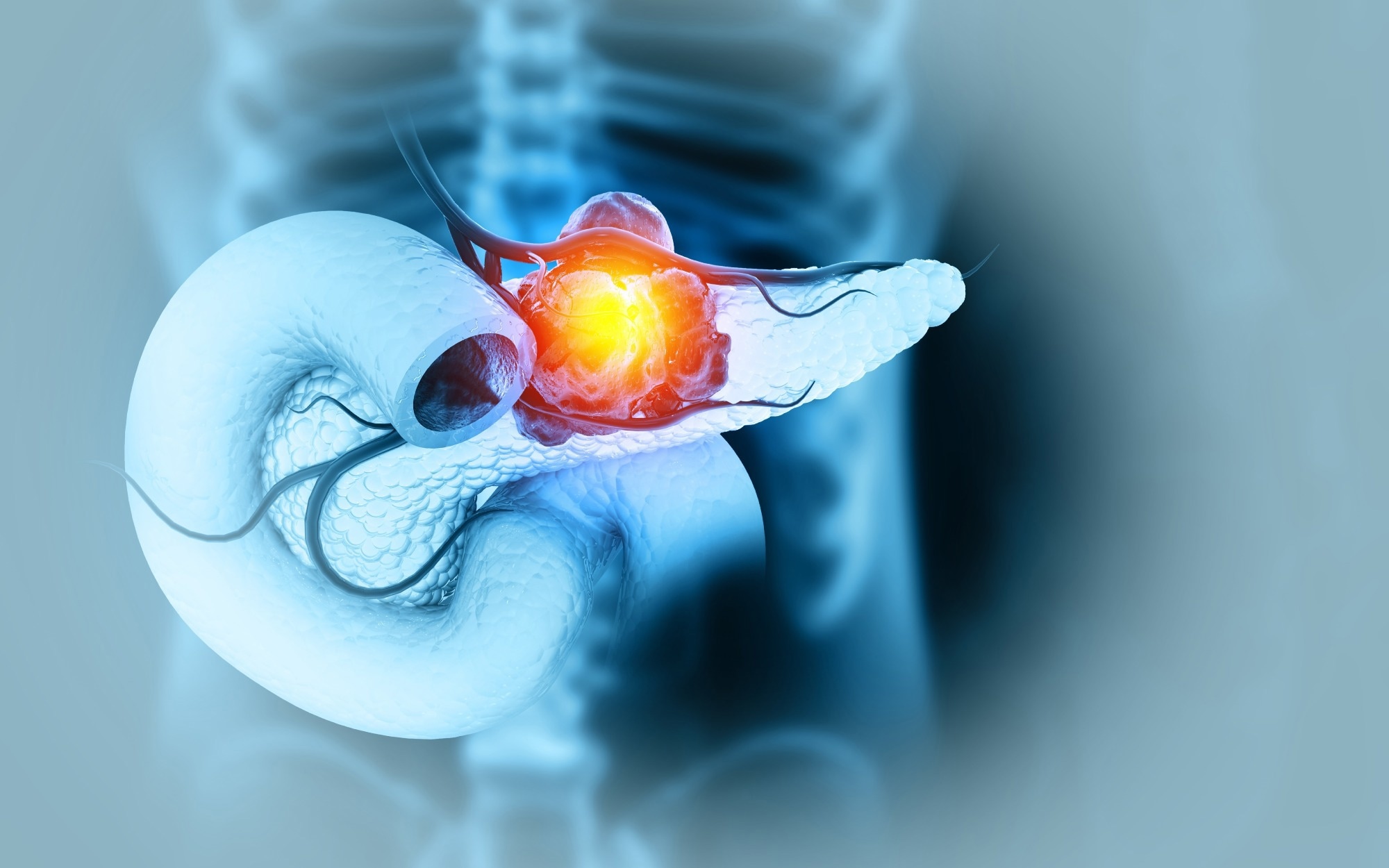 Study: Next-generation AI for visually occult pancreatic cancer detection in a low-prevalence setting with longitudinal stability and multi-institutional generalisability. Image credit: crystal light/Shutterstock.com
Mayo Clinic researchers have developed an artificial intelligence-powered model that can detect pancreatic cancer on routine abdominal CT scans well before its clinical diagnosis. The study is published online in the journal Gut.
Why pancreatic cancer is usually detected too late
Pancreatic cancer is one of the deadliest cancers with a five-year survival rate of less than 15 %. It has been predicted to be the second leading cause of cancer-related deaths in the United States by 2030.
The diagnosis of pancreatic cancer is primarily based on its symptoms, which mostly remain undetectable at early stages. Because of this reason, more than 85 % of cases remain undiagnosed until the cancer spread to other organs and become unmanageable by therapeutic interventions. Early detection is considered the most effective strategy to improve overall survival of pancreatic cancer.
Glycemically-defined new onset diabetes (gNOD) is gaining interest as an early clinical sign of pancreatic cancer, and the National Institute for Health and Care Excellence (NICE) currently recommends urgent abdominal CT scans for individuals aged 60 years or older with gNOD and weight loss.
However, conventional imaging often fails to detect malignant lesions at a curable stage due to certain factors, including perceptual error, technical problems, or absence of any discernible mass (imaging-occult).
To overcome these limitations and improve early diagnosis, researchers at Mayo Clinic, USA, developed a new-generation AI model named Radiomics-based Early Detection Model (REDMOD) to identify apparently invisible subclinical alterations of pancreatic cancer at a pre-clinical (stage 0) phase that may be amenable to curative intervention.
The researchers trained their AI model with 156 pre-diagnostic and 813 control abdominal CT scans (controls confirmed to have no evidence of pancreatic ductal adenocarcinoma, with benign findings permitted) from multiple institutes. Pre-diagnostic scans referred to incidental CTs obtained months to years prior to clinical diagnosis of pancreatic cancer. The model was subsequently validated using an independent set of abdominal CT scans, including 63 pre-diagnostic and 430 control scans.
AI detects hidden pancreatic cancer months before diagnosis
The validation analysis using the independent test set revealed that the AI model REDMOD can identify 73 % of those pre-diagnostic cancers at a median lead time of approximately 16 months before clinical diagnosis, achieving an area under the curve (AUC) of 0.82. This corresponded to nearly 2-fold higher detection rate than specialists reviewing the same scans without AI assistance. The detection rate increased to nearly 3-fold for scans obtained more than two years before diagnosis.
Notably, the AI model exhibited consistent and stable predictive accuracy over time across CT scans obtained from multiple institutions, imaging systems, and protocols. Furthermore, the model consistently predicted the same results in patients with multiple scans obtained months apart. These features support its clinical use for early detection and longitudinal monitoring.
The mechanistic analysis showed that the model can capture even subtle biological changes at the early stage of cancer development by analyzing several quantitative imaging features that describe tissue texture and structure. The exclusive inclusion of filtered radiomic features was found to be the primary drivers of the predictive ability of the model.
Early AI detection could enable intervention before symptoms
The study describes the development and validation of a fully automatic AI model that outperformed radiologists in terms of identifying apparently invisible clinical signs of pancreatic cancer on routine abdominal CT scans that were obtained for other reasons up to three years before the clinical cancer diagnosis.
This early detection of pancreatic cancer well before the appearance of visible tumor mass could have significant clinical implications by enabling earlier intervention, potentially improving cancer prognosis. The detection of pancreatic cancer at a potentially curable pre-clinical stage would be particularly vital for high-risk individuals, including those with gNOD and weight loss.
Overall, the study findings highlight the significance of implementing AI-powered workflow in clinical settings to improve the accuracy of early cancer detection. However, the model achieved a specificity of about 81 % and a relatively modest precision, highlighitng the importance of managing false positives in screening contexts. In absence of visible cancerous changes, there remains a risk of automation bias where readers uncritically accept AI predictions.
To address automation bias, researchers are advancing their work using Artificial Intelligence for Pancreatic Cancer Early Detection, or AI-PACED, an upcoming prospective study that will quantify automation bias and establish optimal override criteria so that algorithmic alerts prompt appropriate risk-stratified evaluation rather than premature intervention.
They are also combining AI analysis of routine imaging with longitudinal follow-up to assess performance, including early detection, false positives, and clinical outcomes.
With further clinical validations, the AI model REDMOD could serve as a triage and longitudinal monitoring tool to overcome the negative consequences of deadliest pancreatic cancer associated with late-stage symptomatic diagnosis.
The study did not validate the performance of REDMOD across different racial and ethnic groups. Future studies should focus on this matter given known disparities in pancreatic cancer risk among individuals with gNOD.
Download your PDF copy by clicking here.
Journal reference:
- Mukherjee S. (2026). Next-generation AI for visually occult pancreatic cancer detection in a low-prevalence setting with longitudinal stability and multi-institutional generalizability. Gut. DOI: https://gut.bmj.com/content/early/2026/04/22/gutjnl-2025-337266. https://gut.bmj.com/content/early/2026/04/22/gutjnl-2025-337266
 Blood test detects more cancers when added to standard screening