Global modeling suggests that replacing conventional marine fuels with hydrogen could sharply reduce pollution-related mortality while generating substantial health and economic benefits.
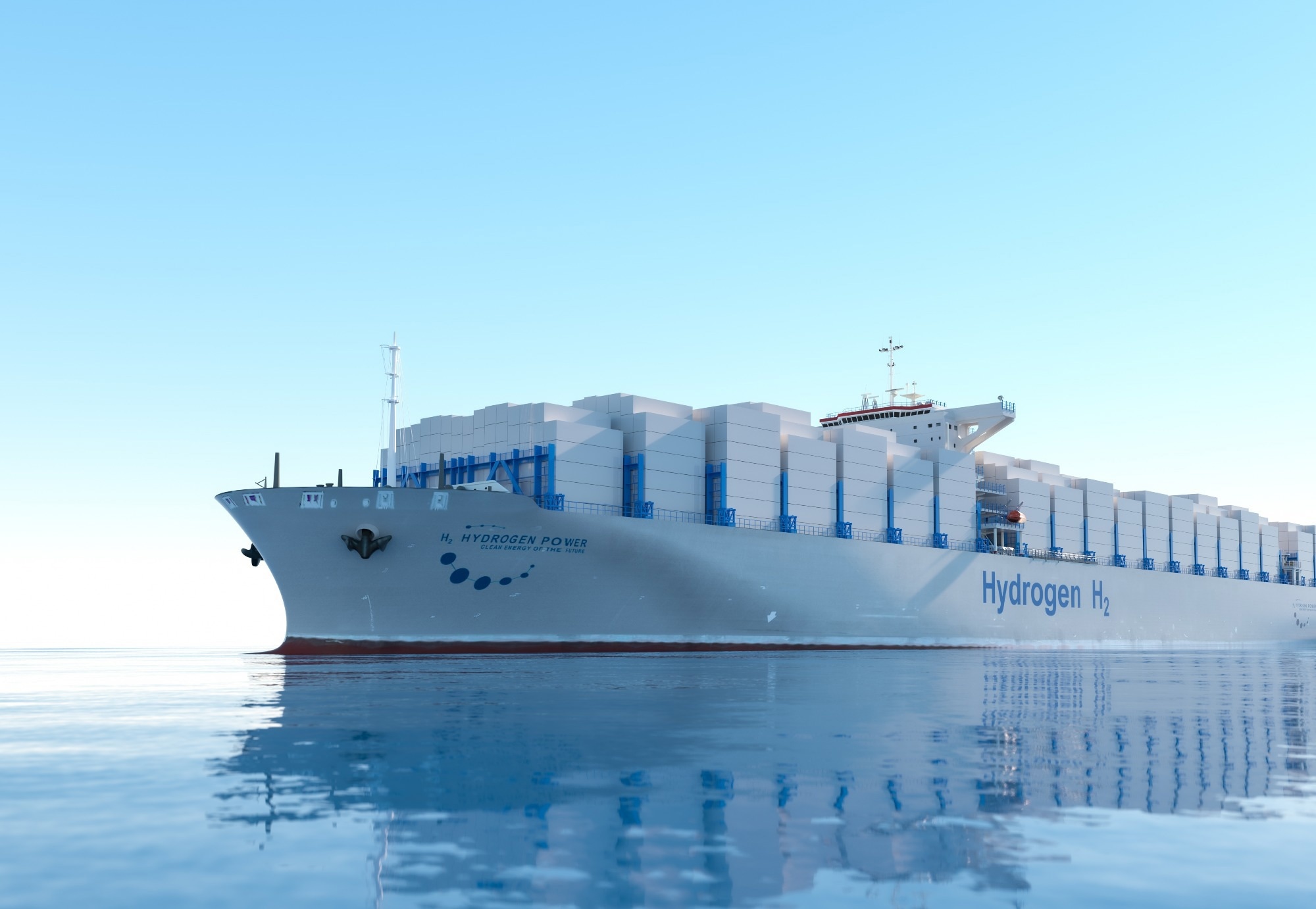
Study: Health and economic impacts of improved air quality from transitioning global shipping energy to hydrogen. Image Credit: Audio und werbung / Shutterstock
In a recent study published online as an unedited 'Article in Press' in the journal Nature Communications, a group of researchers estimated the potential global health and economic benefits of replacing conventional shipping fuels with hydrogen using integrated air quality, health, and economic models.
Background
Worldwide maritime operations burn large amounts of fossil fuels and emit significant amounts of pollutants annually, leading to poor air quality and premature deaths. Although new regulations in the shipping industry have limited sulfur and nitrogen oxide emissions, shipping continues to emit substantial amounts of carbon dioxide (CO2), fine particulate matter (PM2.5), and ozone-forming pollutants, particularly in densely populated coastal regions.
Hydrogen has emerged as a potential low-carbon fuel option for the maritime sector. The study assumed that hydrogen-powered vessels would produce negligible air-pollutant emissions during operation, although hydrogen production can generate upstream emissions. The associated air-quality, health, and economic co-benefits remain poorly characterized.
About the Study
The researchers estimated the potential health and economic effects of replacing conventional marine fuels with hydrogen using an integrated modeling framework that combined emissions estimation, atmospheric simulation, health risk assessment, and economic valuation. The framework incorporated the Community Earth System Model version 2.2 (CESM2.2), concentration-response models (CRMs), and the value of statistical life (VSL) approach.
Three principal scenarios were examined, with the baseline representing global shipping emissions and atmospheric conditions in 2022, incorporating existing International Maritime Organization (IMO) regulations but assuming no hydrogen adoption.
The next two pathways represented upper-bound and partial scenarios: in the former, hydrogen met all shipping energy demand; in the latter, hydrogen supplied 50% of demand while fossil fuels supplied the remainder. Hydrogen production locations and capacity were based on globally announced low- and zero-emission projects through 2050, with the complete and partial pathways allocating 30% and 15% of projected production to shipping, respectively.
The model simulated changes in global annual mean PM2.5 and maximum daily average 8-hour (MDA8) ozone concentrations after the transition to hydrogen. The air quality estimates were combined with 2019 population data and 2021 baseline mortality rates for adults aged 25 years or older to calculate premature deaths due to pollution using standard exposure-response relationships, including the Global Exposure Mortality Model (GEMM) for PM2.5 and a log-linear ozone concentration model. Subsequently, the monetized value of avoided premature deaths was calculated using country-specific VSL adjusted to 2022 purchasing power parity values.
Study Results
The models projected that transitioning from fossil fuels to hydrogen could substantially reduce global shipping emissions and improve air quality in many coastal and marine areas. Although hydrogen production could increase some land-based emissions associated with fuel generation, emissions from ships were assumed to fall to zero under a complete transition and to half under a partial transition. Global annual emissions of major pollutants, including sulfur dioxide (SO2), nitric oxide (NO), carbon monoxide (CO), non-methane volatile organic compounds (NMVOCs), and primary organic matter (POM), were projected to decline most under the complete transition scenario.
These emission reductions drove improvements in air quality around the globe as modeled. This produced lower modeled ground-level PM2.5 concentrations around major international shipping routes and various ports, especially in East Asia, Southeast Asia, and some areas of the Mediterranean Sea.
In contrast, localized increases in PM2.5 were projected in a few areas, including parts of the United States Gulf Coast, northern Chile, Western Europe, and northwest India, largely due to emissions from hydrogen production facilities. Similar trends were observed in the partial transition experiment, though with smaller changes.
The largest modeled concentration changes involved MDA8 ozone. Ozone levels were projected to decline by more than 10 parts per billion (ppb) along major shipping corridors and decreased across many coastal regions worldwide. However, limited increases in ozone were projected in a few urban and industrialized locations because lower NO emissions altered local atmospheric chemistry. Even when the researchers assumed an extreme 10% hydrogen leakage rate, the overall spatial pattern and magnitude of ozone improvements remained largely unchanged, indicating that the projected air quality benefits changed little under this assumption.
The modeled improvements in air quality translated into substantial estimated health benefits worldwide. Under the complete hydrogen transition scenario, an estimated 129,458 premature deaths could be prevented each year, while the partial transition scenario was estimated to prevent 52,574 premature deaths annually.
During the complete transition, approximately 75% of the deaths avoided were attributed to reduced ozone exposure, and around 25% to decreased PM2.5 concentrations. Eastern Asia and Southeastern Asia showed the largest PM2.5-attributable benefits, whereas Southern Asia showed the largest ozone-attributable benefits.
While China had the highest estimated reduction in PM2.5-attributable premature deaths, India had the highest estimated reduction in ozone-attributable premature deaths. Certain areas, including eastern China, the western coast of the Korean Peninsula, Singapore, and northwestern coastal Italy, recorded local increases in ozone-attributable mortality as lower NO emissions weakened ozone titration. Some regions also experienced minor increases in PM2.5-attributable mortality associated with hydrogen production.
Avoiding premature mortality also generated substantial monetized health benefits. The researchers estimated global monetized health benefits of approximately 284 billion US dollars under the complete transition scenario and 114 billion US dollars under the partial transition scenario.
India was projected to experience the highest economic benefits, followed by Japan, the United States, Italy, and China. However, Singapore, the United Arab Emirates, and Qatar were projected to have negative monetized health effects because of localized increases in ozone-related mortality, but the global total remained positive.
These figures represent the estimated value of changes in mortality risk, not direct financial savings or a complete assessment of transition costs and benefits.
Conclusion
The findings indicated that replacing conventional shipping fuels with hydrogen could substantially improve global air quality while delivering major public health and monetized economic benefits. The largest reductions in premature mortality were projected to result from lower ozone exposure, with additional gains from decreased PM2.5 concentrations. Health improvements were estimated to be especially pronounced in densely populated regions with high shipping activity, particularly across Asia.
The study also showed that a complete transition to hydrogen was projected to produce considerably greater total benefits than a partial transition and that the projected advantages changed little under the extreme 10% hydrogen-leakage assumption. However, these scenarios were idealized projections rather than forecasts.
The model held shipping patterns and nonshipping emissions constant, neglected hydrogen-transport emissions and climate-change effects, and combined atmospheric, population, mortality, and hydrogen-project inputs from different years.
Hydrogen-powered shipping could play an important role in advancing cleaner maritime transport while supporting global public health and economic welfare, provided that the associated production, infrastructure, cost, and technical challenges are addressed.
Journal reference:
- Ran, Q., Gaubert, B., Fang, T., & Yim, S. H. L. (2026). Health and economic impacts of improved air quality from transitioning global shipping energy to hydrogen. Nature Communications. DOI: 10.1038/s41467-026-76134-x. https://www.nature.com/articles/s41467-026-76134-x
 Fine particle pollution raises rheumatoid arthritis flare risk and disease activity