A 25-mg dose of psilocybin paired with psychological support produced large improvements in depressive symptoms through six weeks, while showing that psychedelic-assisted therapy can be feasibly delivered within a public healthcare setting.
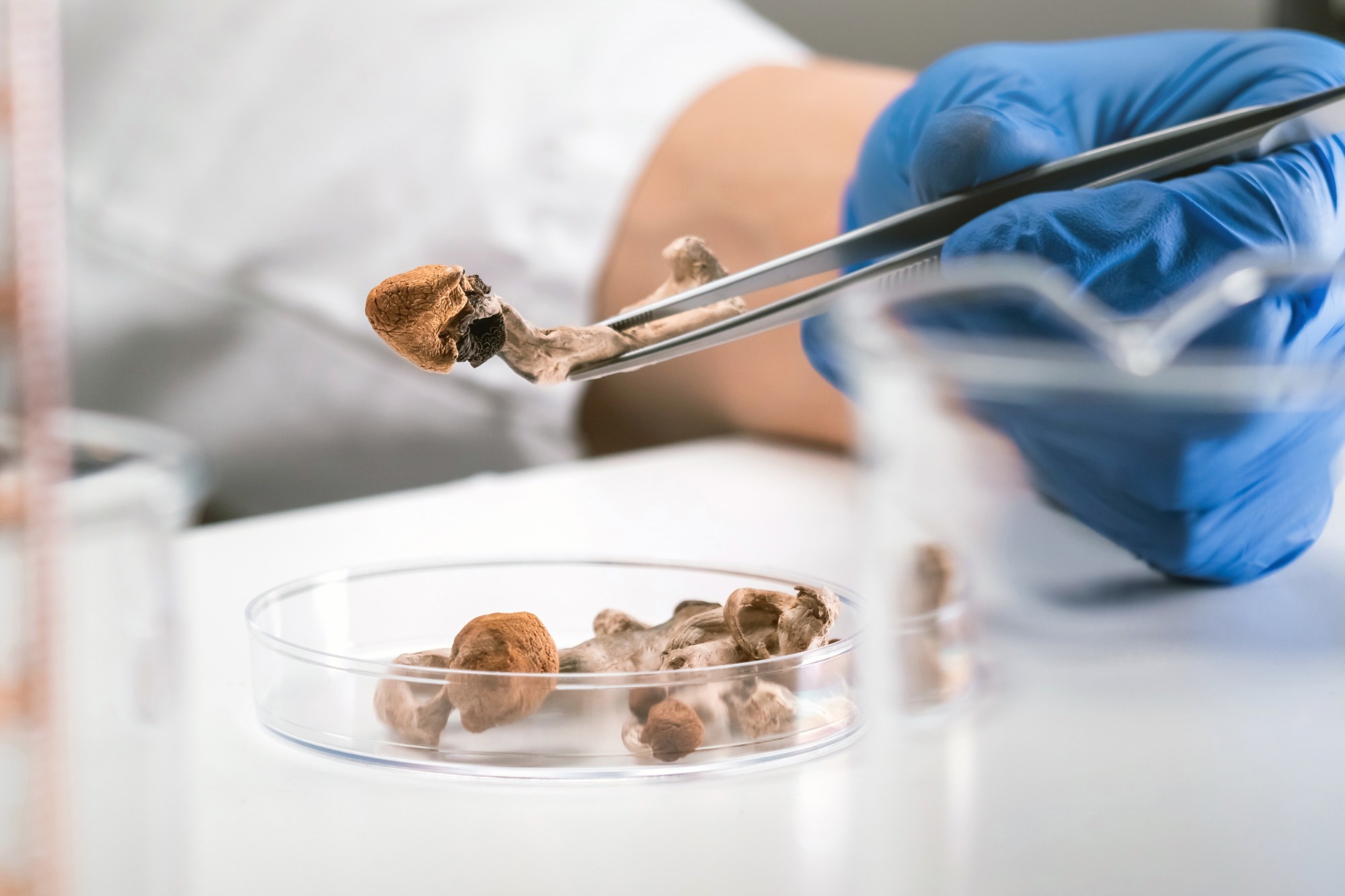
Study: Psilocybin-assisted therapy for treatment-resistant major depressive disorder in a public healthcare setting: a randomized controlled trial. Image Credit: 24K-Production / Shutterstock
In a recent study published in the journal Nature Medicine, researchers evaluated the feasibility and preliminary clinical outcomes of psilocybin-assisted therapy as a public healthcare intervention against treatment-resistant major depressive disorder (TRD). The study comprised a randomized, double-blind, placebo-controlled Phase 2 feasibility trial that enrolled 60 adult participants at a single National Health Service (NHS) site in England and followed them for a 6-week primary follow-up period.
Study findings revealed that a single 25-mg dose of psilocybin, combined with structured psychological support, was well tolerated by the study cohort and led to large, sustained reductions in depressive symptoms compared with placebo. These findings highlight the potential of using psilocybin in treating TRD and support the development of larger confirmatory efficacy trials in public mental health systems.
Background
Major depressive disorder (MDD) is one of the most prevalent mental health conditions in today’s society, with estimates indicating that approximately 300 million people live with the condition worldwide.
Approximately one-third of people with MDD experience treatment-resistant depression, commonly defined as failure to respond adequately to at least two antidepressants given at therapeutic doses and durations.
While advances in mental health treatment methodologies (e.g., electroconvulsive therapy and repetitive transcranial magnetic stimulation) have been proven to help alleviate TRD’s mental health burden, access to these specialized therapies remains limited. Consequently, researchers continue to investigate alternative modalities to treat TRD in a safe, widely accessible clinical context.
One of the most promising candidates under investigation for MDD treatment is psilocybin, whose active metabolite, psilocin, is a partial agonist of the serotonin 5-HT2A receptor. Modern clinical research has reported symptom improvements and indications of safety with psilocybin in depression and other psychiatric conditions. However, evidence regarding the feasibility of delivering placebo-controlled psilocybin therapy within a public healthcare setting has remained limited.
About the study
The present study aimed to address this knowledge gap and inform future TRD-centric intervention research by investigating recruitment, retention, outcome variance, safety, and preliminary clinical outcomes in a real-world TRD cohort within the United Kingdom’s National Health Service (NHS).
The study included 60 adults (eligible participants were aged 25–80 years; median age = 40.8 years; 50% female) who met Diagnostic and Statistical Manual of Mental Disorders, Fifth Edition (DSM-5) criteria for MDD. Eligibility required an inadequate response to at least two antidepressant trials or at least one antidepressant and one psychotherapy trial. Participants had experienced significant depression for a mean of 20 years. Most participants had moderate levels of treatment resistance and a chronic course of illness.
Participants were randomized 1:1 to receive either a single oral 25-mg dose of synthetic psilocybin (COMP360; “psilocybin arm”) or a matching placebo (“placebo arm”). Both cohorts were subjected to standardized psychological preparation during a 1–8-week preparation period, during which relevant antidepressant, antipsychotic, or mood-stabilizing medications were withdrawn, followed by a 6-hour monitored dosing session accompanied by a therapist and chaperone, and finally integration therapy.
The study’s primary endpoints investigated the feasibility parameters of psilocybin’s use in this public healthcare setting (the UK’s NHS), including recruitment, retention, and estimation of Montgomery–Åsberg Depression Rating Scale (MADRS) variance. The study’s secondary endpoints focused on participants’ clinical outcomes, specifically changes in their depressive symptom severity and other measures of mental health and functioning.
Depression severity was quantified using the clinician-rated Montgomery–Åsberg Depression Rating Scale (MADRS) and the self-reported Quick Inventory of Depressive Symptomatology (QIDS-SR-16). Depression outcomes were assessed at baseline with follow-up at weeks 1, 3, and 6 post-dosing.
Study findings
Feasibility measures supported conducting psilocybin-assisted therapy trials in the UK’s NHS context, with participants demonstrating an 83% eligibility rate, 80% randomization rate, 100% dosing attendance, and 98% completion of MADRS assessments through week 6 of the randomized phase.
Notably, secondary endpoint evaluations demonstrated that psilocybin administration generated a relatively rapid and large reduction in the psilocybin arm’s depressive symptoms compared with placebo. As a feasibility study, the trial did not undertake formal hypothesis testing, and these clinical findings were treated as preliminary effect estimates.
At the study’s halfway point (week 3), the adjusted between-group MADRS score difference favored psilocybin (over placebo) by -10.41 points (Cohen's d = -1.70), which reached -12.92 points (Cohen’s d = -2.11) by the end of the 6-week randomized phase.
Encouragingly, the study found that by week 3, 43% of participants in the psilocybin arm met MADRS response criteria (≥ 50% score reduction; increased to 50% of participants at week 6) and 40% achieved full remission (MADRS ≤ 10), compared to just 3% for both metrics in the placebo arm. Concurrently, participants’ self-reported depression, generalized anxiety, and functional impairment also showed greater improvements than in the placebo arm.
Finally, the study’s safety evaluations revealed no treatment-related serious adverse events in the psilocybin cohort, although 164 nonserious adverse events were recorded in the psilocybin arm compared with 123 in the placebo arm. Most adverse events were mild, and most resolved during the study period.
Conclusions
The present study is, to the researchers’ knowledge, the first randomized controlled trial in patients with TRD to specifically assess the feasibility of psilocybin-assisted therapy in an NHS setting in England using a true placebo control. The findings support the feasibility of this approach and provide preliminary evidence of improvements in depressive symptoms through six weeks.
While the study was limited by its functional unblinding (driven by subjective psychedelic effects) and its limited ethnic representation, expectancy effects may have contributed to some of the observed between-group differences. Larger and longer-term efficacy trials are therefore needed to confirm the magnitude and durability of psilocybin’s effects and to evaluate functional outcomes and cost-effectiveness before widespread clinical implementation.
Journal reference:
- Rucker, J. J., et al. (2026). Psilocybin-assisted therapy for treatment-resistant major depressive disorder in a public healthcare setting: a randomized controlled trial. Nature Medicine. DOI: 10.1038/s41591-026-04541-0. https://www.nature.com/articles/s41591-026-04541-0
 Natural anti-NMDAR1 antibody may protect the brain following traumatic brain injury